


Inequities in maternal health services utilization in Ethiopia 2000-2016: magnitude, trends, and determinants
- PMID: 29973244
- PMCID: PMC6031117
- DOI: 10.1186/s12978-018-0556-x
Inequities in maternal health services utilization in Ethiopia 2000-2016: magnitude, trends, and determinants
Abstract
Background: Inequities in maternal health services utilization constitute a major challenge in maternal mortality reduction in Ethiopia. We sought to assess magnitude, trends, and determinants of inequities in maternal health services utilization in Ethiopia from 2000 to 2016.
Methods: The study utilized data from the 2000 and 2016 Ethiopia Demographic and Health Surveys, which were done based on a cross sectional survey design. The wealth-related inequities were assessed by concentration curve and horizontal inequity indices. Trends in inequities were assessed by comparing the concentration indices of maternal health services utilization variables between the 2000 and 2016 surveys using Wagstaff two groups concentration indices comparison method. Finally, the inequities were decomposed into its contributing factors using Wagstaff method of analysis.
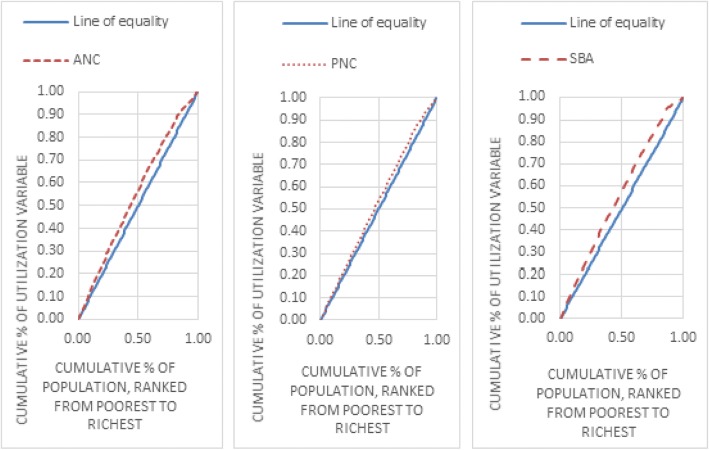
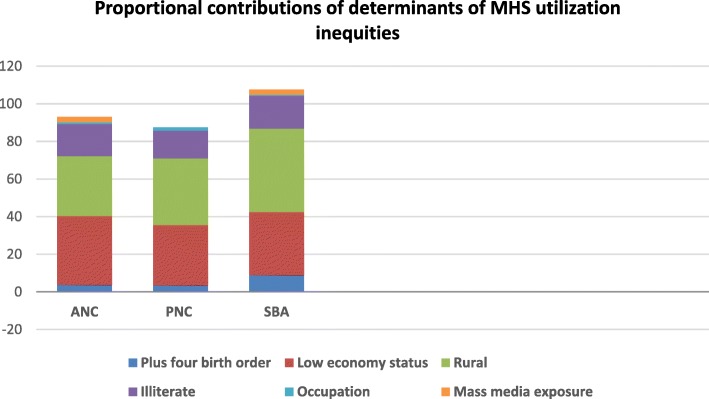
Results: Wealth-related inequities were significantly high in 2016: with horizontal inequities indices and residual regression error of antenatal care, skilled birth attendance, and postnatal care service utilization (- 0.09 and - 0.01), (- 0.06 and 0.01), and (- 0.11 and 0.0001), respectively. These indices increased significantly in 2016 when it is compared with the 2000 indices' with the respective concentration indices difference of - 0.05, 0.05, and - 0.07. The related all p-values were < 0.0001. The main determinants of inequities were low-economic status, illiteracy, rural residence, no occupation, and fewer accesses to mass media.
Conclusions: In Ethiopia, maternal health services utilization inequities were significantly high and increased in 2016 compared to 2000. Women who are poor, rural resident, uneducated, unemployed, and fewer mass media exposed are the most disadvantaged. Targeting maternal health interventions for the underserved women is essential to reduce maternal mortality in the country.
Keywords: Determinants; Inequities; Maternal health services; Trend; Utilization.
Conflict of interest statement
Ethics approval and consent to participate
All EDHS data were collected after the study got an ethical clearance from at least one of the following institutes: Ethiopia Central Statistical Authority, Ethiopia Central Statistical Agency (CSA), Ethiopia Health and Nutrition Research Institute (EHNRI) Review Board, the National Research Ethics Review Committee (NRERC) at the Ministry of Science and Technology, the Institutional Review Board of ICF International, and the CDC. Consent was obtained from each study participant before conducting an interview. We obtained the data by submitting the data request to Measure DHS.
Consent for publication
Not applicable.
Competing interests
The authors declare that they have no competing interest.
Publisher’s Note
Springer Nature remains neutral with regard to jurisdictional claims in published maps and institutional affiliations.
Figures
References
-
- Central Statistical Agency (CSA) [Ethiopia], ICF . Ethiopia Demographic and Health Survey 2016. Addis Ababa, Ethiopia, and Rockville, Maryland, USA: CSA and ICF; 2016.
-
- Barros AJ, Ronsmans C, Axelson H, Loaiza E, Bertoldi AD, França GV, Bryce J, Boerma JT, Victora CG. Equity in maternal, newborn, and child health interventions in countdown to 2015: a retrospective review of survey data from 54 countries. Lancet. 2012;379(9822):1225–1233. doi: 10.1016/S0140-6736(12)60113-5. - DOI - PubMed
-
- FDRE . Health policy of the transitional government of Ethiopia in. 1993.
MeSH terms
LinkOut - more resources
Full Text Sources
Other Literature Sources
Medical
