


Reflection and observation: cell-based screening failing to detect HBV in HUMSCs derived from HBV-infected mothers underscores the importance of more stringent donor eligibility to reduce risk of transmission of infectious diseases for stem cell-based medical products
- PMID: 29973264
- PMCID: PMC6030788
- DOI: 10.1186/s13287-018-0920-3
Reflection and observation: cell-based screening failing to detect HBV in HUMSCs derived from HBV-infected mothers underscores the importance of more stringent donor eligibility to reduce risk of transmission of infectious diseases for stem cell-based medical products
Abstract
Background: In cell-based therapy, the transmission of communicable diseases imposes a substantial threat to recipients. In this study, we investigated whether cell-based screening could detect hepatitis B virus (HBV) in human umbilical cord-derived mesenchymal stem cells (HUMSCs) isolated from HBV-infected donors to understand the susceptibility of HUMSCs to HBV infection.
Methods: HBV assay was performed in HUMSCs derived from healthy and HBV-infected donors with enzyme-linked immunosorbent assay (ELISA), fluorescence quantitative PCR (FQ-PCR) assay, and droplet digital PCR (ddPCR) assay. Further, HBV DNA was assayed in HUMSCs derived from healthy donors after incubation with human sera containing a high titer of HBV using FQ-PCR.
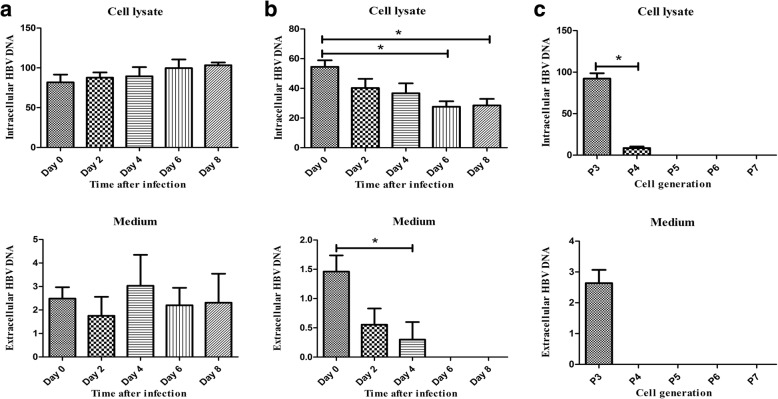
Results: HBV antigen/antibody and DNA failed to be detected using ELISA, FQ-PCR, and ddPCR. After incubation with HBV infection sera, HBV DNA could be detected, but below the valid titer of the assay kit. The HBV DNA levels in HBV-incubated HUMSCs gradually decreased with medium change every 2 days and then significantly decreased, not even detected after passage.
Conclusions: The current cell-based screening methods could not detect HBV in HUMSCs derived from HBV-infected donors, indicating the importance of more stringent donor eligibility to reduce the risk of transmission of communicable diseases in cell-based therapy. To solve the problem of an occult HBV window period in donor eligibility determination, we recommend that the donors undergo another HBV serological test 3 months after the first serological communicable disease screening.
Keywords: Cell-based therapy; Clinical screening assay; Droplet digital PCR; Hepatitis B virus; Human umbilical cord mesenchymal stem cells; Serological test.
Conflict of interest statement
Ethics approval and consent to participate
Mesenchymal stem cells were isolated from the umbilical cord of 14 donors after full-term births. All samples were taken after informed and written consent, and the study was approved by the Research Ethics Board of Nanjing Drum Tower Hospital (permit number: 2017–161-01).
Consent for publication
Not applicable.
Competing interests
The authors declare that they have no competing interests.
Publisher’s Note
Springer Nature remains neutral with regard to jurisdictional claims in published maps and institutional affiliations.
Figures
References
Publication types
MeSH terms
Substances
LinkOut - more resources
Full Text Sources
Other Literature Sources
