


Anthelmintic resistance in gastrointestinal nematodes of alpacas (Vicugna pacos) in Australia
- PMID: 29973276
- PMCID: PMC6031175
- DOI: 10.1186/s13071-018-2949-7
Anthelmintic resistance in gastrointestinal nematodes of alpacas (Vicugna pacos) in Australia
Abstract
Background: Gastrointestinal nematodes (GINs) can cause significant economic losses in alpacas due to lowered production of fibre and meat. Although no anthelmintics are registered for use in alpacas, various classes of anthelmintics are frequently used to control parasitic gastroenteritis in alpacas in Australia and other countries. Very little is known about the current worm control practices as well as the efficacy of anthelmintics used against common GINs of alpacas. This study aimed to assess the existing worm control practices used by Australian alpaca farmers and to quantify the efficacy of commonly used anthelmintics against GINs of alpacas.
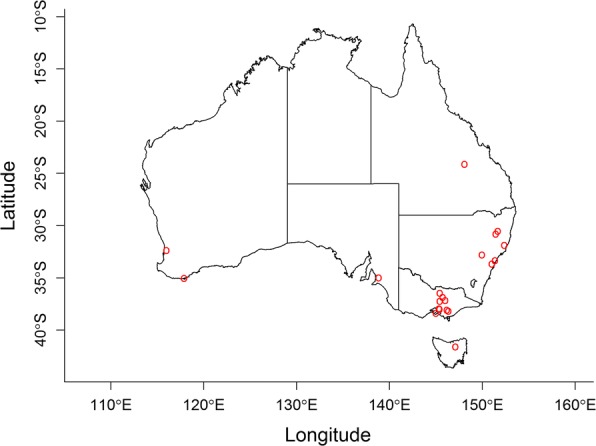
Methods: An online questionnaire survey was conducted to assess current worm control practices on 97 Australian alpaca farms, with an emphasis on the use of anthelmintics. Of this group of 97 alpaca farms, 20 were selected to assess the efficacy of eight anthelmintics and/or their combinations (closantel, fenbendazole ivermectin, monepantel, moxidectin and a combination of levamisole, closantel, albendazole, abamectin) using the faecal egg count reduction test (FECRT). A multiplexed-tandem PCR (MT-PCR) was used to identify the prevalent nematode genera/species.
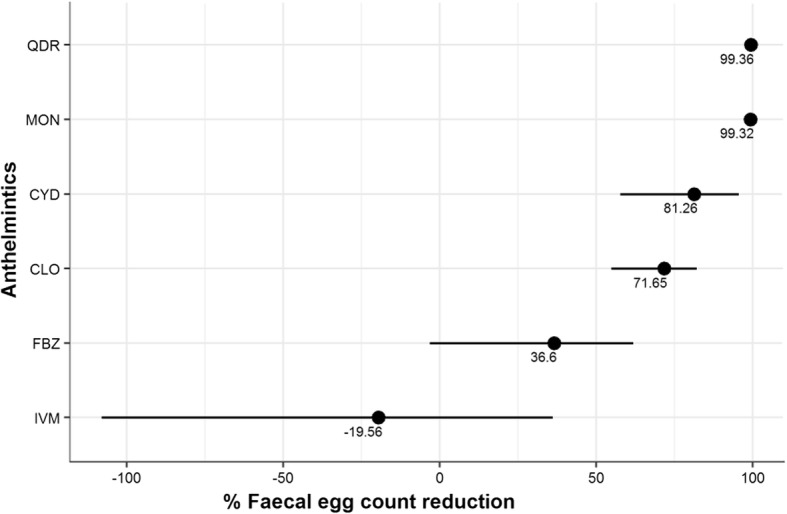
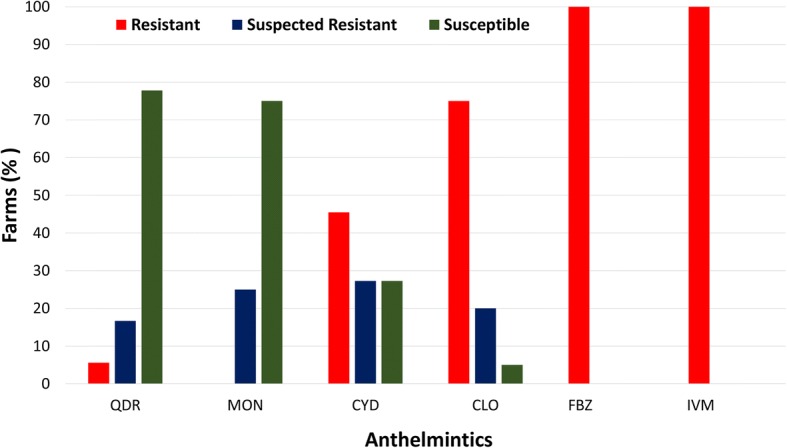
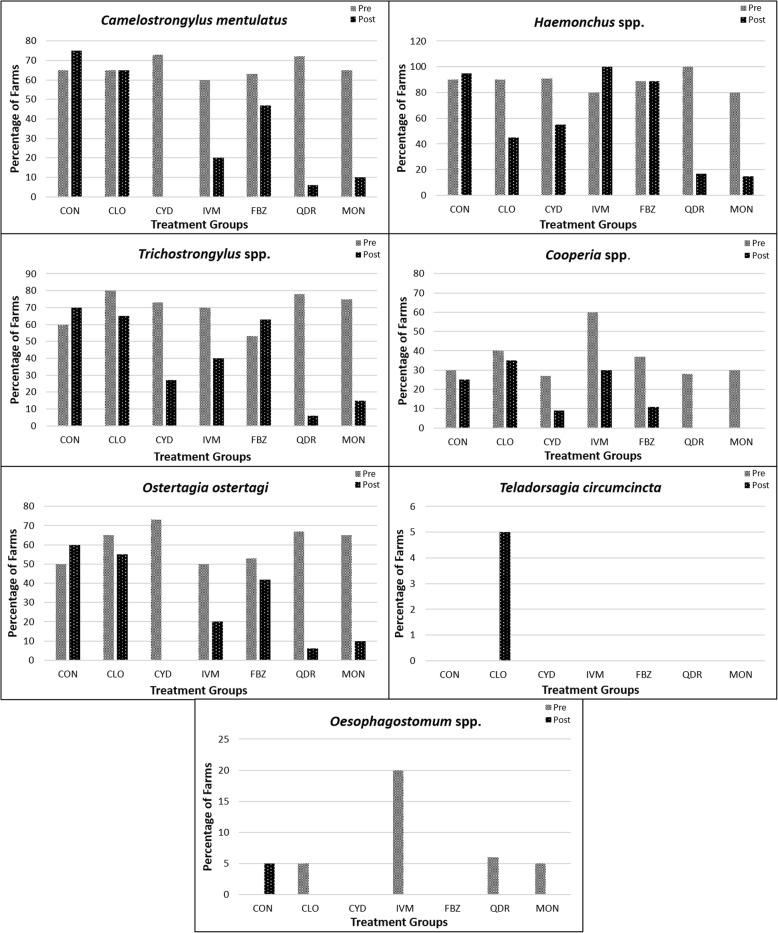
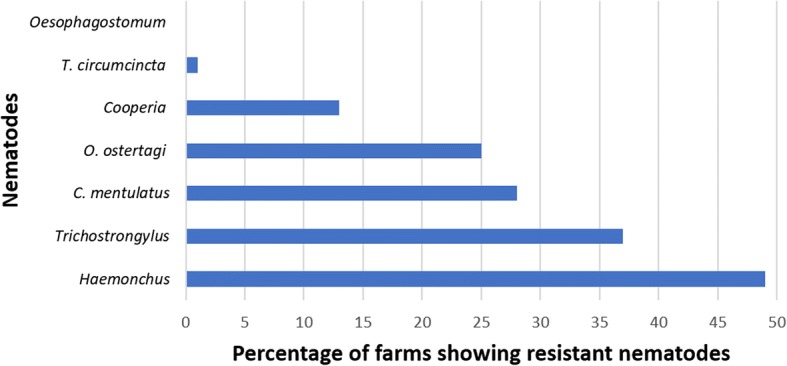
Results: The response rate for the questionnaire was 94% (91/97). Almost half of the respondents kept alpacas with sheep and cattle, and 26% of respondents allowed alpacas to co-graze with these ruminants. Although only 63% respondents perceived worms to be an important health concern for alpacas, the majority of respondents (89%) used anthelmintics to control GINs of alpacas. The commonly used anthelmintics were macrocyclic lactones, monepantel, benzimidazoles, levamisole, closantel and their combinations, and they were typically administered at the dose rate recommended for sheep. The FECRT results showed that a combination of levamisole, closantel, albendazole and abamectin was the most effective dewormer followed by single drugs, including monepantel, moxidectin, closantel, fenbendazole and ivermectin. Haemonchus spp. were the most commonly resistant nematodes followed by Trichostrongylus spp., Camelostrongylus mentulatus, Ostertagia ostertagi and Cooperia spp.
Conclusions: This is the first study aimed at assessing worm control practices and efficacy of commonly used anthelmintics in alpacas in Australia. Our findings document the extent of anthelmintics resistance on Australian alpaca farms and identify those anthelmintics that are still effective against GINs of alpacas.
Keywords: Alpacas; Anthelmintic; Australia; Nematodes; Resistance.
Conflict of interest statement
Ethics approval and consent to participate
The questionnaire survey was approved by the Human Ethics Committee (Ethics ID 1443529) of the University of Melbourne. The use of alpacas in this study was approved by the Animal Ethics Committee (AEC no. 1413412.1) of the University of Melbourne.
Consent for publication
Not applicable.
Competing interests
The authors declare that they have no competing interests.
Publisher’s Note
Springer Nature remains neutral with regard to jurisdictional claims in published maps and institutional affiliations.
Figures
References
-
- Gerken M, Renieri C. South American camelids research. In: 4th European Symposium on South American Camelids and DECAMA European Seminar 2004, Göttingen, Germany. Wageningen: Wageningen Academic Publishers; 2006. p. 7–8.
MeSH terms
Substances
Grants and funding
LinkOut - more resources
Full Text Sources
Other Literature Sources
Miscellaneous
