


The prognostic significance of metabolic syndrome and weight loss in esophageal squamous cell carcinoma
- PMID: 29973636
- PMCID: PMC6031687
- DOI: 10.1038/s41598-018-28268-2
The prognostic significance of metabolic syndrome and weight loss in esophageal squamous cell carcinoma
Abstract
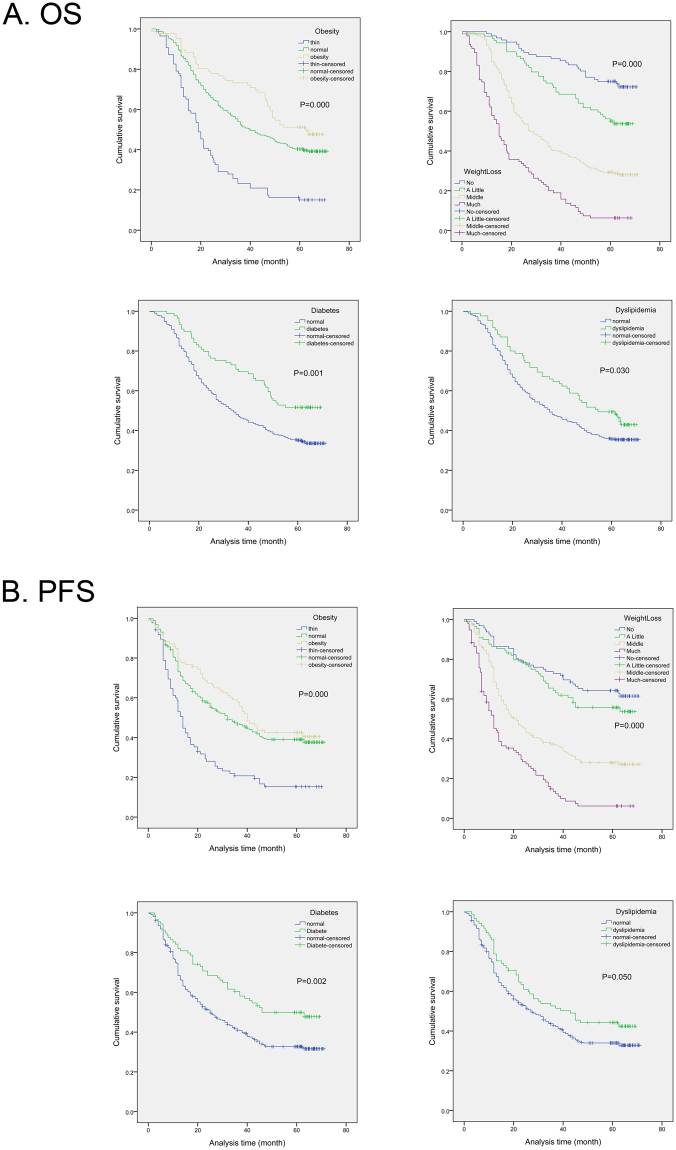
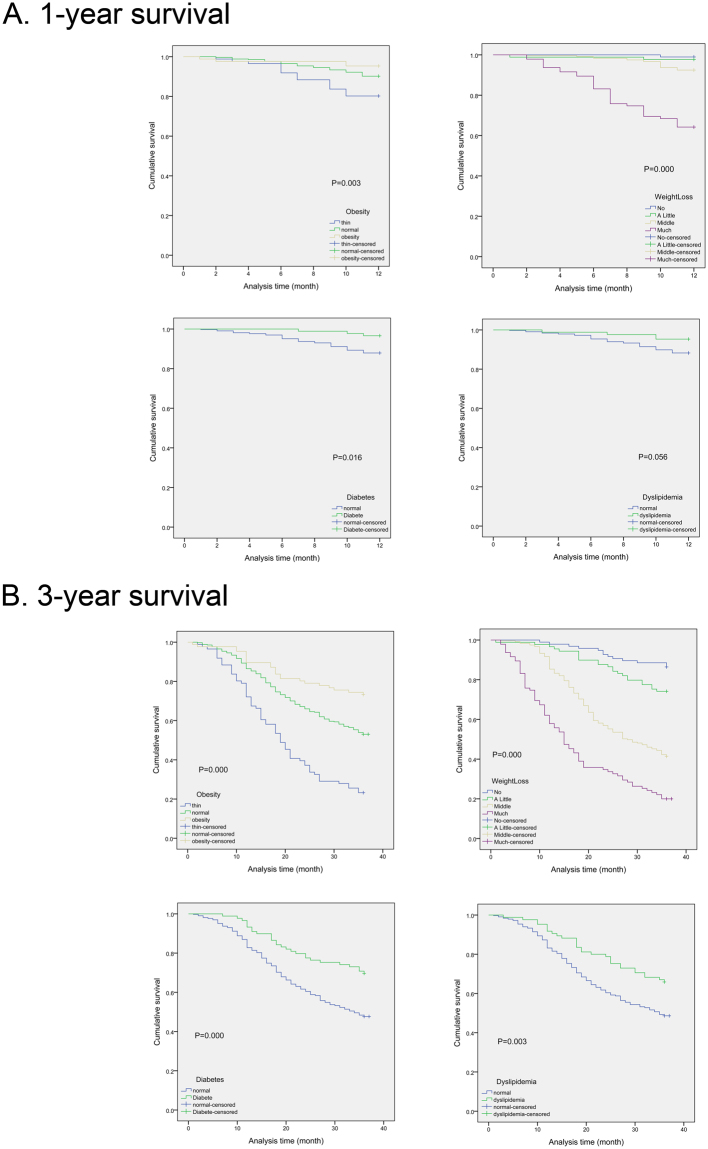
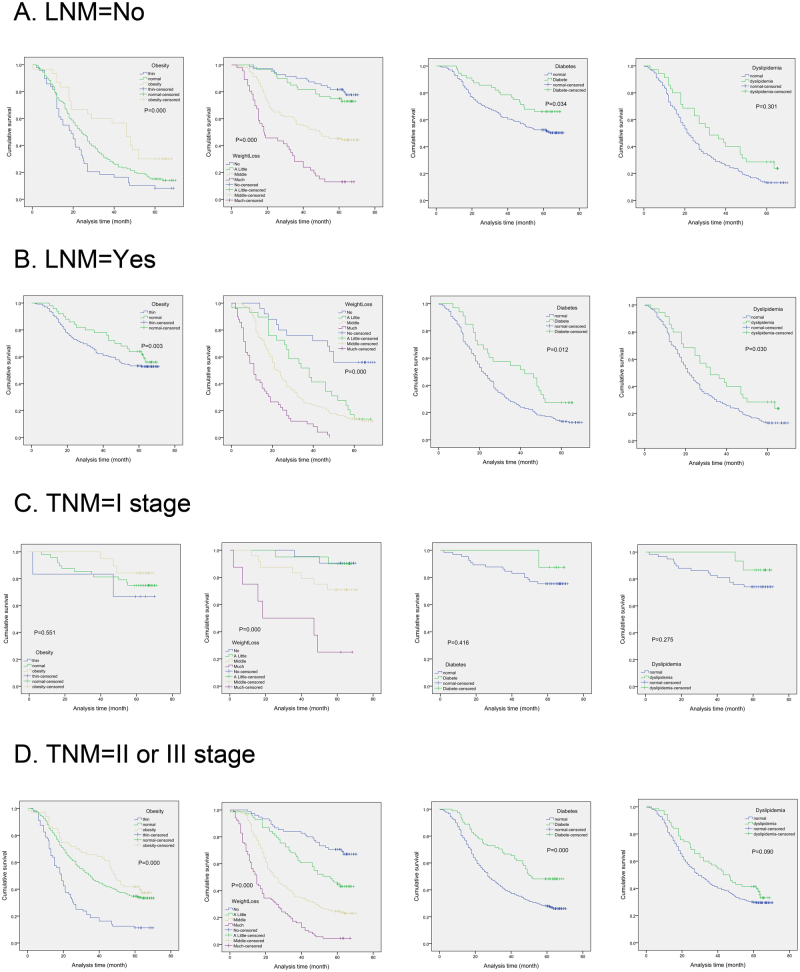
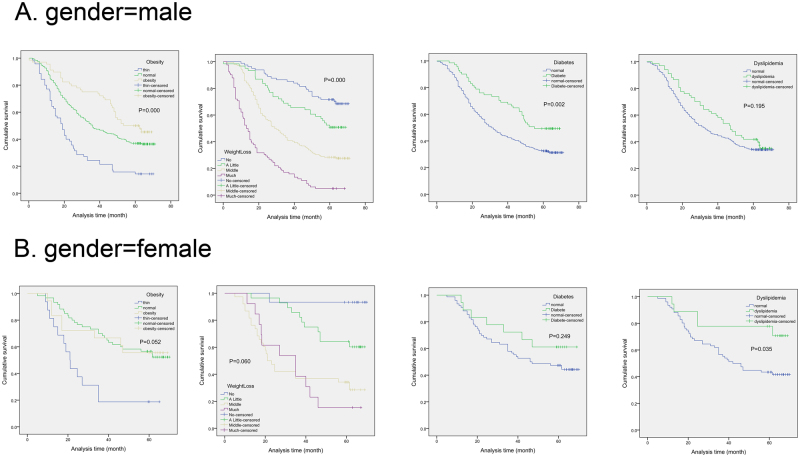
Our study aimed to investigate the association between metabolic syndrome and postoperative survival in patients with esophageal squamous cell carcinoma, and evaluate whether metabolic syndrome can predict the prognosis in esophageal cancer patients. The retrospective study reviewed 519 patients with esophageal squamous cell carcinoma who had received esophagetomy and lymphnode dissections in the Department of Thoracic Surgery, Qilu Hospital of Shandong University between January 2007 and December 2011. All patients were followed up until December 2016. The median follow-up time was 39.59 months (range 0.25-72 months). The 3-year and 5-year survival rate was 51.4% and 37.0%, respectively. Kaplan-Meier survival analysis revealed a significant correlation between OS and obesity (P = 0.000), weight loss (P = 0.000), diabetes (P = 0.001) and dyslipidemia (P = 0.030). Multivariate analysis indicated that advanced TNM staging (P = 0.007, HR: 1.760, 95% CI: 1.167-2.654) and more weight loss (P = 0.000, HR: 1.961, 95% CI: 1.697-2.267) were independent factors for adverse prognosis of esophageal squamous carcinoma patients. In contrast, diabetes was a protective factor in the prognosis of patients with esophageal cancer (P = 0.018, HR: 0.668, 95% CI: 0.478-0.933). Our findings suggest that TNM staging, weight changes and diabetes were independent predictors for the prognosis of esophageal cancer patients.
Conflict of interest statement
The authors declare no competing interests.
Figures
References
-
- Chen W, et al. Cancer statistics in China, 2015. CA: a cancer journal for clinicians. 2016;66:115–132. - PubMed
-
- Jemal A, et al. Global cancer statistics. CA: a cancer journal for clinicians. 2011;61:69–90. - PubMed
-
- Torre LA, et al. Global cancer statistics, 2012. CA: a cancer journal for clinicians. 2015;65:87–108. - PubMed
Publication types
MeSH terms
Grants and funding
- 81572958/National Natural Science Foundation of China (National Science Foundation of China)/International
- 81572958/National Natural Science Foundation of China (National Science Foundation of China)/International
- 81572958/National Natural Science Foundation of China (National Science Foundation of China)/International
- 81572958/National Natural Science Foundation of China (National Science Foundation of China)/International
- 81572958/National Natural Science Foundation of China (National Science Foundation of China)/International
LinkOut - more resources
Full Text Sources
Other Literature Sources
Medical
