


Evidence for facultative protocarnivory in Capsella bursa-pastoris seeds
- PMID: 29973685
- PMCID: PMC6031654
- DOI: 10.1038/s41598-018-28564-x
Evidence for facultative protocarnivory in Capsella bursa-pastoris seeds
Abstract
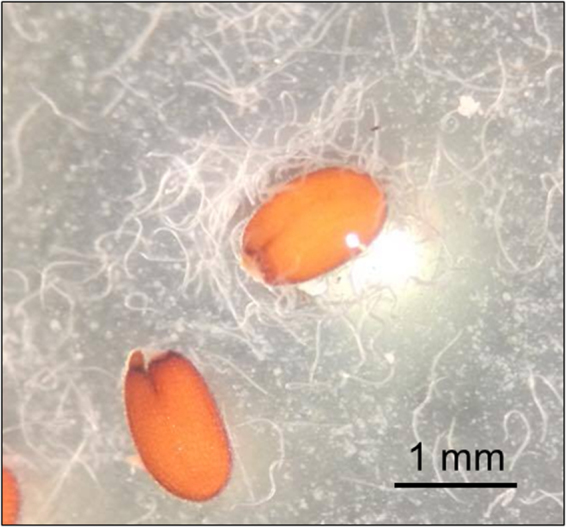
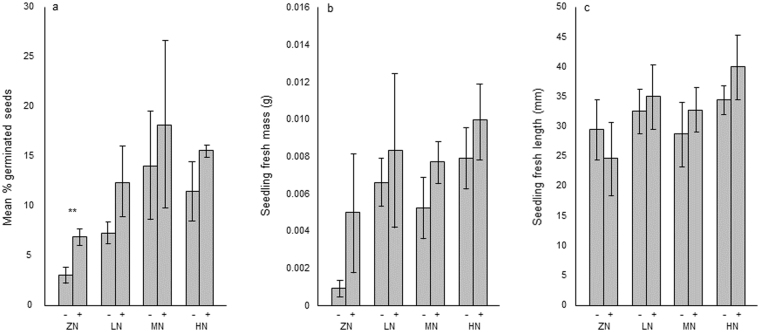
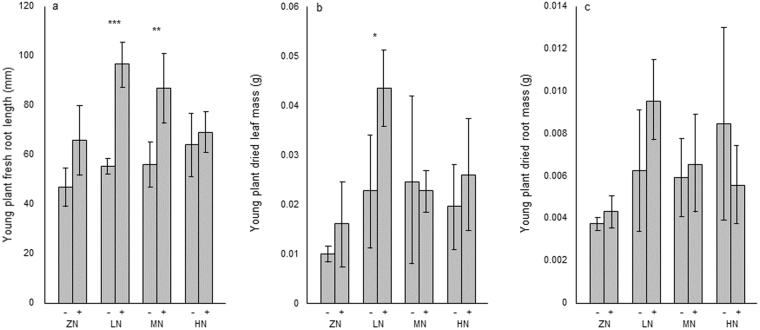
Many plants derive nutrients by attracting, ensnaring and killing invertebrates, a process that is described as "protocarnivory". This has been observed in seeds of the weed Capsella bursa-pastoris, but it is unclear as to whether it confers any material benefit in terms of germination, establishment and development. In the present study, seeds were germinated in zero, low, medium and high nutrient soils in both the presence and absence of nematodes (Steinernema feltiae). Nematodes were attracted to the seeds, with many dying within three days. Germination rates and seedling fresh masses were higher at all nutrient levels, and seedling fresh lengths were higher in all but the zero nutrient treatment, in the presence of nematodes. After transplantation, young plant fresh root lengths and dried leaf and root masses were generally higher in plants that had been germinated in the presence of nematodes across all nutrient levels, with the majority of significant differences being observed in the low-nutrient treatment. Our findings suggest that protocarnivory may play a role in the germination, establishment and early development of C. bursa-pastoris, and that this process may be facultative, since differences between nematode and non-nematode treatments were generally more pronounced in soils with low nutrient levels.
Conflict of interest statement
The authors declare no competing interests.
Figures
References
-
- Darwin, C. R. Insectivorous Plants. John Murray, London, UK. (1875).
-
- Chase MW, Christenhusz MJ, Sanders D, Fay MF. Murderous plants: Victorian Gothic, Darwin, and modern insights into vegetable carnivory. Bot. J. Linn. Soc. 2009;161:329–356. doi: 10.1111/j.1095-8339.2009.01014.x. - DOI
-
- Simons P. How exclusive are carnivorous plants? Carniv. Pl. Newsletter. 1981;10:65–68.
-
- Givnish TJ, Burkhardt EL, Happel RE, Weintraub JD. Carnivory in the bromeliad Brocchinia reducta, with a cost/benefit model for the general restriction of carnivorous plants to sunny, moist, nutrient-poor habitats. Amer. Nat. 1984;124:479–497. doi: 10.1086/284289. - DOI
MeSH terms
LinkOut - more resources
Full Text Sources
Other Literature Sources
