Fluoroquinolone resistance in Salmonella: insights by whole-genome sequencing
- PMID: 29975627
- PMCID: PMC6113872
- DOI: 10.1099/mgen.0.000195
Fluoroquinolone resistance in Salmonella: insights by whole-genome sequencing
Abstract
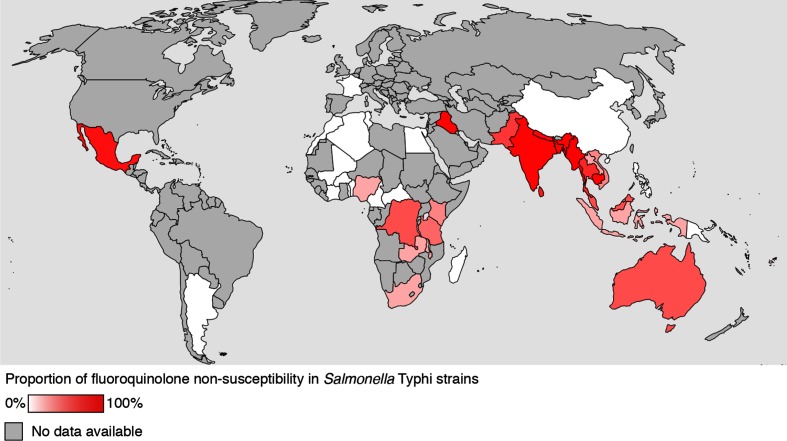
Fluoroquinolone (FQ)-resistant Salmonella spp. were listed by the WHO in 2017 as priority pathogens for which new antibiotics were urgently needed. The overall global burden of Salmonella infections is high, but differs per region. Whereas typhoid fever is most prevalent in South and South-East Asia, non-typhoidal salmonellosis is prevalent across the globe and associated with a mild gastroenteritis. By contrast, invasive non-typhoidal Salmonella cause bloodstream infections associated with high mortality, particularly in sub-Saharan Africa. Most Salmonella strains from clinical sources are resistant to first-line antibiotics, with FQs now being the antibiotic of choice for treatment of invasive Salmonella infections. However, FQ resistance is increasingly being reported in Salmonella, and multiple molecular mechanisms are already described. Whole-genome sequencing (WGS) is becoming more frequently used to analyse bacterial genomes for antibiotic-resistance markers, and to understand the phylogeny of bacteria in relation to their antibiotic-resistance profiles. This mini-review provides an overview of FQ resistance in Salmonella, guided by WGS studies that demonstrate that WGS is a valuable tool for global surveillance.
Keywords: Salmonella; antibiotic resistance; ciprofloxacin; fluoroquinolones; whole-genome sequencing.
Conflict of interest statement
The authors declare no conflicts of interest.
Figures
References
Publication types
MeSH terms
Substances
Grants and funding
LinkOut - more resources
Full Text Sources
Other Literature Sources
Medical
Molecular Biology Databases
Miscellaneous