


How I treat primary mediastinal B-cell lymphoma
- PMID: 29976557
- PMCID: PMC6634954
- DOI: 10.1182/blood-2018-04-791566
How I treat primary mediastinal B-cell lymphoma
Abstract
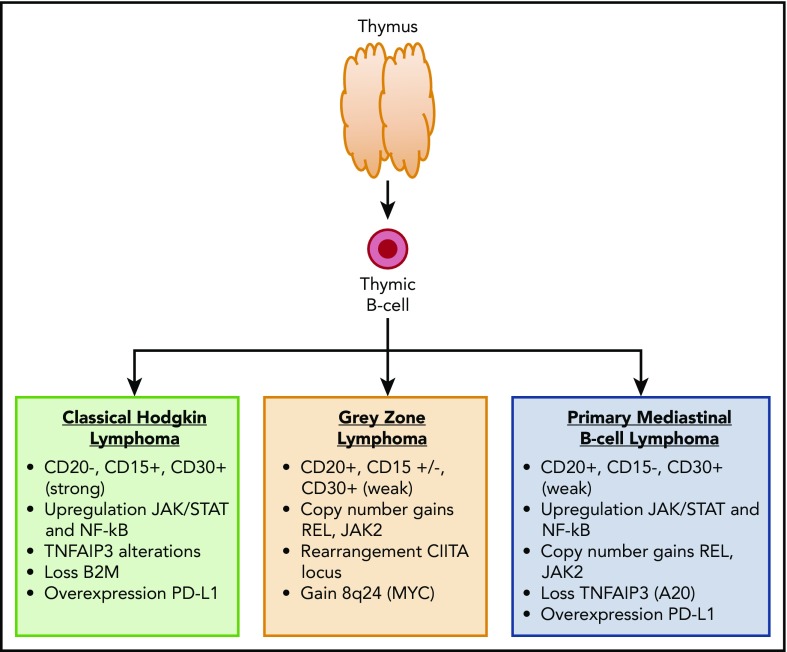
The World Health Organization now recognizes primary mediastinal B-cell lymphoma (PMBCL) as a unique clinical and biologic entity. PMBCL is distinct from other B-cell non-Hodgkin lymphoma subtypes and has features that overlap with classical Hodgkin lymphoma, including a peak incidence in the adolescent and young adult population, mediastinal presentation of disease, and molecular alterations in JAK2 and programmed death ligands. Because PMBCL is rare, there are few prospective clinical trials to guide therapy, resulting in no single standard of care. Given the long life expectancy of survivors of PMBCL, treatment approaches must balance maximizing cure while minimizing long-term toxicity. In this article, I review my approach to the treatment of PMBCL, incorporating data from adult and pediatric studies, as well as recent advances in our understanding of the molecular basis of PMBCL.
© 2018 by The American Society of Hematology.
Conflict of interest statement
Conflict-of-interest disclosure: L.G.-R. declares no competing financial interests.
Figures
References
-
- Feuerhake F, Kutok JL, Monti S, et al. NFkappaB activity, function, and target-gene signatures in primary mediastinal large B-cell lymphoma and diffuse large B-cell lymphoma subtypes. Blood. 2005;106(4):1392-1399. - PubMed
-
- Guiter C, Dusanter-Fourt I, Copie-Bergman C, et al. Constitutive STAT6 activation in primary mediastinal large B-cell lymphoma. Blood. 2004;104(2):543-549. - PubMed
Publication types
MeSH terms
LinkOut - more resources
Full Text Sources
Other Literature Sources
Miscellaneous
