. 2018 Jul 5;3(4):e00190-18.
doi: 10.1128/mSphere.00190-18.

Sad1 Spatiotemporally Regulates Kinetochore Clustering To Ensure High-Fidelity Chromosome Segregation in the Human Fungal Pathogen Cryptococcus neoformans

Affiliations

Sad1 Spatiotemporally Regulates Kinetochore Clustering To Ensure High-Fidelity Chromosome Segregation in the Human Fungal Pathogen Cryptococcus neoformans

Vikas Yadav et al. mSphere. .

Abstract

Kinetochore clustering, frequently observed in yeasts, plays a key role in genome organization and chromosome segregation. In the absence of the metaphase plate arrangement, kinetochore clustering in yeast species is believed to facilitate timely kinetochore-microtubule interactions to achieve bivalent attachments of chromosomes during metaphase. The factors determining the dynamics of kinetochore clustering remain largely unknown. We previously reported that kinetochores oscillate between an unclustered and a clustered state during the mitotic cell cycle in the basidiomycetous yeast Cryptococcus neoformans Based on tubulin localization patterns, while kinetochore clustering appears to be microtubule dependent, an indirect interaction of microtubules with kinetochores is expected in C. neoformans In this study, we sought to examine possible roles of the SUN-KASH protein complex, known to form a bridge across the nuclear envelope, in regulating kinetochore clustering in C. neoformans We show that the SUN domain protein Sad1 localizes close to kinetochores in interphase as well as in mitotic cells. Sad1 is nonessential for viability in C. neoformans but is required for proper growth and high-fidelity chromosome segregation. Further, we demonstrate that the onset of kinetochore clustering is significantly delayed in cells lacking Sad1 compared to wild-type cells. Taken together, this study identifies a novel role of the SUN domain protein Sad1 in spatiotemporal regulation of kinetochore clustering during the mitotic cell cycle in C. neoformansIMPORTANCE The linker of nucleoskeleton and cytoskeleton (LINC) complex is present in fungi, animals, and plants. It performs diverse functions in animals, and its role(s) have recently been explored in plants. In ascomycetous yeast species, the role of the LINC complex in spindle pole body function and telomere clustering during meiosis has been determined. However, nothing is known about the LINC complex in the fungal phylum of Basidiomycota. In this study, we identified the role of the LINC complex in kinetochore dynamics as well as in nuclear migration in a basidiomycetous yeast, Cryptococcus neoformans, a human pathogen. Unlike most other yeast species, kinetochores remain unclustered during interphase but gradually cluster during mitosis in C. neoformans We report that the LINC complex is required for timely onset of kinetochore clustering and high-fidelity chromosome segregation in C. neoformans Thus, our study identifies a novel factor required for kinetochore clustering during mitosis in yeast species.

Keywords: CENP-A; LINC complex; microtubule organizing center; mitotic spindle.


Figures

FIG 1
FIG 1
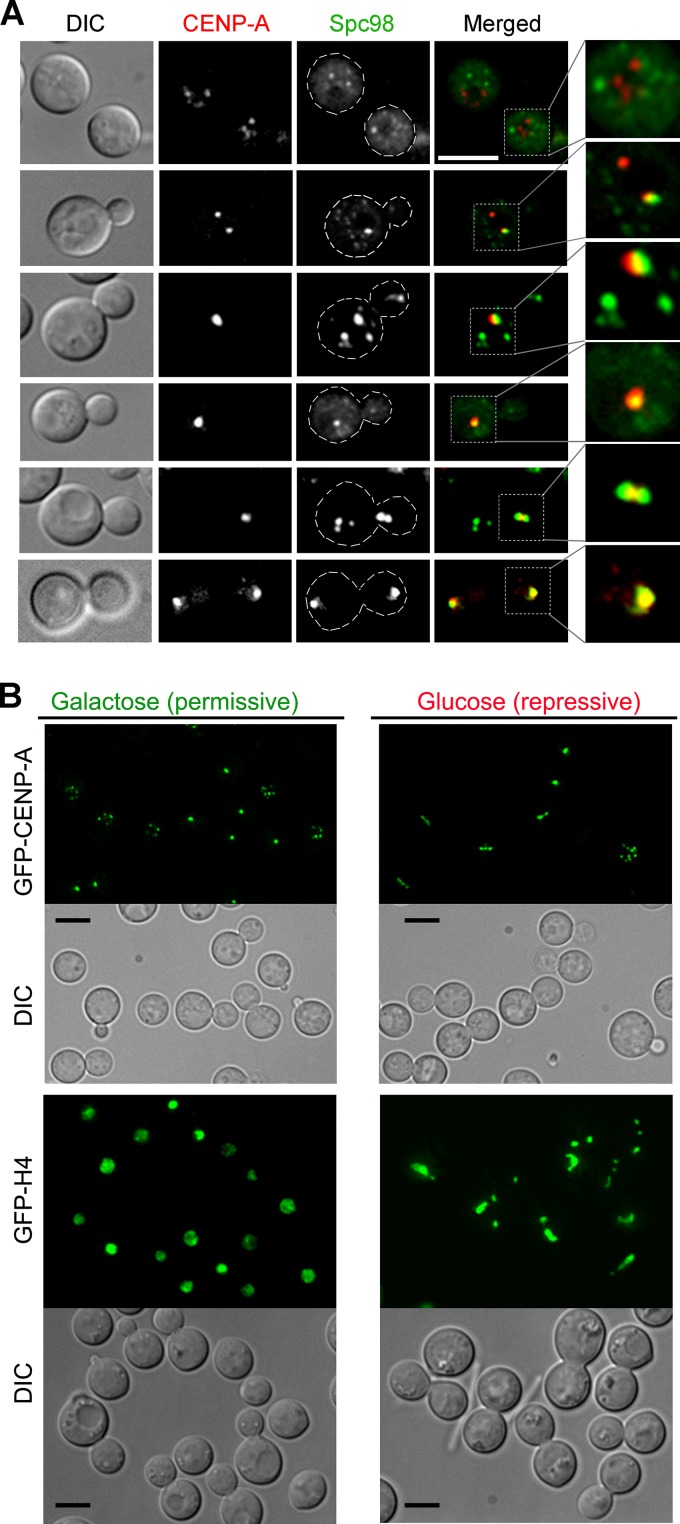
Dynamic colocalization of MTOCs and the kinetochore during the cell cycle in C. neoformans. (A) Dynamics of colocalization of the kinetochore (mCherry–CENP-A) and MTOCs (Spc98-GFP) at different stages of the cell cycle in C. neoformans. (B) GAL7p-Spc98 conditional mutant was grown in both permissive and repressive media for 12 h. The cells were harvested and studied for the status of kinetochore (marked by GFP–CENP-A) and chromatin (marked by GFP-H4) localization. The cells depleted of Spc98 showed an aberrant kinetochore localization pattern and massive chromosome segregation errors. On the other hand, the cells overexpressing Spc98 behaved in the same fashion as wild-type cells and did not show any difference in kinetochore or chromatin localization. Bars, 5 µm.
FIG 2
FIG 2
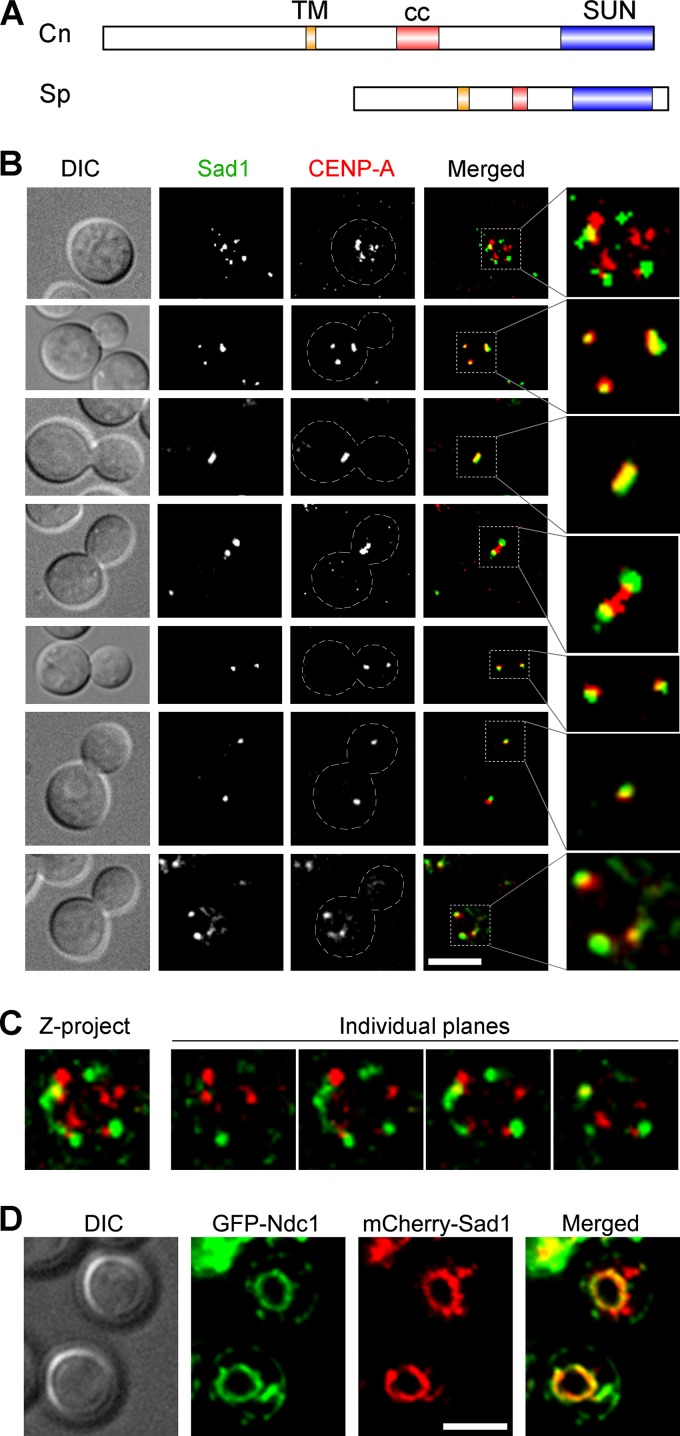
Sad1 localizes close to the kinetochore throughout the cell cycle in C. neoformans. (A) The domain architecture of C. neoformans Sad1 (CnSad1) and its comparison with S. pombe Sad1 (SpSad1). TM, transmembrane domain; cc, coiled-coil region; SUN, SUN domain. (B) Colocalization of C. neoformans Sad1-GFP with mCherry–CENP-A, a kinetochore marker, reveals a close association between two proteins throughout the cell cycle. Bar, 5 µm. (C) Colocalization analysis of the unbudded cell shown in panel B revealed that a fraction of kinetochore signals (red) and Sad1 (green) colocalized (yellow) during interphase. The colocalization was observed even in individual plane images, indicating a direct interaction between the kinetochore and Sad1. Some of the CENP-A signals that did not colocalize with Sad1 might have been a result of microscopy imaging limitations. (D) Snapshots depicting the localization of the NE (GFP-Ndc1), and mCherry-Sad1 in unbudded cells. mCherry-Sad1 was expressed using the GAL7 promoter and localized along the NE. Bar, 5 µm.
FIG 3
FIG 3
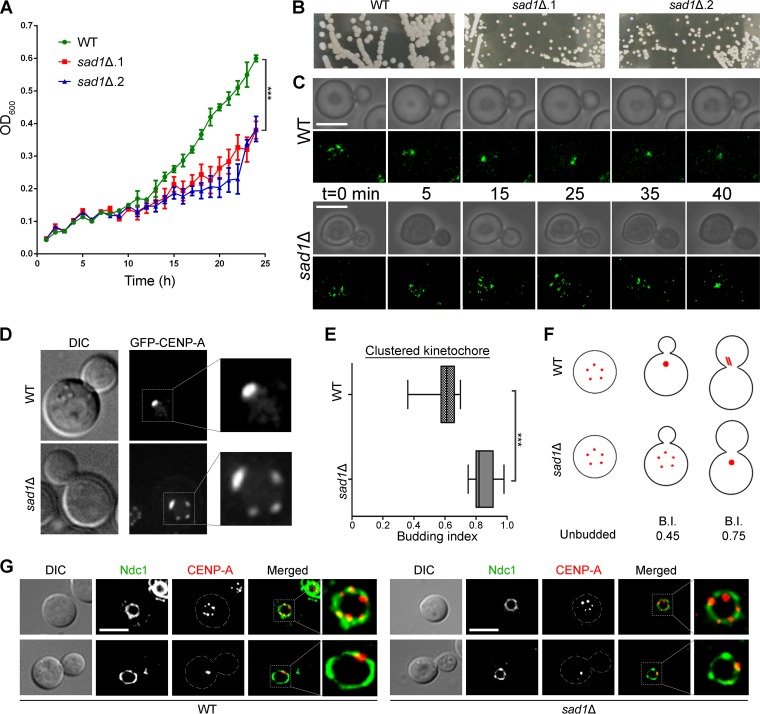
Kinetochore clustering is delayed in the sad1 null mutant. (A) A graph showing the growth rates of wild-type and sad1Δ mutant cells (P < 0.0001). (B) Plate images showing the colonies formed by both the wild type and the sad1Δ mutants on the YPD plates after 4 days. The images shown were captured at the same magnification. (C) Time-lapse imaging showing kinetochore clustering in both wild-type and sad1Δ mutant cells (n = 5). Bars, 5 µm. (D) Snapshots depicting the status of the kinetochore clustering in the mutant and wild-type cells of a similar budding index. (E) The kinetochore clustering status was correlated with the budding index (BI) and was plotted for cells with the clustered kinetochores (n = 50). As shown, kinetochore clustering was delayed in the mutant and took place only when cells attained a BI of 0.7, while it occurred at a BI of 0.4 in the wild-type cells (P < 0.0001). (F) A cartoon depicting kinetochore clustering dynamics in both the wild type and the sad1Δ mutant. (G) Localization of the kinetochore (mCherry–CENP-A) with respect to the nuclear envelope (GFP-Ndc1) does not change in sad1 null cells compared to the wild-type cells, in both interphase and mitotic cells.
FIG 4
FIG 4
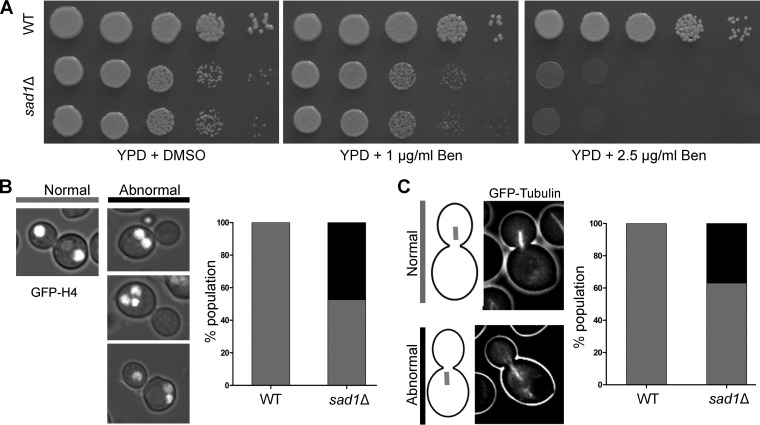
Sad1 is required for proper chromosome segregation. (A) Plate images displaying the sensitivity of the sad1Δ mutant to a microtubule-depolymerizing drug, benomyl (Ben), compared to the wild-type cells. The mutant grows slower on the control (dimethyl sulfoxide [DMSO]) plate, as shown in Fig. 3A. (B) A graph showing the status of chromosome segregation (marked by GFP- histone H4) in the wild-type and the sad1Δ mutant large budded cells (budding index, ≥0.75; n = 50). (C) A graph depicting localization patterns of the mitotic spindle in the sad1Δ mutant compared to that in the wild-type large budded cells (n = 30).
FIG 5
FIG 5
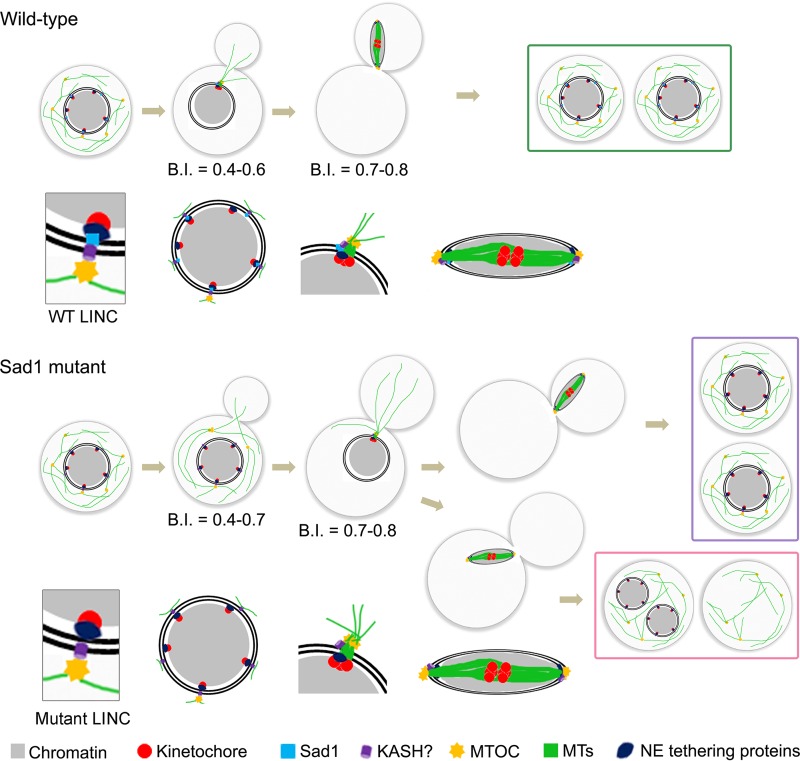
A model describing the role of Sad1 protein in kinetochore clustering in C. neoformans. In a wild-type cell, the timely onset of kinetochore clustering allows proper kinetochore-microtubule attachment. The chromatin moves to the daughter cell in a microtubule-dependent manner followed by segregation of the sister chromatids. In the absence of Sad1, the kinetochore clustering is delayed, perturbing the critical timing of kinetochore-microtubule attachment. This leads to abnormal nuclear dynamics and mislocalization of the mitotic spindle, eventually resulting in chromosome missegregation in a population of cells. Remaining cells divide normally, giving rise to two separate nuclei, one each in the mother cell and the daughter cell. A zoomed view of the LINC complex localization at each cell cycle stage is shown for both wild-type and Sad1 mutant cells. LINC, linker of nucleoskeleton and cytoskeleton; MTs, microtubules; MTOC, microtubule-organizing center; NE, nuclear envelope.

References

    1. Anderson M, Haase J, Yeh E, Bloom K. 2009. Function and assembly of DNA looping, clustering, and microtubule attachment complexes within a eukaryotic kinetochore. Mol Biol Cell 20:4131–4139. doi: 10.1091/mbc.E09-05-0359. - DOI - PMC - PubMed
    1. Jin QW, Fuchs J, Loidl J. 2000. Centromere clustering is a major determinant of yeast interphase nuclear organization. J Cell Sci 113:1903–1912. - PubMed
    1. Sanyal K, Carbon J. 2002. The CENP-A homolog CaCse4p in the pathogenic yeast Candida albicans is a centromere protein essential for chromosome transmission. Proc Natl Acad Sci U S A 99:12969–12974. doi: 10.1073/pnas.162488299. - DOI - PMC - PubMed
    1. Takahashi K, Chen ES, Yanagida M. 2000. Requirement of MIS6 centromere connector for localizing a CENP-A-like protein in fission yeast. Science 288:2215–2219. doi: 10.1126/science.288.5474.2215. - DOI - PubMed
    1. Taddei A, Gasser SM. 2012. Structure and function in the budding yeast nucleus. Genetics 192:107–129. doi: 10.1534/genetics.112.140608. - DOI - PMC - PubMed

Publication types

MeSH terms

LinkOut - more resources