How New Support Devices Change Critical Care Delivery
- PMID: 29977466
- PMCID: PMC6027720
- DOI: 10.14797/mdcj-14-2-101
How New Support Devices Change Critical Care Delivery
Abstract
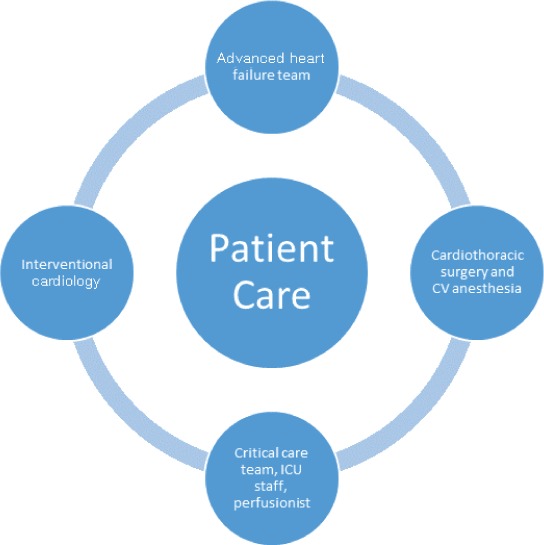
Mechanical support devices are used to support failing cardiac, respiratory, or both systems. Since Gibbon developed the cardiopulmonary bypass in 1953, collaborative efforts by medical centers, bioengineers, industry, and the National Institutes of Health have led to development of mechanical devices to support heart, lung, or both. These devices are used as a temporary or long-term measures for acute collapse of circulatory system and/or respiratory failure. Patients are managed on these support devices as a bridge to recovery, bridge to long term devices, or bridge to transplant. The progress in development of these devices has improved mortality and quality of life in select groups of patients. Care of these patients requires a multidisciplinary team approach, which includes cardiac surgeons, critical care physicians, cardiologists, pulmonologists, nursing staff, and perfusionists. Using a team approach improves outcomes in these patients.
Keywords: critical care management; mechanical circulatory support devices; role of multidisciplinary team.
Conflict of interest statement
Conflict of Interest Disclosure: The authors have completed and submitted the Methodist DeBakey Cardiovascular Journal Conflict of Interest Statement and none were reported.
Figures
References
-
- The artificial heart program: current status and history. Institute of Medicine (US) Committee to Evaluate the Artificial Heart Program of the National Heart, Lung, and Blood Institute. : Hogness JR, VanAntwerp M, . The artificial heart: prototypes, policies, and patients. Washington, DC: National Academies Press (US); 1991. - PubMed
-
- Thiele H, Jobs A, Ouweneel DM, . et al. Percutaneous short-term active mechanical support devices in cardiogenic shock: a systematic review and collaborative meta-analysis of randomized trials. Eur Heart J. 2017. December 14; 38 47: 3523– 31. - PubMed
-
- Maini B. Letter by Maini regarding article, “percutaneous left-ventricular support with the impella-2.5-assist device in acute cardiogenic shock: results of the impella-EUROSHOCK-registry”. Circ Heart Fail. 2013. July; 6 4: e55. - PubMed
-
- Friedman PA, Munger TM, Torres N, Rihal C.. Percutaneous endocardial and epicardial ablation of hypotensive ventricular tachycardia with percutaneous left ventricular assist in the electrophysiology laboratory. J Cardiovasc Electrophysiol. 2007. January; 18 1: 106– 9. - PubMed
-
- Port SC, Patel S, Schmidt DH.. Effects of intraaortic balloon counterpulsation on myocardial blood flow in patients with severe coronary artery disease. J Am Coll Cardiol. 1984. June; 3 6: 1367– 74. - PubMed
Publication types
MeSH terms
LinkOut - more resources
Full Text Sources
Medical