


Randomized trial of concentrated proanthocyanidins (PAC) for acute reduction of bacteriuria in male veterans with spinal cord injury utilizing clean intermittent catheterization
- PMID: 29977609
- PMCID: PMC6023912
- DOI: 10.1038/s41394-018-0087-2
Randomized trial of concentrated proanthocyanidins (PAC) for acute reduction of bacteriuria in male veterans with spinal cord injury utilizing clean intermittent catheterization
Abstract
Study design: This study was a double-blind, placebo-controlled trial of a concentrated PACs compound (36 mg/capsule), in veterans with SCI and neurogenic lower urinary tract dysfunction (NLUTD) requiring intermittent catheterization (IC) over a 15-day period.
Objectives: The objective of this study was to evaluate the acute effects of concentrated proanthocyanidins (PACs) in the cranberry supplement ellura® on bacteriuria, leukocyturia, and subjective urine quality in catheter-dependent veterans with SCI.
Setting: Spinal cord injury center (outpatient clinic and inpatient unit).
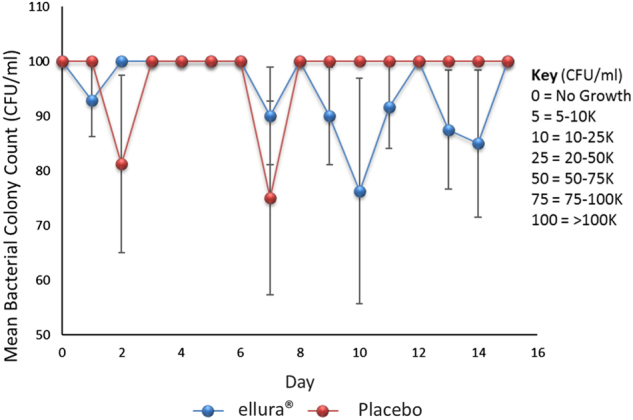
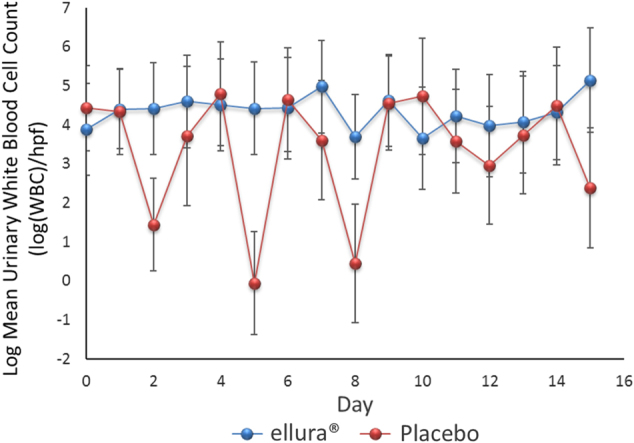
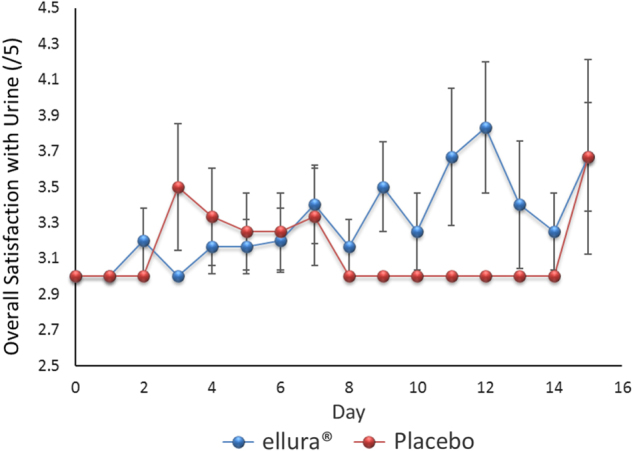
Methods: Participants with positive urine bacterial colonization (≥50 K CFU/ml) were randomized to once daily concentrated PACs or identical placebo and followed with daily (in-patients) or twice weekly (out-patients) urine cultures with colony forming units per milliliter (cfu/ml) range (bacteriuria), microscopic urine white blood cells per high-powered field (wbc/hpf) quantification (leukocyturia), and surveys assessing urine clarity, odor, color, sediment, and overall satisfaction. A repeated measure analysis of variance was used to compare treatment vs. control and evaluate serial trends.
Results: A total of 13 male participants (7 randomized to concentrated PACs, 6 to placebo) completed the trial. There was no significant decrease over the study period in colony forming units per milliliter (cfu/ml) or log(wbc/hpf) in the treatment vs. the control group. Patients receiving concentrated PACs rated the clarity, odor, color, sediment, and overall satisfaction of their urine as insignificantly improved compared to placebo.
Conclusions: Acutely, there was no reduction of bacteriuria and pyuria or improvement in subjective urine quality for SCI patients treated with daily concentrated PACs.
Conflict of interest statement
Compliance with ethical standardsThe authors declare that they have no conflict of interest.
Figures
References
-
- Hooton TM, Bradley SF, Cardenas DD, Colgan R, Geerlings SE, Rice JC, et al. Diagnosis, prevention, and treatment of catheter-associated urinary tract infection in adults: 2009 International Clinical Practice Guidelines from the Infectious Diseases Society of America. Clin Infect Dis. 2010;50:625–63. doi: 10.1086/650482. - DOI - PubMed
LinkOut - more resources
Full Text Sources
Other Literature Sources
