Comparative Study
. 2018 Jul 6;13(7):e0200202.
doi: 10.1371/journal.pone.0200202. eCollection 2018.

Characterization of two related Erwinia myoviruses that are distant relatives of the PhiKZ-like Jumbo phages

Affiliations
Comparative Study

Characterization of two related Erwinia myoviruses that are distant relatives of the PhiKZ-like Jumbo phages

Daniel K Arens et al. PLoS One. .

Abstract

Bacteriophages are a major force in the evolution of bacteria due to their sheer abundance as well as their ability to infect and kill their hosts and to transfer genetic material. Bacteriophages that infect the Enterobacteriaceae family are of particular interest because this bacterial family contains dangerous animal and plant pathogens. Herein we report the isolation and characterization of two jumbo myovirus Erwinia phages, RisingSun and Joad, collected from apple trees. These two genomes are nearly identical with Joad harboring two additional putative gene products. Despite mass spectrometry data that support the putative annotation, 43% of their gene products have no significant BLASTP hit. These phages are also more closely related to Pseudomonas and Vibrio phages than to published Enterobacteriaceae phages. Of the 140 gene products with a BLASTP hit, 81% and 63% of the closest hits correspond to gene products from Pseudomonas and Vibrio phages, respectively. This relatedness may reflect their ecological niche, rather than the evolutionary history of their host. Despite the presence of over 800 Enterobacteriaceae phages on NCBI, the uniqueness of these two phages highlights the diversity of Enterobacteriaceae phages still to be discovered.


Conflict of interest statement

JHG has a licensing agreement for a bacteriophage treatment of fire blight, for which Erwinia amylovora is the causative agent. Although the private donor is affiliated with a company that has licensed other Erwinia phages for commercial use, the funds provided for this specific study were a gift and the specific phages used in this study are not commercialized. There are no patents, products in development or marketed products to declare. This does not alter our adherence to PLOS ONE policies on sharing data and materials.

Figures

Fig 1
Fig 1
Transmission electron microscopy revealed (A) RisingSun and (B) Joad as Myoviridae.
Fig 2
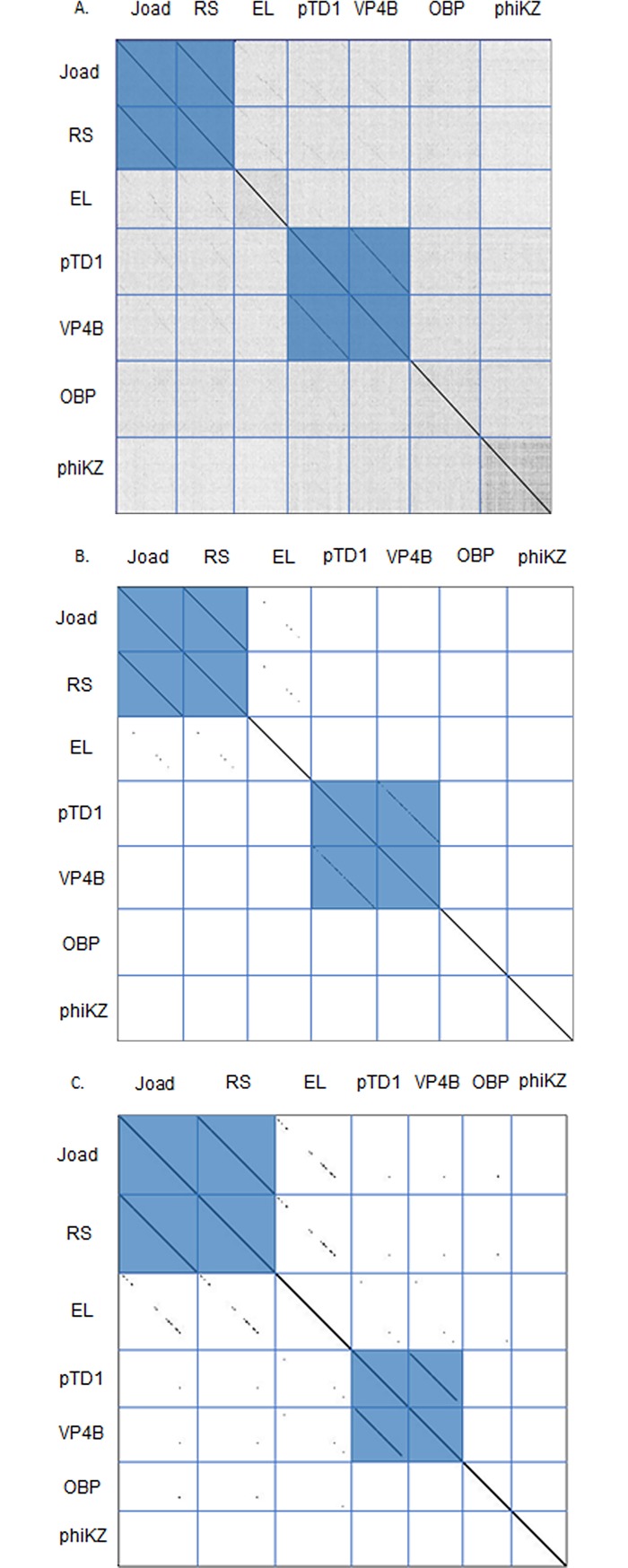
Fig 2. Dot plot comparisons for whole genome nucleotide sequences, MCP amino acid sequences, and terminase amino acid sequences of seven phages.
Blue horizontal and vertical lines were added to show genome boundaries. Erwinia phages: Joad, RisingSun (RS). Vibrio phages: pTD1, VP4B. Pseudomonas phages: EL, OBP, phiKZ. A) Nucleotide dot plot shows genome similarity between seven phage genomes. Two distinct clusters are shown, the Joad and RS cluster and the Vibrio phage cluster. B) Dot plot comparison for MCP amino acid sequences of seven phages. The clusters are shown between Joad and RS and between Vibrio phages pTD1 and VP4B. C) Dot plot comparison for terminase amino acid sequences of seven phages. Two clusters are formed between Joad and RS and between Vibrio phages pTD1 and VP4B.
Fig 3
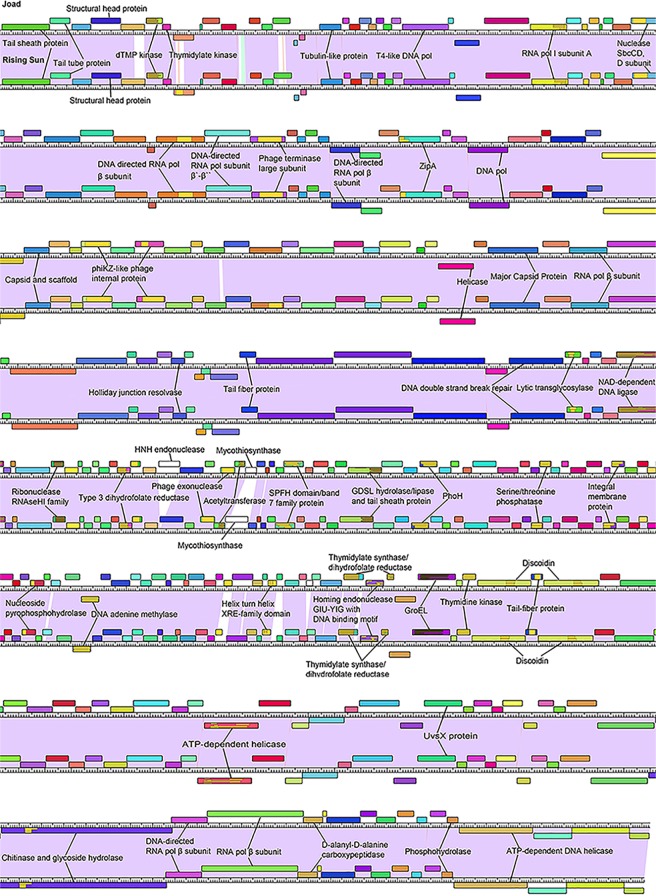
Fig 3. Whole genome comparison map between the phages Joad and RisingSun adapted from Phamerator [42].
Boxes on top of the genome ruler are genes expressed on the forward strand, while boxes under the genome ruler are genes expressed on the reverse strand. The colored boxes categorize homologous proteins. The purple between the two genomes represents high nucleotide similarity, while the white between the two nucleotides represents nucleotide variation. Annotated functions were collected through BLAST and Phamerator searches. Abbreviations include: Discoidin (Coagulation factor also known as F5/8 type C domain known as the discoidin (DS) domain family); GroEL (GroEL-like type 1 chaperonin protein); PhoH (Phosphate starvation protein PhoH); ZipA (cell division protein ZipA).
Fig 4
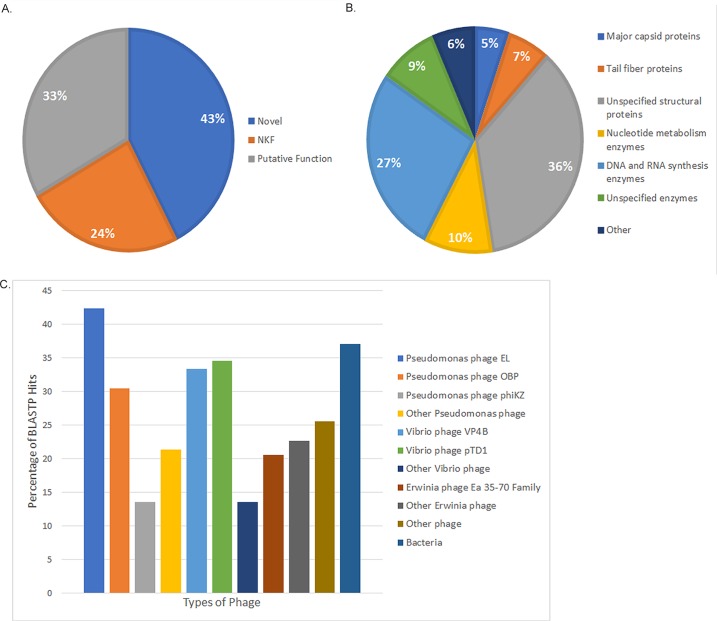
Fig 4. RisingSun and Joad are unique phages whose proteomes contain novel proteins.
A) Distribution of proteins in RisingSun based upon BLASTP hits that are novel, have no known function, and putative function. B) Putative gene ontology in RisingSun. C) Percentage of RisingSun gene products with BLASTP hits to proteins in other phages/organisms.
Fig 5
Fig 5. Predicted gp164 RisingSun functional protein modeling using RaptorX [51, 52].
A) This model reflects RisingSun gene product 164 aligned to the protein DNA adenine methylase [Bilophila sp. 4_1_30]: WP_009733305.1. Both proteins have similar folds, indicating that they may share the same function. B) This model reflects RisingSun gene product 85 aligned to the protein RNA polymerase beta subunit [Erwinia phage vB_EamM_RAY]: ANH51783.1. The protein folds diverge drastically, indicating that the two proteins may not share a similar function.
Fig 6
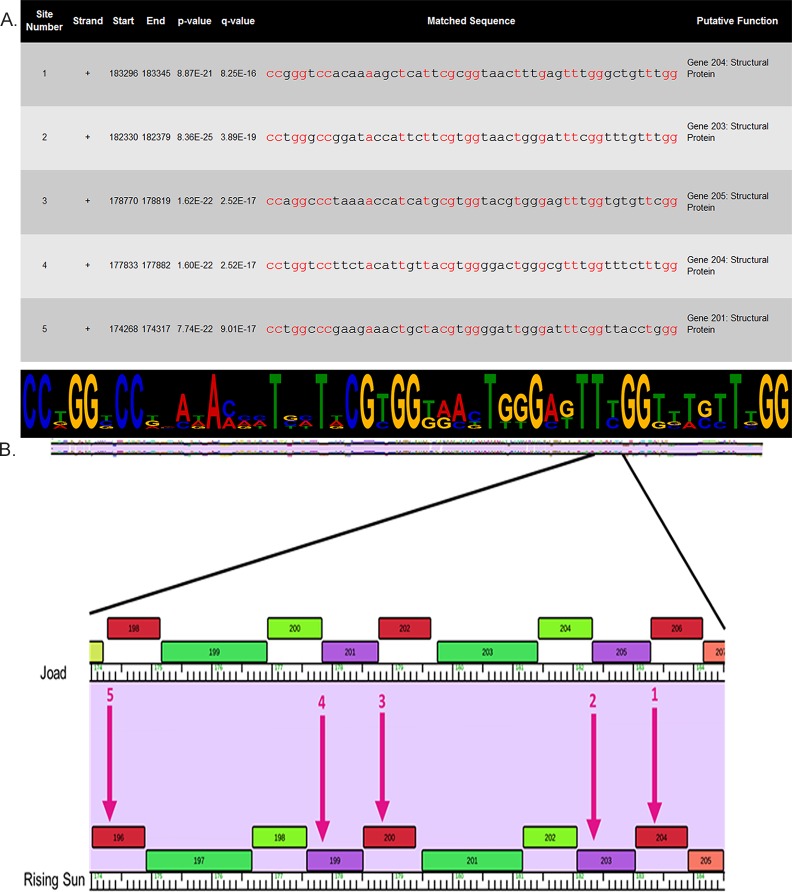
Fig 6. Locations of one motif discovered in five different structural genes.
A) Exact location of motif sites, p and q-values, sequence of motifs (conserved nucleotides shown in red), and putative gene function. Logogram shows motif sequence and larger letters represent frequent conservation. B) Arrows show approximate location of motif site. Genes were analyzed from the RisingSun annotation and thus locations are shown in the RisingSun phamerator map.

References

    1. Duckworth DH. WHO DISCOVERED BACTERIOPHAGE. Bacteriological Reviews. 1976;40(4):793–802. PubMed PMID: WOS:A1976CT29300001. - PMC - PubMed
    1. Grose JH, Casjens SR. Understanding the enormous diversity of bacteriophages: The tailed phages that infect the bacterial family Enterobacteriaceae. Virology. 2014;468:421–43. doi: 10.1016/j.virol.2014.08.024 PubMed PMID: WOS:000344434400046. - DOI - PMC - PubMed
    1. Cheetham BF, Katz ME. A ROLE FOR BACTERIOPHAGES IN THE EVOLUTION AND TRANSFER OF BACTERIAL VIRULENCE DETERMINANTS. Mol Microbiol. 1995;18(2):201–8. doi: 10.1111/j.1365-2958.1995.mmi_18020201.x PubMed PMID: WOS:A1995TG43300003. - DOI - PubMed
    1. Schicklmaier P, Schmieger H. FREQUENCY OF GENERALIZED TRANSDUCING PHAGES IN NATURAL ISOLATES OF THE SALMONELLA-TYPHIMURIUM COMPLEX. Appl Environ Microbiol. 1995;61(4):1637–40. PubMed PMID: WOS:A1995QQ36200074. - PMC - PubMed
    1. Faruque SM, Mekalanos JJ. Phage-bacterial interactions in the evolution of toxigenic Vibrio cholerae. Virulence. 2012;3(7):556–65. doi: 10.4161/viru.22351 PubMed PMID: WOS:000313285700003. - DOI - PMC - PubMed

Publication types

LinkOut - more resources