


Disease and outcome disparities in multiple myeloma: exploring the role of race/ethnicity in the Cooperative Group clinical trials
- PMID: 29980678
- PMCID: PMC6035273
- DOI: 10.1038/s41408-018-0102-7
Disease and outcome disparities in multiple myeloma: exploring the role of race/ethnicity in the Cooperative Group clinical trials
Abstract
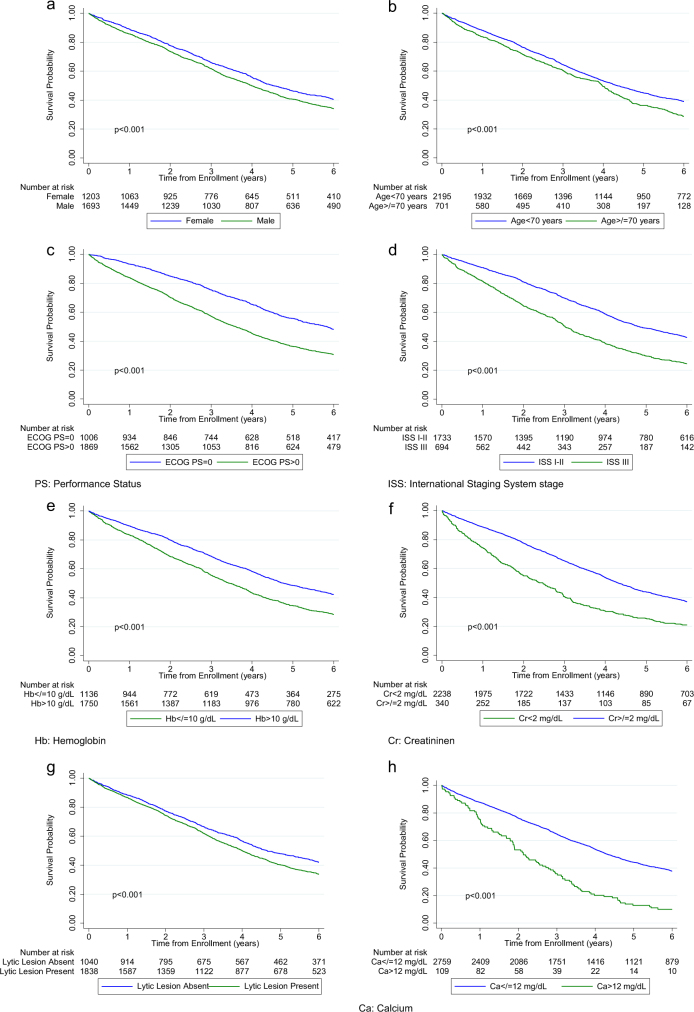
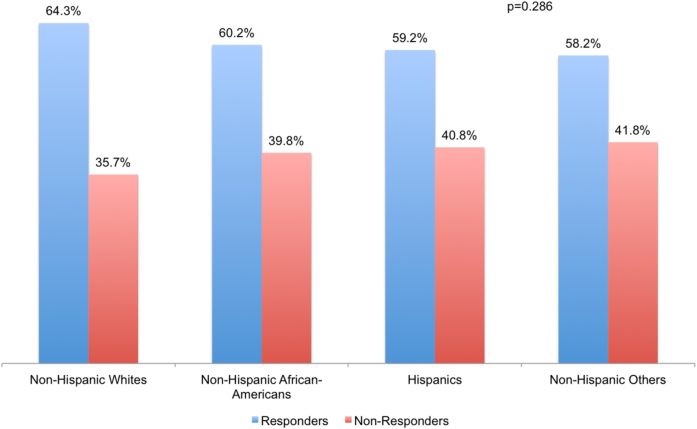
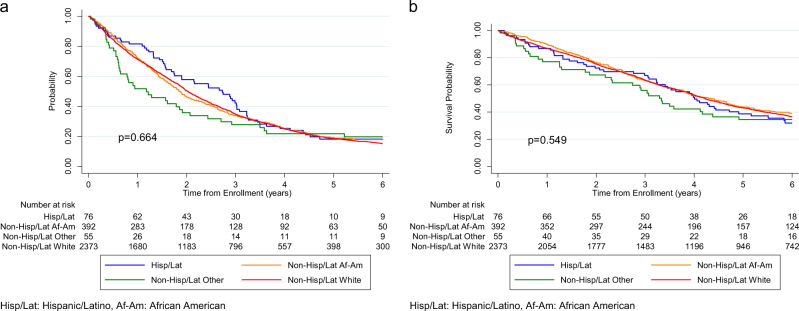
Multiple myeloma (MM) is an incurable hematologic malignancy with disparities in outcomes noted among racial-ethnic subgroups, likely due to disparities in access to effective treatment modalities. Clinical trials can provide access to evidence-based medicine but representation of minorities on therapeutic clinical trials has been dismal. We evaluated the impact of patient race-ethnicity in pooled data from nine large national cooperative group clinical trials in newly diagnosed MM. Among 2896 patients enrolled over more than two decades, only 18% were non-White and enrollment of minorities actually decreased in most recent years (2002-2011). African-Americans were younger and had more frequent poor-risk markers, including anemia and increased lactate dehydrogenase. Hispanics had the smallest proportion of patients on trials utilizing novel therapeutic agents. While adverse demographic (increased age) and clinical (performance status, stage, anemia, kidney dysfunction) factors were associated with inferior survival, patient race-ethnicity did not have an effect on objective response rates, progression-free, or overall survival. While there are significant disparities in MM incidence and outcomes among patients of different racial-ethnic groups, this disparity seems to be mitigated by access to appropriate therapeutic options, for example, as offered by clinical trials. Improved minority accrual in therapeutic clinical trials needs to be a priority.
Conflict of interest statement
The authors declare that they have no conflict of interest.
Figures
References
Publication types
MeSH terms
Grants and funding
- N01 CA004919/CA/NCI NIH HHS/United States
- U10 CA037981/CA/NCI NIH HHS/United States
- U10 CA004919/CA/NCI NIH HHS/United States
- U10 CA013650/CA/NCI NIH HHS/United States
- U10 CA021115/CA/NCI NIH HHS/United States
- U10 CA180835/CA/NCI NIH HHS/United States
- UG1 CA189974/CA/NCI NIH HHS/United States
- U10 CA180858/CA/NCI NIH HHS/United States
- U10 CA066636/CA/NCI NIH HHS/United States
- P50 CA186781/CA/NCI NIH HHS/United States
- UG1 CA189828/CA/NCI NIH HHS/United States
- U10 CA180790/CA/NCI NIH HHS/United States
- U10 CA180820/CA/NCI NIH HHS/United States
- U10 CA023318/CA/NCI NIH HHS/United States
- U10 CA180794/CA/NCI NIH HHS/United States
- U10 CA180888/CA/NCI NIH HHS/United States
- U10 CA180819/CA/NCI NIH HHS/United States
LinkOut - more resources
Full Text Sources
Other Literature Sources
Medical
