


Impact of long-term androgen deprivation therapy on PSMA ligand PET/CT in patients with castration-sensitive prostate cancer
- PMID: 29980832
- PMCID: PMC6182397
- DOI: 10.1007/s00259-018-4079-z
Impact of long-term androgen deprivation therapy on PSMA ligand PET/CT in patients with castration-sensitive prostate cancer
Abstract
Purpose: Since the introduction of PSMA PET/CT with 68Ga-PSMA-11, this modality for imaging prostate cancer (PC) has spread worldwide. Preclinical studies have demonstrated that short-term androgen deprivation therapy (ADT) can significantly increase PSMA expression on PC cells. Additionally, retrospective clinical data in large patient cohorts suggest a positive association between ongoing ADT and a pathological PSMA PET/CT scan. The present evaluation was conducted to further analyse the influence of long-term ADT on PSMA PET/CT findings.
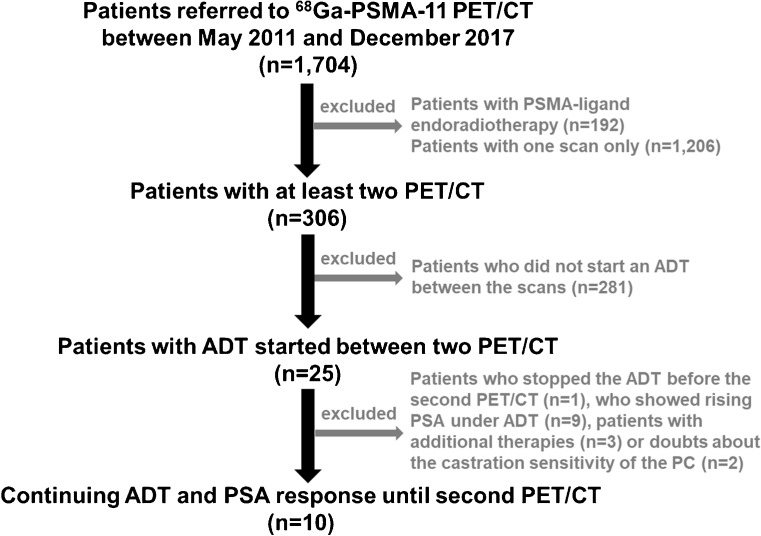
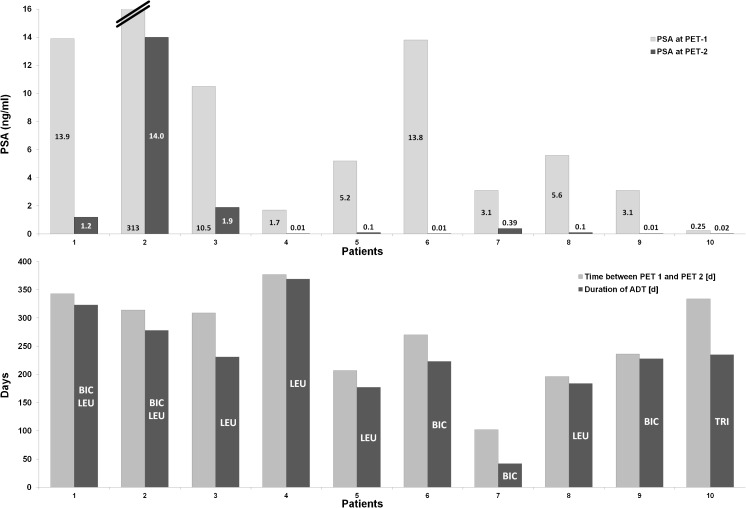
Methods: A retrospective analysis was performed of all 1,704 patients who underwent a 68Ga-PSMA-11 PET/CT scan at our institution from 2011 to 2017 to detect PC. Of 306 patients scanned at least twice, 10 had started and continued ADT with a continuous clinical response between the two PSMA PET/CT scans. These ten patients were included in the current analysis which compared the tracer uptake intensity and volume of PC lesions on PSMA PET/CT before and during ongoing ADT.
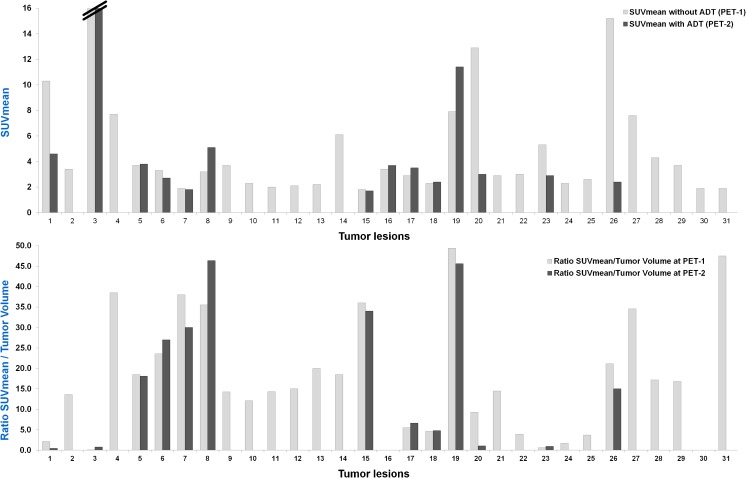
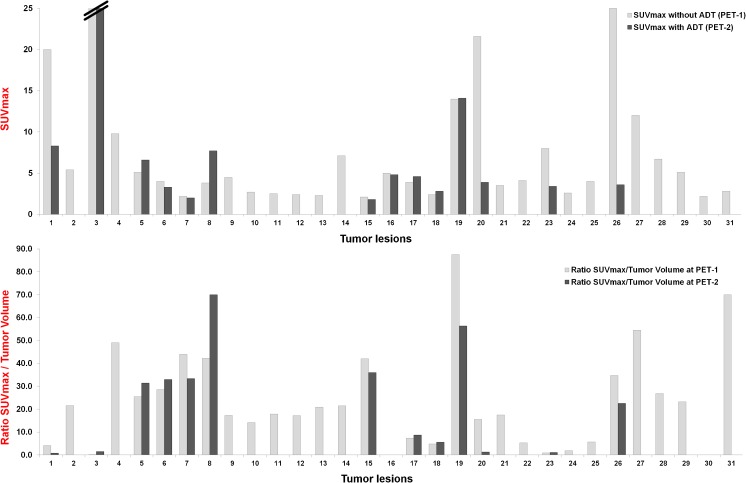
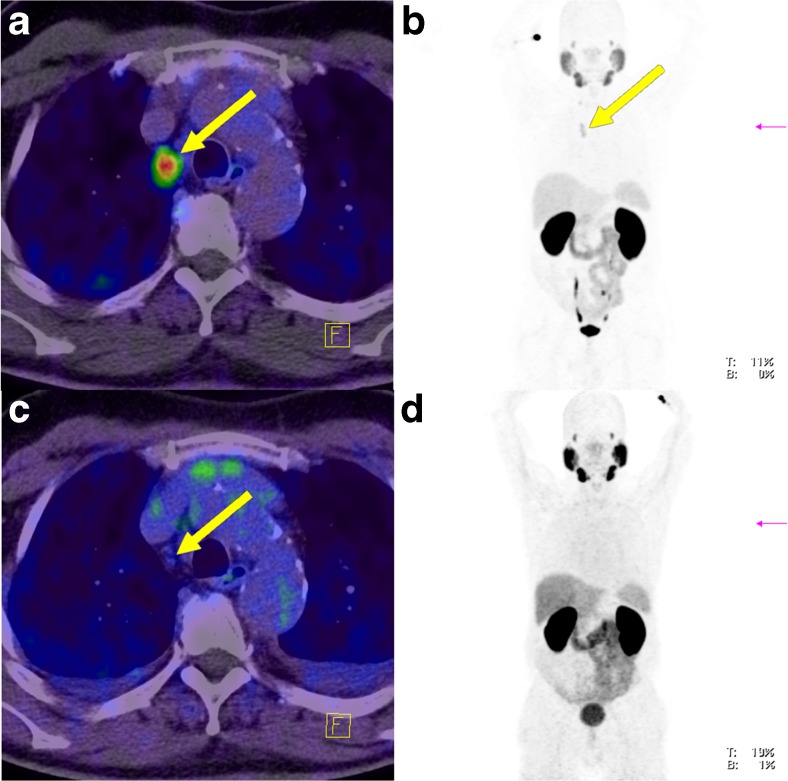
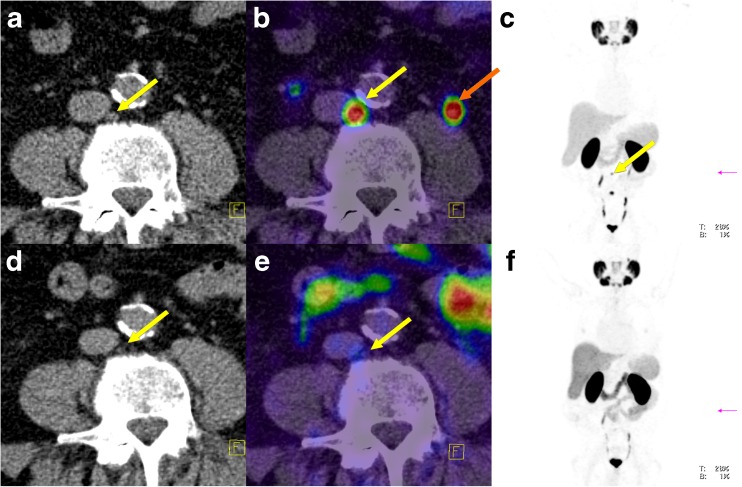
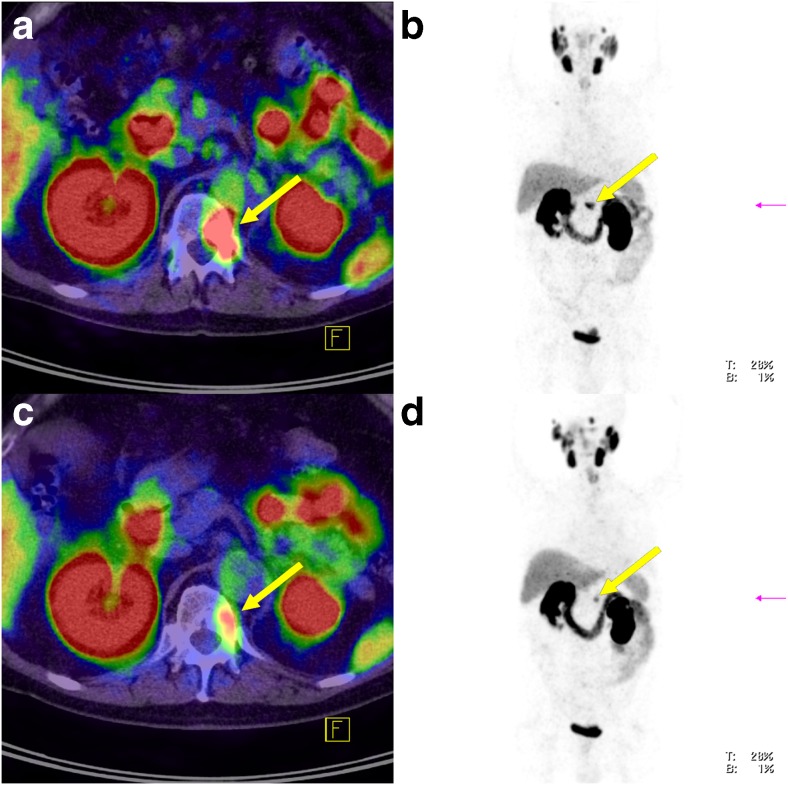
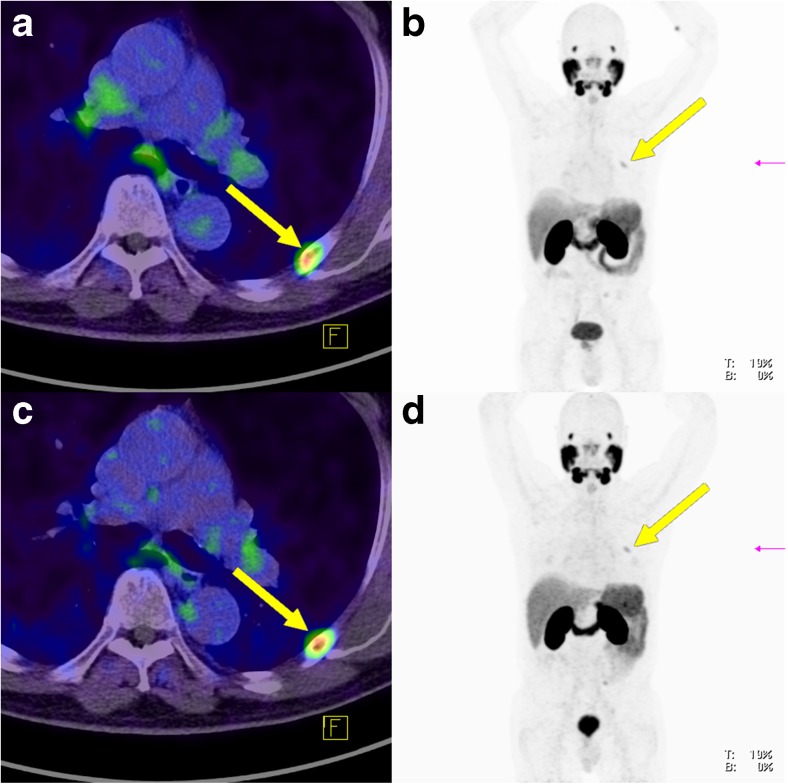
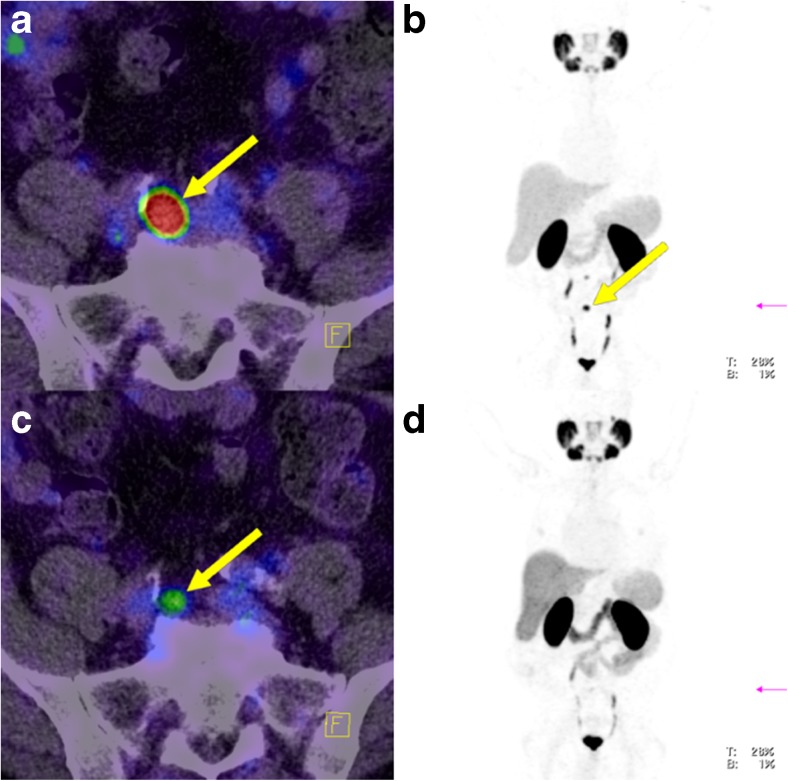
Results: Overall, 31 PC lesions were visible in all ten patients before initiation of ADT. However, during ongoing ADT (duration 42-369 days, median 230 days), only 14 lesions were visible in eight of the ten patients. The average tracer uptake values decreased in 71% and increased in 12.9% of the PC lesions. Of all lesions, 33.3% were still visible in six patients with a complete PSA response (≤0.1 ng/ml).
Conclusion: Continuous long-term ADT significantly reduces the visibility of castration-sensitive PC on PSMA PET/CT. If the objective is visualization of the maximum possible extent of disease, we recommend referring patients for PSMA PET/CT before starting ADT.
Keywords: 68Ga-PSMA-11; Androgen deprivation therapy; PET/CT; PSMA; Prostate cancer; Prostate-specific membrane antigen.
Conflict of interest statement
Ethical approval
All patients discussed in this article provided signed informed consent for the anonymized evaluation and publication of their data. All reported investigations were conducted in accordance with the principles of the Declaration of Helsinki and with our national regulations (German Medicinal Products Act, AMG section 13 2b). This evaluation was approved by the Ethics Committee of the University of Heidelberg (S-321-2012).
Conflicts of interest
None.
Figures
References
-
- Israeli RS, Powell CT, Corr JG, Fair WR, Heston WD. Expression of the prostate-specific membrane antigen. Cancer Res. 1994;54:1807–1811. - PubMed
-
- Afshar-Oromieh A, Malcher A, Eder M, Eisenhut M, Linhart HG, Hadaschik BA, et al. PET imaging with a [68Ga]gallium-labelled PSMA ligand for the diagnosis of prostate cancer: biodistribution in humans and first evaluation of tumour lesions. Eur J Nucl Med Mol Imaging. 2013;40:486–495. doi: 10.1007/s00259-012-2298-2. - DOI - PubMed
-
- Afshar-Oromieh A, Zechmann CM, Malcher A, Eder M, Eisenhut M, Linhart HG, et al. Comparison of PET imaging with a (68)Ga-labelled PSMA ligand and (18)F-choline-based PET/CT for the diagnosis of recurrent prostate cancer. Eur J Nucl Med Mol Imaging. 2014;41:11–20. doi: 10.1007/s00259-013-2525-5. - DOI - PMC - PubMed
MeSH terms
Substances
LinkOut - more resources
Full Text Sources
Other Literature Sources
Medical
Research Materials
Miscellaneous
