


Konzo: a distinct neurological disease associated with food (cassava) cyanogenic poisoning
- PMID: 29981837
- PMCID: PMC6626527
- DOI: 10.1016/j.brainresbull.2018.07.001
Konzo: a distinct neurological disease associated with food (cassava) cyanogenic poisoning
Abstract
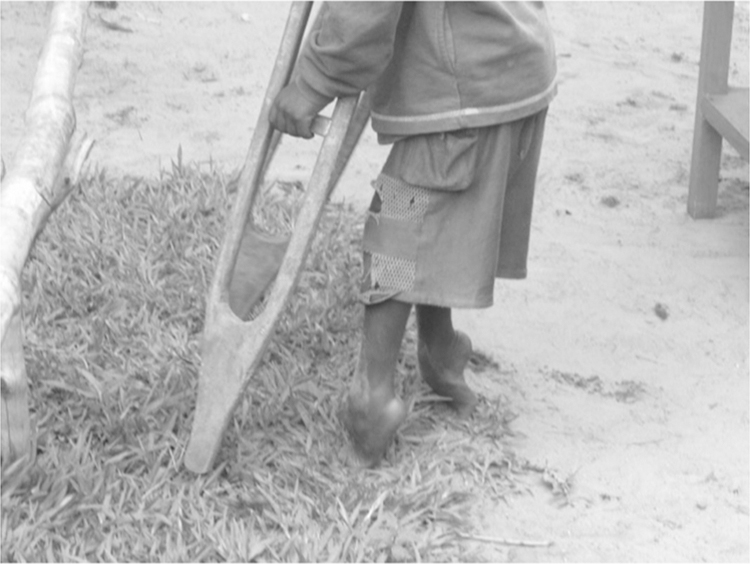
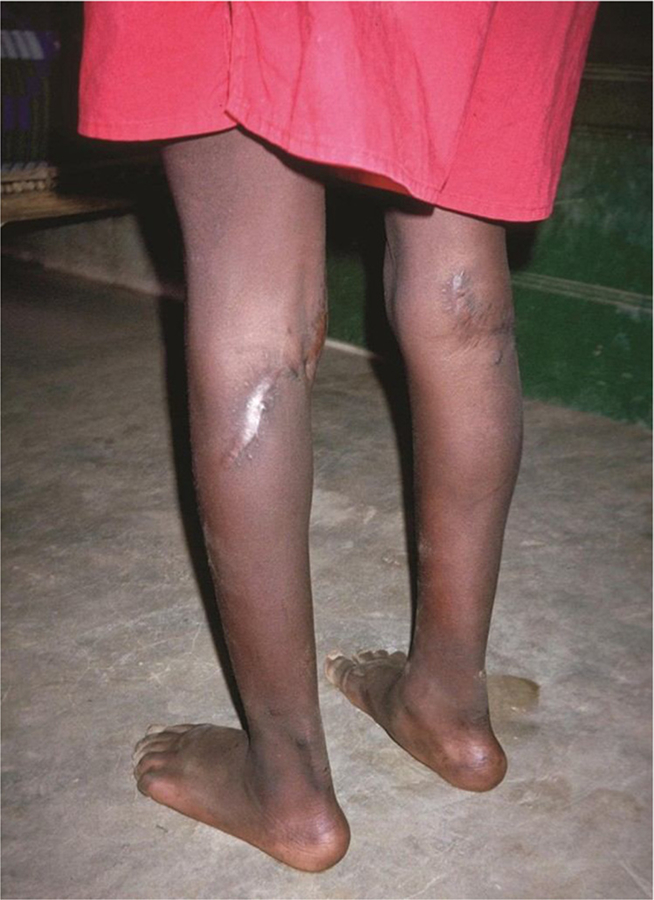
Epidemics of neurodegenerative diseases putatively caused by food toxins have been reported in the tropics with no clear understanding of their pathogenetic mechanisms. These diseases include the disease named Konzo that has been well documented in sub-Sahara Africa, mostly among children and women of childbearing age. Outbreaks of Konzo have occurred in the Democratic Republic of Congo, Mozambique, Tanzania, Central African Republic, Angola, Cameroun, and most recently in Zambia. The main clinical picture consists of a symmetrical, permanent and irreversible spastic paraparesis (motor neuron disease) with no signs of sensory or genitourinary impairments. Recently, cognitive impairments and neurodevelopmental delays have been reported among school-aged and very young children. The exact pathogenetic mechanisms of the disease remain unknown. Epidemiological studies consistently show an association between outbreaks of the disease and chronic dietary reliance on insufficiently processed cyanogenic cassava (manioc or tapioca). Biochemical and toxicological studies suggest that the metabolites of linamarin (α-Hydroxyisobutyronitrile β-D-glucopyranoside, the main cassava cyanogen), notably cyanide (mitochondrial toxin), thiocyanate (AMPA chaotropic agent), and cyanate (protein carbamoylating agent) may play an important role in the pathogenesis of Konzo. Experimental data suggest that thiol-redox and protein- folding mechanisms may also be perturbed. Factors of susceptibility including genetics, poor nutrition, poverty and dietary cyanogen exposure, or their interactions have been suggested. Serological studies have ruled out the role of retroviruses such as the human lymphotropic viruses HIV-I/II or HTLV-I/II. Because there is no cure for Konzo, prevention of the disease remains of paramount importance. Prospects for cognitive rehabilitation still need to be explored and tested.
Keywords: Cassava; Cognition; Cyanogen; Konzo; Motor neuron disease.
Copyright © 2018. Published by Elsevier Inc.
Conflict of interest statement
Conflicts of interest
The authors declare no conflicts of interest.
Figures
References
-
- Banea JPM, Bikangi N, Nahimana G, Nunga M, Tylleskar T, Rosling H, 1992. High prevalence of Konzo associated with a food shortage crisis in the Bandundu region of zaire. Ann. Soc. Belg. Med. Trop 72 (4), 295–309. - PubMed
-
- Banea JP, Nahimana G, Mandombi C, Bradbury JH, Denton IC, Kuwa N, 2012. Control of in DRC using the wetting method on cassava flour. Food Chem. Toxicol 50 (5), 1517–1523. - PubMed
-
- Banea JP, Bradbury JH, Mandombi C, Nahimana D, Denton IC, Kuwa N, et al., 2013Control of Konzo by detoxification of cassava flour in three villages in the Democratic Republic of Congo. Food Chem. Toxicol 60, 506–513. - PubMed
-
- Banea JP, Bradbury JH, Mandombi C, Nahimana D, Denton IC, Kuwa N, et al., 2014. Effectiveness of wetting method for control of Konzo and reduction of cyanide poisoning by removal of cyanogens from cassava flour. Food Nutr. Bull 35 (1), 28. - PubMed
-
- Berger JR, Sabet A, 2002. Infectious myelopathies. Semin. Neurol 22 (2), 133–142. - PubMed
Publication types
MeSH terms
Substances
Grants and funding
LinkOut - more resources
Full Text Sources
Other Literature Sources
