Review
. 2019 Sep 27;20(5):1836-1852.
doi: 10.1093/bib/bby054.

Trends in the development of miRNA bioinformatics tools

Affiliations
Review

Trends in the development of miRNA bioinformatics tools

Liang Chen et al. Brief Bioinform. .

Abstract

MicroRNAs (miRNAs) are small noncoding RNAs that regulate gene expression via recognition of cognate sequences and interference of transcriptional, translational or epigenetic processes. Bioinformatics tools developed for miRNA study include those for miRNA prediction and discovery, structure, analysis and target prediction. We manually curated 95 review papers and ∼1000 miRNA bioinformatics tools published since 2003. We classified and ranked them based on citation number or PageRank score, and then performed network analysis and text mining (TM) to study the miRNA tools development trends. Five key trends were observed: (1) miRNA identification and target prediction have been hot spots in the past decade; (2) manual curation and TM are the main methods for collecting miRNA knowledge from literature; (3) most early tools are well maintained and widely used; (4) classic machine learning methods retain their utility; however, novel ones have begun to emerge; (5) disease-associated miRNA tools are emerging. Our analysis yields significant insight into the past development and future directions of miRNA tools.

Keywords: bibliometric; bioinformatics tools; miRNA; ranking; text mining.


Figures

Figure 1.
Figure 1.
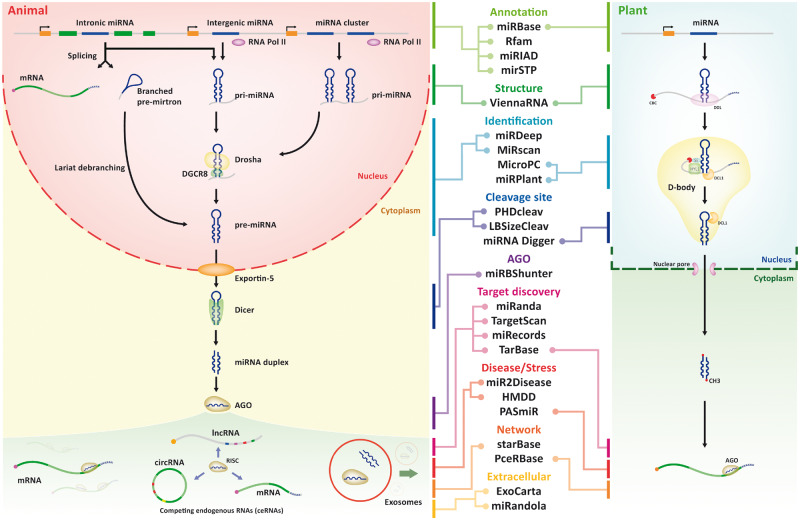
miRNA biogenesis of animal/plant and bioinformatics tools associated within each process. The canonical and non-canonical miRNA biogenesis pathways of animal/plant are shown in the side panels. Examples of bioinformatics tools cataloged by biogenesis process are listed in the middle.
Figure 2.
Figure 2.
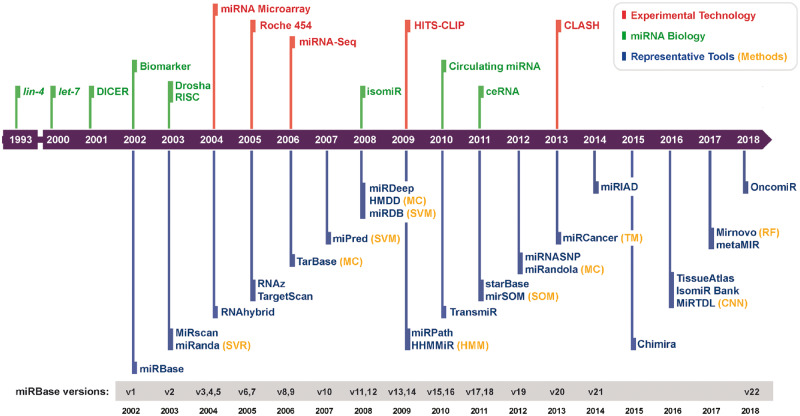
Historical time line of miRNA research. The development of experimental and computational aspects of miRNA is illustrated. Red, green, orange and blue marks the event concerning experimental technology, miRNA biology, computational technology and representative tools, respectively. On the bottom panel, versions of miRBase are listed. Symbols and abbreviations follow. miRNA biology: lin-4, the first miRNA to be discovered [23]; let-7, the first human miRNA to be discovered [24]; DICER, Dicer was found to be required for miRNA maturation [25, 26]; Biomarker, miRNAs dysregulated in tumor tissue and could be potential biomarker [27]; Drosha, Drosha was identified as the initiator of the miRNA maturation process [28]; RISC, the mechanism of the miRNA into the RISC complex was characterized [29, 30]; isomiR, as a new term defined [31]; Circulating miRNA, the presence of miRNAs in 12 human body fluids was examined [19]; and ceRNA, hypothesis of ceRNA [17]. Experimental technology: miRNA microarray, early microarray application to profile miRNA [32, 33]; Roche 454, the first commercially successful second-generation sequencing system developed by 454 Life Sciences [34]; miRNA-Seq, early NGS application to profile miRNA [33, 35]; High-throughput sequencing of RNA isolated by crosslinking immunoprecipitation (HITS-CLIP), identified interaction sites between miRNA and target mRNA by sequencing AGO protein–RNA complexes [36]; CLASH, identified miRNA–target RNA duplexes associated with AGO [37]. Methods: Random forest (RF) [38]; SVM [39]; Support Vector Regression (SVR) [40]; TM [41]; Manually Curated (MC); Hidden Markov Model (HMM) [42]; SOM [43]; Convolutional Neural Networks (CNN) [44]. The representative tools are described in the main text.
Figure 3.
Figure 3.
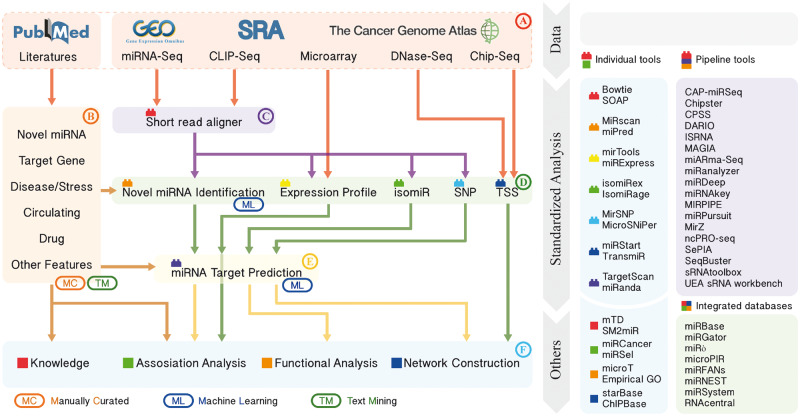
Standardized miRNA analysis workflow and examples of associated tools. The left panel with arrows shows the general bioinformatics miRNA analysis workflow, and the right panel shows the list of related tools. The tools are labeled with different colors and shapes corresponding to the same item on the left workflow. (A) Data sets download, (B) search of background knowledge, (C) read alignment, (D) identification and characterization of known and novel miRNAs, (E) target prediction and (F) downstream analysis.
Figure 4.
Figure 4.
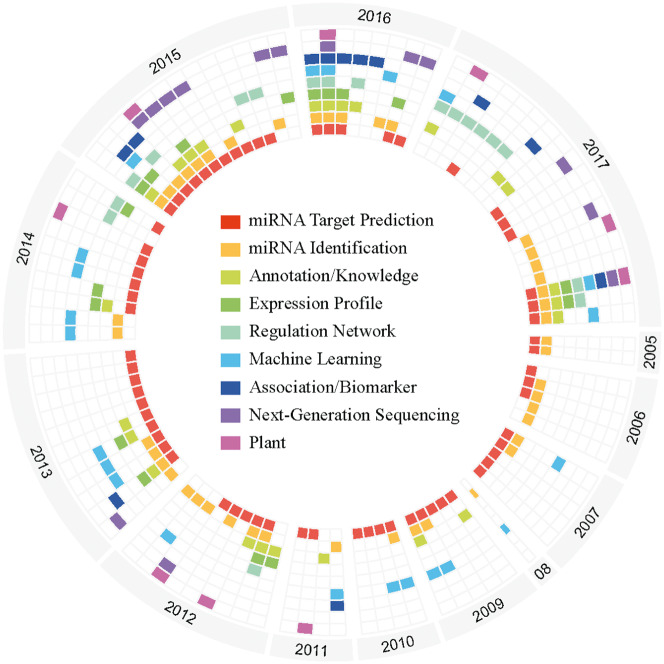
Circular graphic of miRNA identification and miRNA target prediction mentioned in reviews since 2005. Each sector contains the reviews published in each year. Each column represents a review paper, and each block with a different color indicates the specific topics in the review paper.
Figure 5.
Figure 5.
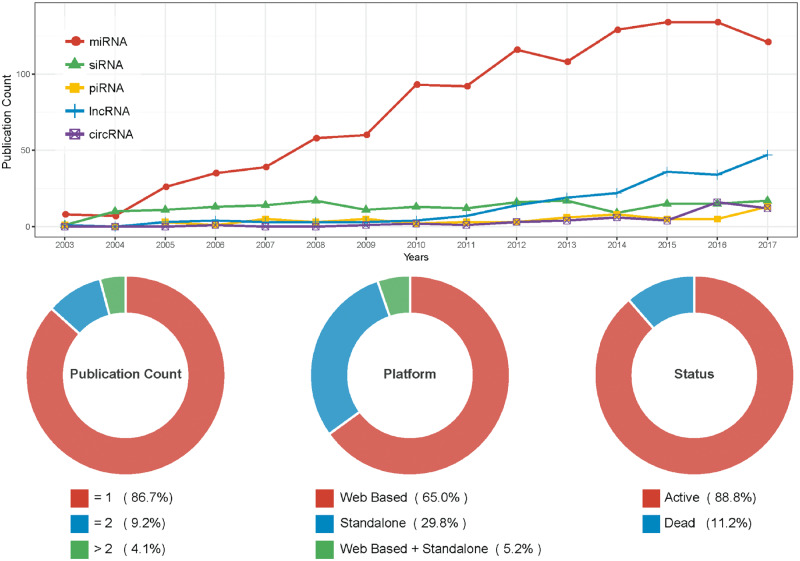
Statistic of miRNA tools. Line chart: The number of publications of ncRNA-related bioinformatics tools by year since 2003. Different colors represent different ncRNAs, including miRNA, siRNA, piRNA, lncRNA and circRNA. miRNA statistic data were extracted from miRToolsGallery [45], and other ncRNAs were collected with the same method as described in miRToolsGallery. Donut chart: the number of publications per tool, platforms of tools and status of tools are presented as percentages.
Figure 6.
Figure 6.
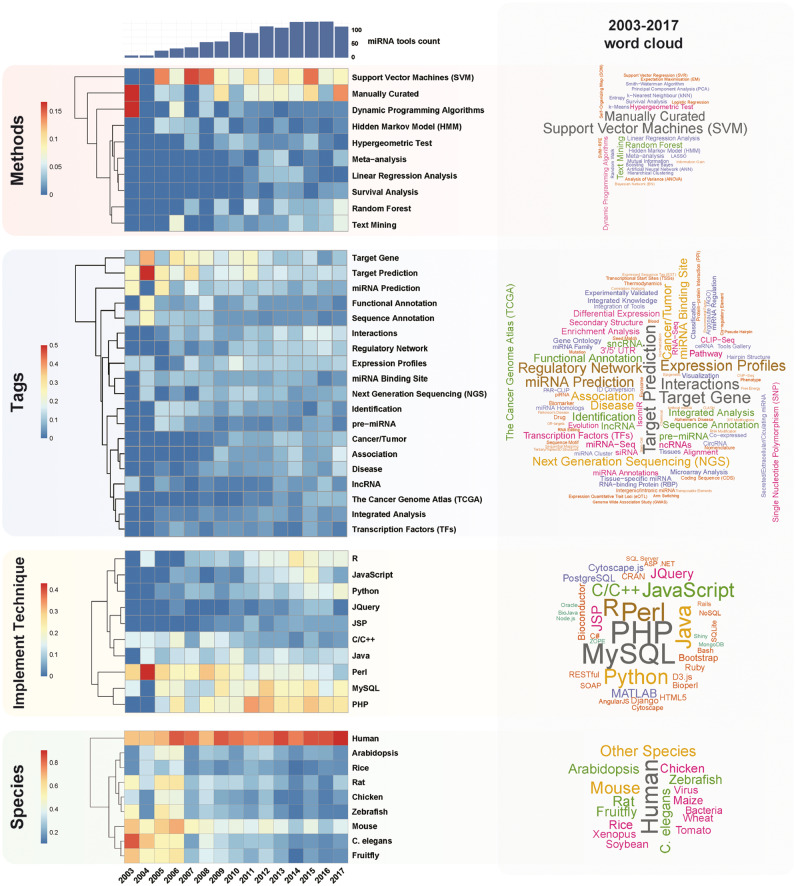
Tags statistic of miRNA tools based on miRToolsGallery. Heat map for top tags in each catalog, the values of which equal the term frequency divided by miRNA tool count in each year. The bar chart shows the miRNA tool count in each year. The word cloud shows the tag usage in each tag catalogs based on all data from 2003 to 2017. The full tags statistic table is available in Supplementary Table S3.
Figure 7.
Figure 7.
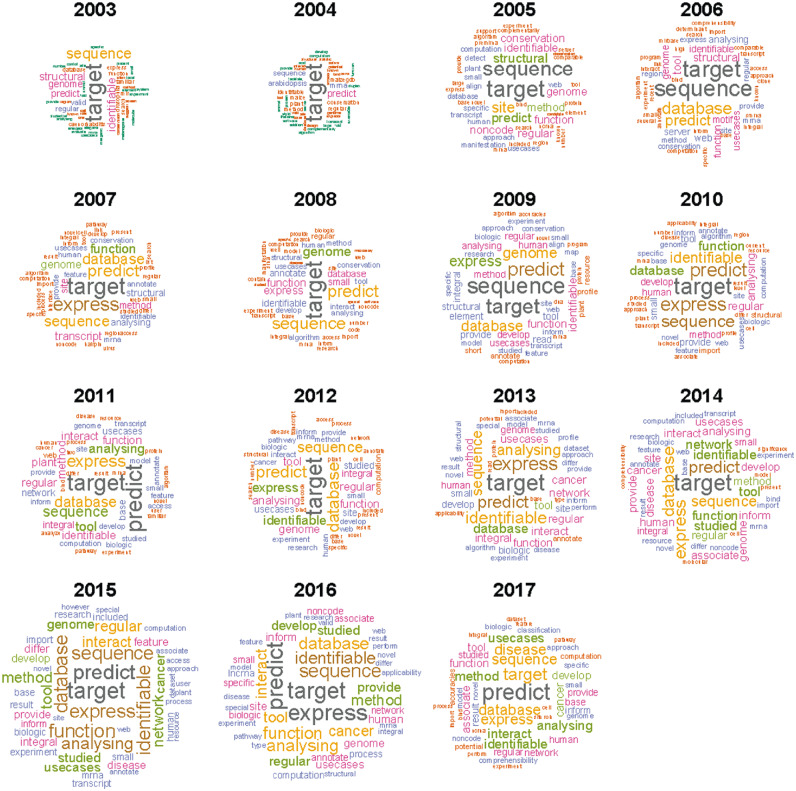
Word cloud based on literature in each year. The word cloud was generated based on the publication’s abstract and title. TM was performed by a CRAN R package ‘tm’ [135], and figure was drawn by the ‘wordcloud’ package [136]. ‘miRNA’ is the universal keyword in all the texts, so the ‘miRNA’ was removed from the word cloud.
Figure 8.
Figure 8.
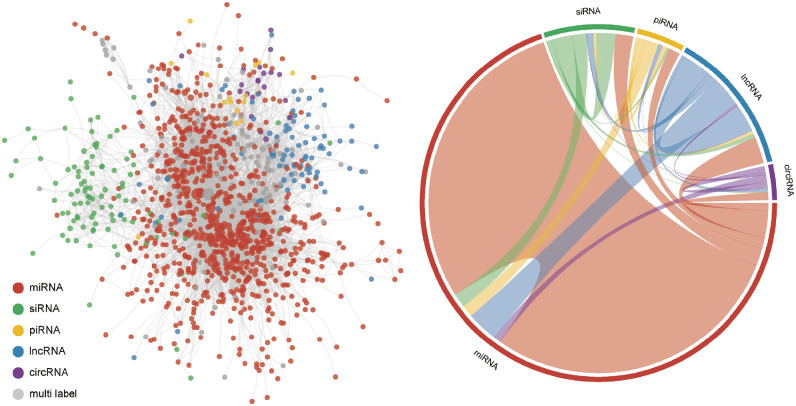
ncRNA tools interaction network. The left network was based on the tool’s publication citation. The miRNA tools publications were extracted from miRToolsGallery. Other ncRNA tools were retrieved from PubMed with the same criterion like miRToolsGallery. Gray nodes represented the tools that can be applied by up to two different ncRNA analyses. The right chord diagram represents the interaction strength of each different ncRNA tool. Different sectors represent different ncRNA tools, and the link represents the citation number from source to target (e.g. the red link means miRNA tools cited by other ncRNA tools.). The network was generated by a CRAN R package ‘igraph’ [171] and was drawn with a force-directed layout.

References

    1. Bartel DP. MicroRNAs: genomics, biogenesis, mechanism, and function. Cell 2004;116(2):281–97. - PubMed
    1. Krol J, Loedige I, Filipowicz W.. The widespread regulation of microRNA biogenesis, function and decay. Nat Rev Genet 2010;11(9):597–610. - PubMed
    1. Bartel DP. MicroRNAs: target recognition and regulatory functions. Cell 2009;136(2):215–33. - PMC - PubMed
    1. Okamura K, Hagen JW, Duan H, et al. The mirtron pathway generates microRNA-class regulatory RNAs in Drosophila. Cell 2007;130(1):89–100. - PMC - PubMed
    1. Altuvia Y, Landgraf P, Lithwick G, et al. Clustering and conservation patterns of human microRNAs. Nucleic Acids Res 2005;33(8):2697–706. - PMC - PubMed

Publication types