


Electroactive polymers for tissue regeneration: Developments and perspectives
- PMID: 29983457
- PMCID: PMC6029263
- DOI: 10.1016/j.progpolymsci.2018.01.001
Electroactive polymers for tissue regeneration: Developments and perspectives
Abstract
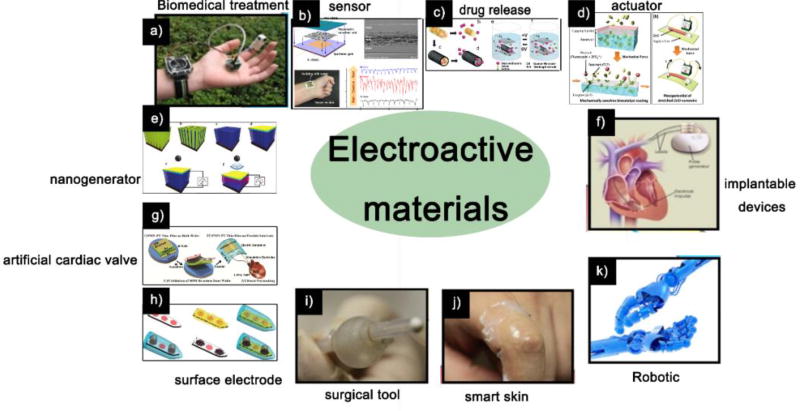
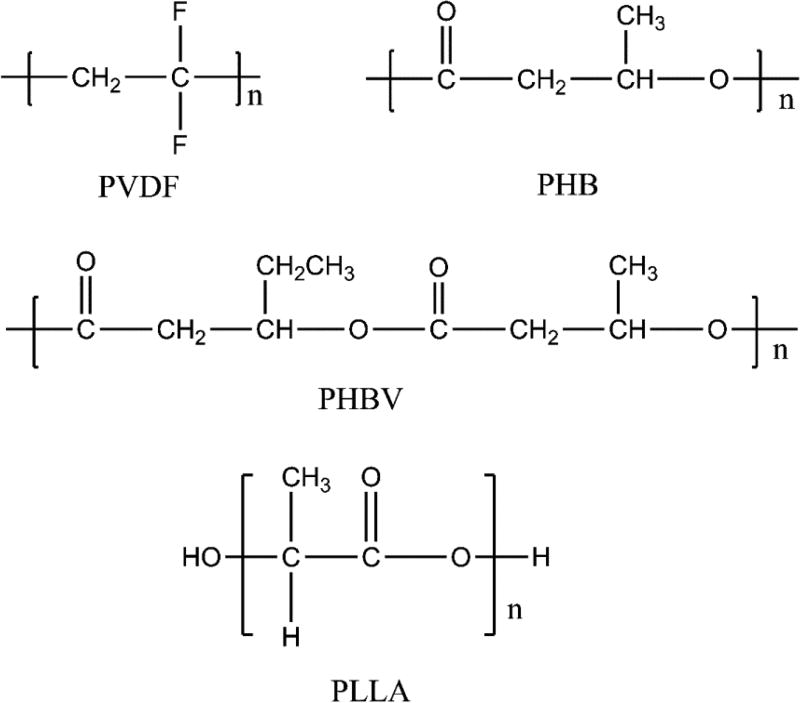
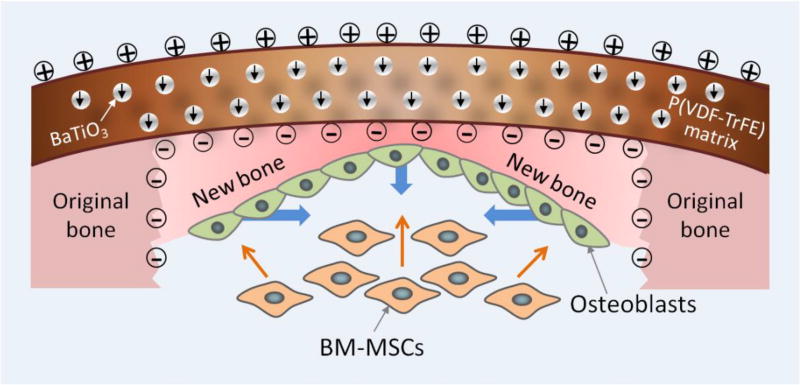
Human body motion can generate a biological electric field and a current, creating a voltage gradient of -10 to -90 mV across cell membranes. In turn, this gradient triggers cells to transmit signals that alter cell proliferation and differentiation. Several cell types, counting osteoblasts, neurons and cardiomyocytes, are relatively sensitive to electrical signal stimulation. Employment of electrical signals in modulating cell proliferation and differentiation inspires us to use the electroactive polymers to achieve electrical stimulation for repairing impaired tissues. Electroactive polymers have found numerous applications in biomedicine due to their capability in effectively delivering electrical signals to the seeded cells, such as biosensing, tissue regeneration, drug delivery, and biomedical implants. Here we will summarize the electrical characteristics of electroactive polymers, which enables them to electrically influence cellular function and behavior, including conducting polymers, piezoelectric polymers, and polyelectrolyte gels. We will also discuss the biological response to these electroactive polymers under electrical stimulation. In particular, we focus this review on their applications in regenerating different tissues, including bone, nerve, heart muscle, cartilage and skin. Additionally, we discuss the challenges in tissue regeneration applications of electroactive polymers. We conclude that electroactive polymers have a great potential as regenerative biomaterials, due to their ability to stimulate desirable outcomes in various electrically responsive cells.
Keywords: Conducting Polymers; Electroactive Polymers; Piezoelectric Polymers; Polyelectrolyte Gels; Tissue Regeneration.
Figures




References
-
- Jiang T, Carbone EJ, Lo KWH, Laurencin CT. Electrospinning of polymer nanofibers for tissue regeneration. Prog Polym Sci. 2015;46:1–24.
-
- Balint R, Cassidy NJ, Cartmell SH. Conductive polymers: towards a smart biomaterial for tissue engineering. Acta Biomater. 2014;10:2341–53. - PubMed
-
- Ohki T, Yamato M, Ota M, Takagi R, Kondo M, Kanai N, Okano T, Yamamoto M. Application of regenerative medical technology using tissue-engineered cell sheets for endoscopic submucosal dissection of esophageal neoplasms. Digest Endosc. 2015;27:182–8. - PubMed
-
- Mooney E, Mackle JN, Blond DJ, O'Cearbhaill E, Shaw G, Blau WJ, Barry FP, Barron V, Murphy JM. The electrical stimulation of carbon nanotubes to provide a cardiomimetic cue to MSCs. Biomaterials. 2012;33:6132–9. - PubMed
-
- Ghasemi-Mobarakeh L, Prabhakaran MP, Morshed M, Nasr-Esfahani MH, Baharvand H, Kiani S, Al-Deyab SS, Ramakrishna S. Application of conductive polymers, scaffolds and electrical stimulation for nerve tissue engineering. J Tissue Eng Regener Med. 2011;5:e17–35. - PubMed
Grants and funding
LinkOut - more resources
Full Text Sources
Other Literature Sources