


Tendon Excision Following Distal Semitendinosus Injury in the Elite Athlete: A Surgical Technique
- PMID: 29983661
- PMCID: PMC6031544
- DOI: 10.1007/s11420-017-9585-1
Tendon Excision Following Distal Semitendinosus Injury in the Elite Athlete: A Surgical Technique
Abstract
Background: Hamstring injuries can present in numerous forms, some of which can lead to persistent pain, loss of function, and delay in return to sport. Although most are treated conservatively, proximal and distal tendon avulsion injuries have become more commonly treated with surgery. Distal semitendinosus avulsion injuries have been largely reported in the elite athlete population. While conservative management has been utilized, failure in this group can significantly impact a future career.
Purpose: The purpose of the manuscript is to describe our approach of surgical tendon excision for distal semitendinosus injury in an elite athlete.
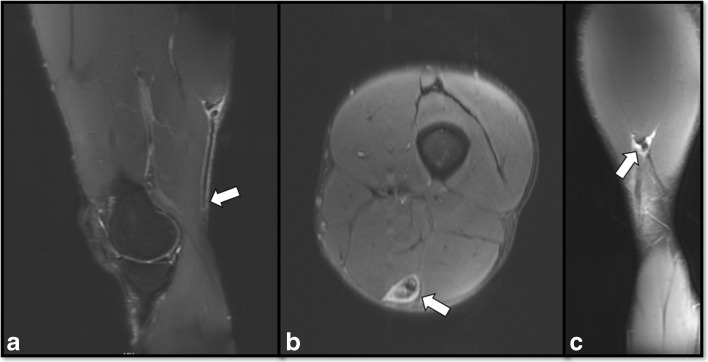
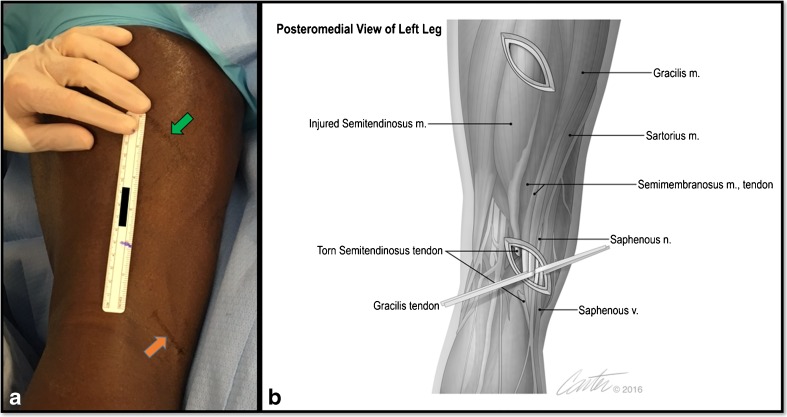
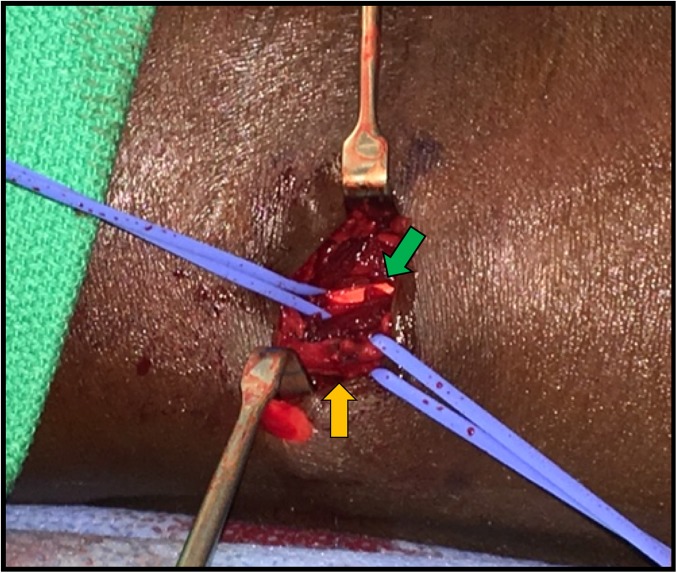
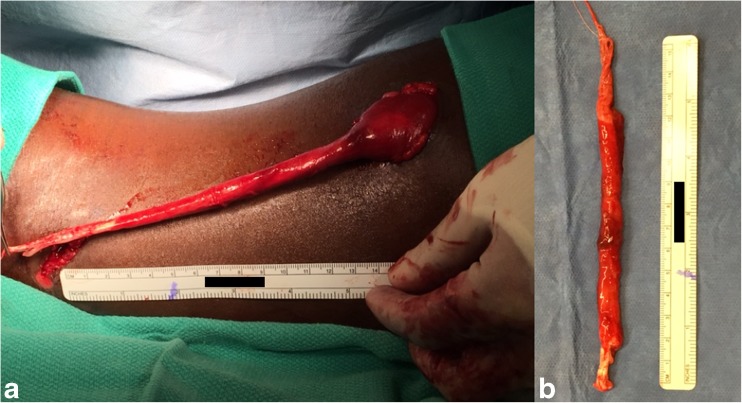
Methods: We highlight a two-incision technique to isolate the avulsed tendon, followed by exteriorization and tendon excision. In addition, we provide insight on clinical and imaging findings to help guide management.
Results: This technique provides a reliable and effective surgical option for managing these rare injuries of the distal semitendinosus, along with outlining rehabilitation goals in the postoperative period.
Conclusion: In this setting, we present a detailed surgical technique to excise the injured distal semitendinosus tendon to promote recovery and potentially allow for earlier return to play.
Keywords: Distal semitendinosus; Tendon excision.
Conflict of interest statement
Compliance with Ethical StandardsBrian J. Rebolledo, MD, and Timothy R. McAdams, MD, declare that they have no conflict of interest. Daniel E. Cooper, MD, reports receiving fees as a consultant from Arthrex and Stryker and royalties from Stryker.Exemption was granted from the Institutional Review Board at Stanford University, where the surgery was performed.Disclosure forms provided by the authors are available with the online version of this article.
Figures
References
LinkOut - more resources
Full Text Sources
Other Literature Sources
