Microstate and Omega Complexity Analyses of the Resting-state Electroencephalography
- PMID: 29985306
- PMCID: PMC6101748
- DOI: 10.3791/56452
Microstate and Omega Complexity Analyses of the Resting-state Electroencephalography
Abstract
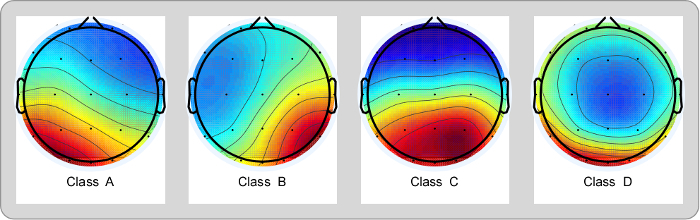
Microstate and omega complexity are two reference-free electroencephalography (EEG) measures that can represent the temporal and spatial complexities of EEG data and have been widely used to investigate the neural mechanisms in some brain disorders. The goal of this article is to describe the protocol underlying EEG microstate and omega complexity analyses step by step. The main advantage of these two measures is that they could eliminate the reference-dependent problem inherent to traditional spectrum analysis. In addition, microstate analysis makes good use of high time resolution of resting-state EEG, and the four obtained microstate classes could match the corresponding resting-state networks respectively. The omega complexity characterizes the spatial complexity of the whole brain or specific brain regions, which has obvious advantage compared with traditional complexity measures focusing on the signal complexity in a single channel. These two EEG measures could complement each other to investigate the brain complexity from the temporal and spatial domain respectively.
References
-
- Imperatori C, et al. Aberrant EEG functional connectivity and EEG power spectra in resting state post-traumatic stress disorder: a sLORETA study. Biol Psychol. 2014;102:10–17. - PubMed
-
- Gao F, et al. Altered Resting-State EEG Microstate Parameters and Enhanced Spatial Complexity in Male Adolescent Patients with Mild Spastic Diplegia. Brain Topogr. 2017;30(2):233–244. - PubMed
Publication types
MeSH terms
LinkOut - more resources
Full Text Sources
Other Literature Sources
Medical