


Starting Young: Trends in Opioid Therapy Among US Adolescents and Young Adults With Inflammatory Bowel Disease in the Truven MarketScan Database Between 2007 and 2015
- PMID: 29986015
- PMCID: PMC6692855
- DOI: 10.1093/ibd/izy222
Starting Young: Trends in Opioid Therapy Among US Adolescents and Young Adults With Inflammatory Bowel Disease in the Truven MarketScan Database Between 2007 and 2015
Abstract
Background: Opioids are commonly prescribed for relief in inflammatory bowel disease (IBD). Emerging evidence suggests that adolescents and young adults are a vulnerable population at particular risk of becoming chronic opioid users and experiencing adverse effects.
Objectives: This study evaluates trends in the prevalence and persistence of chronic opioid therapy in adolescents and young adults with IBD in the United States.
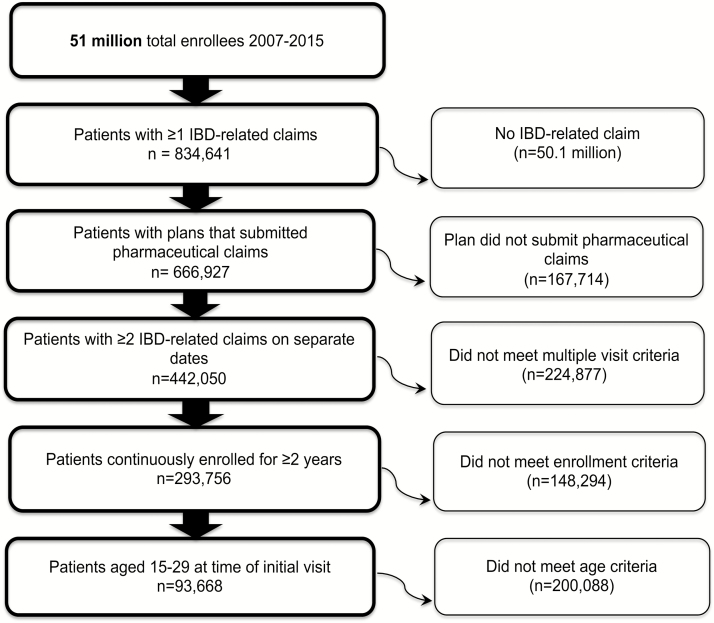
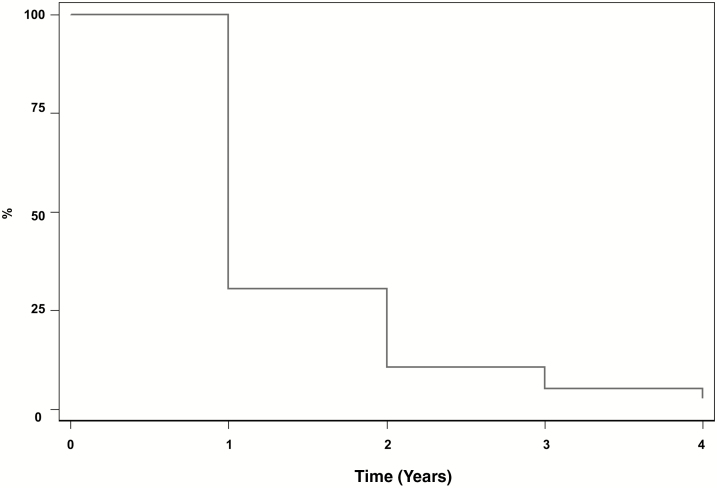
Method: A longitudinal retrospective cohort analysis was conducted with the Truven MarketScan Database from 2007 to 2015. Study subjects were 15-29 years old with ≥2 IBD diagnoses (Crohn's: 555/K50; ulcerative colitis: 556/K51). Opioid therapy was identified with prescription claims within the Truven therapeutic class 60: opioid agonists. Persistence of opioid use was evaluated by survival analysis for patients who remained in the database for at least 3 years following index chronic opioid therapy use.
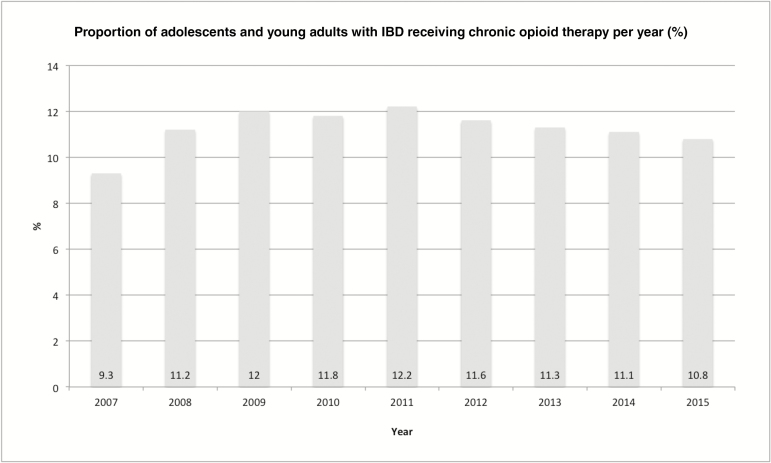
Results: In a cohort containing 93,668 patients, 18.2% received chronic opioid therapy. The annual prevalence of chronic opioid therapy increased from 9.3% in 2007 to 10.8% in 2015 (P < 0.01), peaking at 12.2% in 2011. Opioid prescriptions per patient per year were stable (approximately 5). Post hoc Poisson regression analyses demonstrated that the number of opioid pills dispensed per year increased with age and was higher among males. Among the 2503 patients receiving chronic opioid therapy and followed longitudinally, 30.5% were maintained on chronic opioid therapy for 2 years, and 5.3% for all 4 years.
Conclusion: Sustained chronic opioid use in adolescents and young adults with IBD is increasingly common, underscoring the need for screening and intervention for this vulnerable population.
Figures
References
-
- Hughes AW, Matthew, Lipari R, et al. Prescription drug use and misuse in the United States: results from the 2015 National Survey on Drug Use and Health. 2015. https://www.samhsa.gov/data/sites/default/files/NSDUH-FFR2-2015/NSDUH-FF.... Accessed January 8, 2017.
-
- Centers for Disease Control and Prevention. Wide-Ranging Online Data for Epidemiologic Research (WONDER). 2016. http://wonder.cdc.gov. Accessed January 8, 2017.
-
- Rudd R, Seth P, David F, et al. Increases in drug and opioid-involved overdose deaths—United States, 2010–2015. MMWR Morb Mortal Wkly Rep. 2016;65(5051):1445–1452. - PubMed
-
- Centers for Disease Control and Prevention. CDC ten leading causes of death and injury. 2015. https://www.cdc.gov/injury/wisqars/LeadingCauses.html. Accessed July 8, 2017.
-
- Buckley JP, Cook SF, Allen JK, et al. Prevalence of chronic narcotic use among children with inflammatory bowel disease. Clin Gastroenterol Hepatol. 2015;13(2):310–315.e2. - PubMed
Publication types
MeSH terms
Substances
Grants and funding
LinkOut - more resources
Full Text Sources
Other Literature Sources
Medical
