


The hygiene hypothesis: immunological mechanisms of airway tolerance
- PMID: 29986301
- PMCID: PMC6202673
- DOI: 10.1016/j.coi.2018.06.007
The hygiene hypothesis: immunological mechanisms of airway tolerance
Abstract
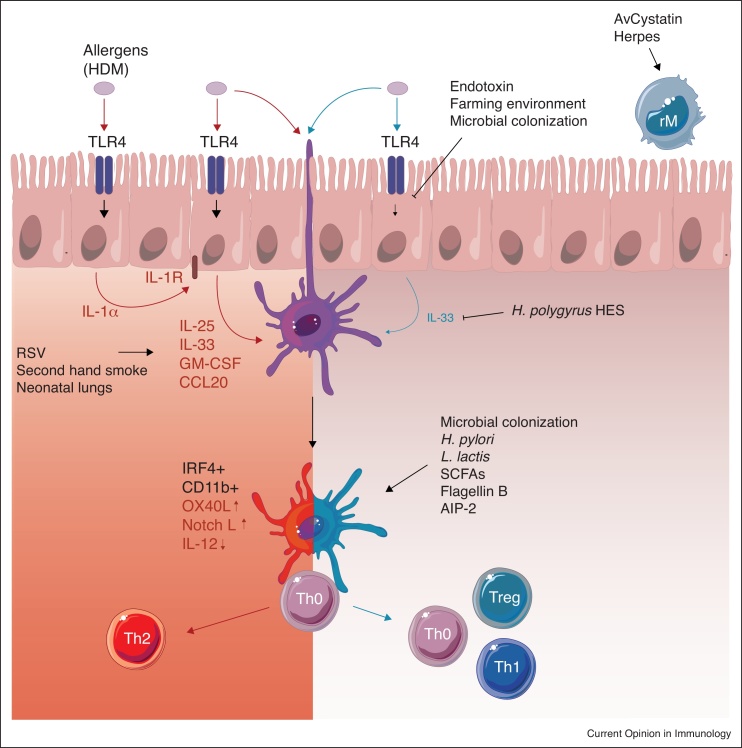
The hygiene hypothesis was initially proposed as an explanation for the alarming rise in allergy prevalence in the last century. The immunological idea behind this hypothesis was a lack of infections associated with a Western lifestyle and a consequential reduction in type 1 immune responses. It is now understood that the development of tolerance to allergens depends on microbial colonization and immunostimulatory environmental signals during early-life or passed on by the mother. These environmental cues are sensed and integrated by barrier epithelial cells of the lungs and possibly skin, which in turn instruct dendritic cells to regulate or impede adaptive T cell responses. Recent reports also implicate immunoregulatory macrophages as powerful suppressors of allergy by the microbiome. We propose that loss of adequate microbial stimulation due to a Western lifestyle may result in hypersensitive barrier tissues and the observed rise in type 2 allergic disease.
Copyright © 2018 The Authors. Published by Elsevier Ltd.. All rights reserved.
Figures
References
-
- Smits H.H., Hiemstra P.S., Prazeres da Costa C., Ege M., Edwards M., Garn H. Microbes and asthma: opportunities for intervention. J Allergy Clin Immunol. 2016;137:690–697. - PubMed
-
- McSorley H.J., Blair N.F., Smith K.A., McKenzie A.N., Maizels R.M. Blockade of IL-33 release and suppression of type 2 innate lymphoid cell responses by helminth secreted products in airway allergy. Mucosal Immunol. 2014;7:1068–1078. - PMC - PubMed
-
Evidence of very early immunomodulation by a soluble parasite product.H. polygyrus excretory/secretory (HES) products were shown to block early Alternaria-induced IL-33 release by epithelial cells, and to strongly suppress the innate eosinophilia and ILC2 response. In an OVA asthma model using Alternaria as an adjuvant, HES also inhibited adaptive type 2 responses. The observation that parasites release products that block early epithelial IL-33 release, probably to inhibit the host’s anti-parasite immune responses, affirms the importance of this process in the development of type 2 immunity.
Publication types
MeSH terms
LinkOut - more resources
Full Text Sources
Other Literature Sources
Medical
