


Incidence and demographics of giant cell tumor of bone in The Netherlands: First nationwide Pathology Registry Study
- PMID: 29987945
- PMCID: PMC6202770
- DOI: 10.1080/17453674.2018.1490987
Incidence and demographics of giant cell tumor of bone in The Netherlands: First nationwide Pathology Registry Study
Abstract
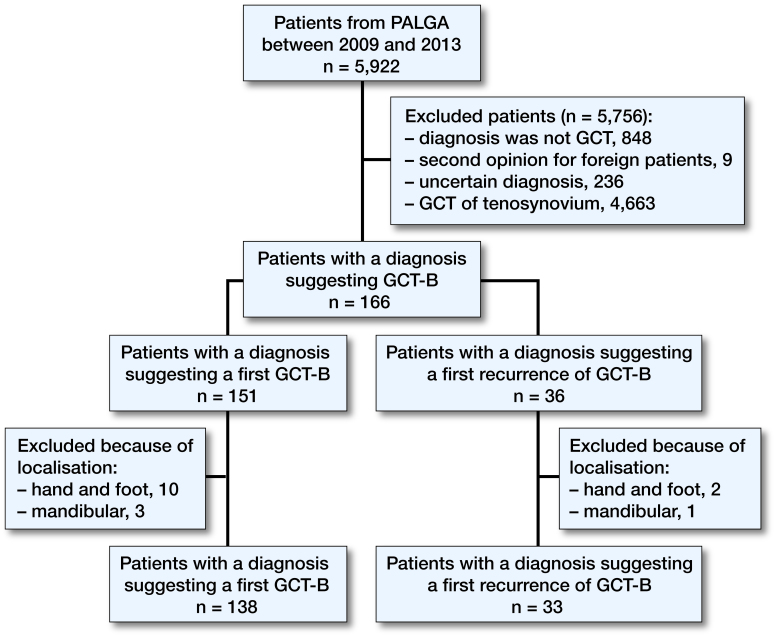
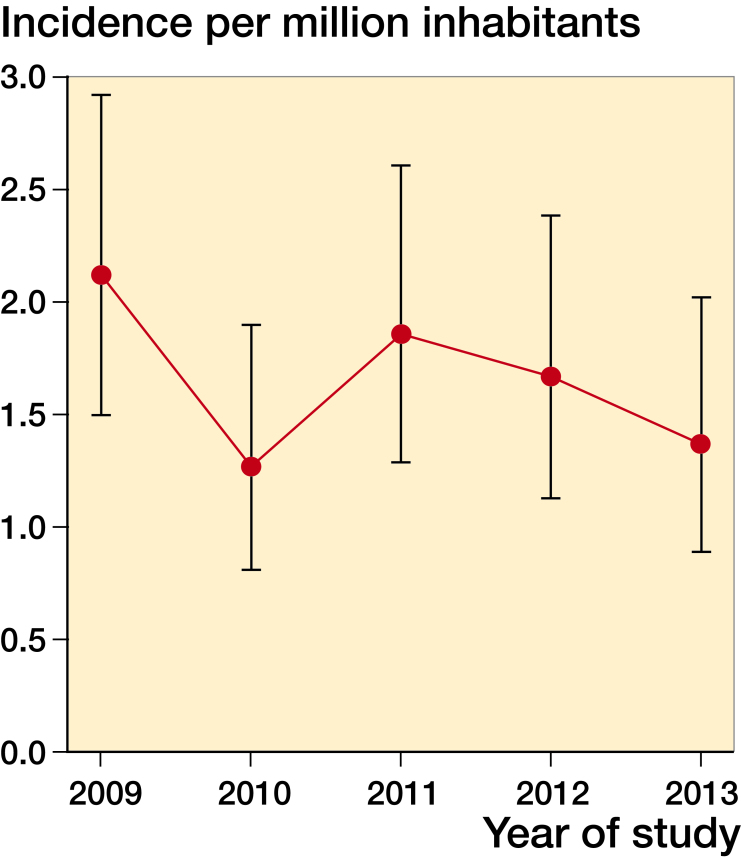
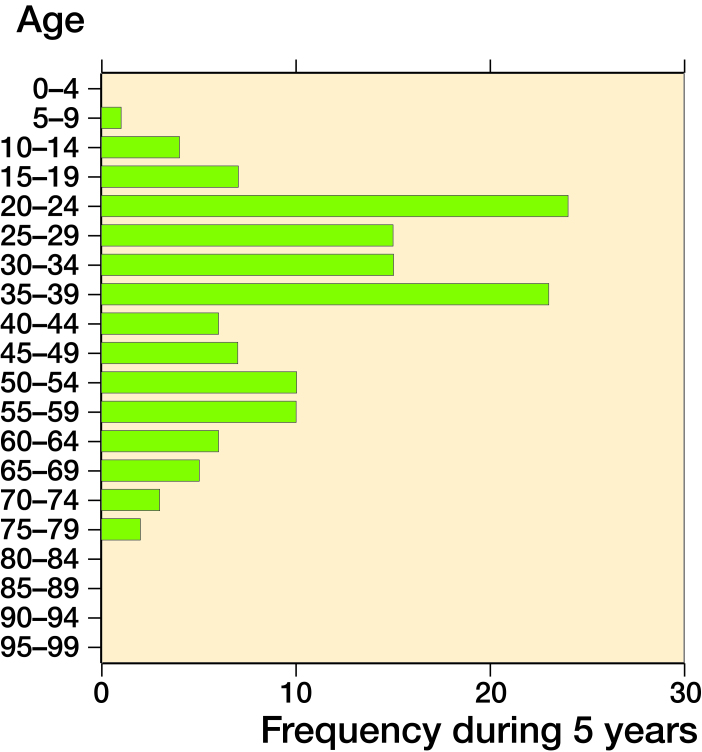
Background and purpose - Giant cell tumors of bone (GCT-B) are rare, locally aggressive tumors characterized by an abundance of giant cells. Incidence studies for GCT-B are rare. This is the first study using a fully automated 100% covering pathology database, the nationwide Dutch Pathology Registry (17 million inhabitants), PALGA, to calculate incidence rates for GCT-B. Patients and methods - From PALGA, all pathology excerpts were retrieved for patients diagnosed with GCT-B, giant cell tumors of tenosynovium, and giant cell tumors of soft tissue between January 1, 2009 and December 31, 2013. The incidence of GCT-B was calculated. Results - In total, 8,156 excerpts of 5,922 patients were retrieved; these included 138 first GCT-B diagnosis. For GCT-B the incidence was 1.7 per million inhabitants per year with a male to female ratio of 1:1.38 and a median age of 35 years (9-77). Most common localization was the femur (35%), followed by the tibia (18%). No differences in localization according to age and sex were found. The incidence rate of local recurrence was 0.40 per million inhabitants per year. Interpretation - This is the first nationwide study reporting the incidence of GCT-B, based on a nationwide pathology database with 100% coverage of pathology departments. Current incidence calculations are based only on doctor-driven registries. We confirmed that GCT-B is a rare disease with an incidence that is slightly higher than previously published. The relatively young median age of patients and the high incidence of recurrence stresses the importance of developing more effective treatments for this disease.
Figures
References
-
- Ahmad O B, Boschi-Pinto C, Lopez A D, Murray C J L, Lozano R, Inoue M. Age standardization of rates: a new WHO standard. Geneva: WHO; 2001.
-
- Athanasou N A, Bansal M, Forsyth R, Reid R P, Sapi Z. Giant cell tumour of bone In: (Fletcher C D, Bridge J A, Hogendoorn P C, Mertens F, eds.) WHO classification of tumours of soft tissue and bone. Lyon: IARC; 2013. pp. 321–4.
MeSH terms
LinkOut - more resources
Full Text Sources
Other Literature Sources
Medical