


Leucine competes with kynurenine for blood-to-brain transport and prevents lipopolysaccharide-induced depression-like behavior in mice
- PMID: 29988087
- PMCID: PMC6326900
- DOI: 10.1038/s41380-018-0076-7
Leucine competes with kynurenine for blood-to-brain transport and prevents lipopolysaccharide-induced depression-like behavior in mice
Abstract
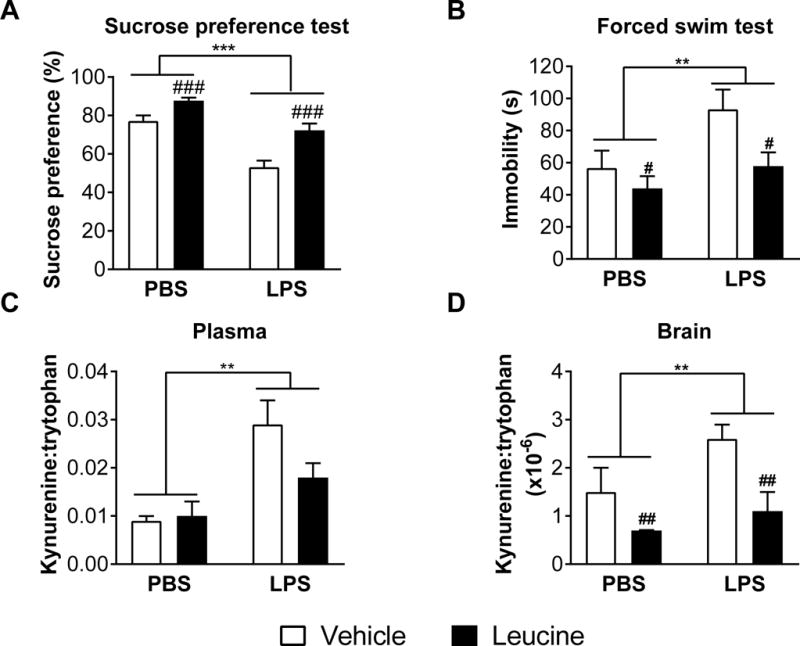
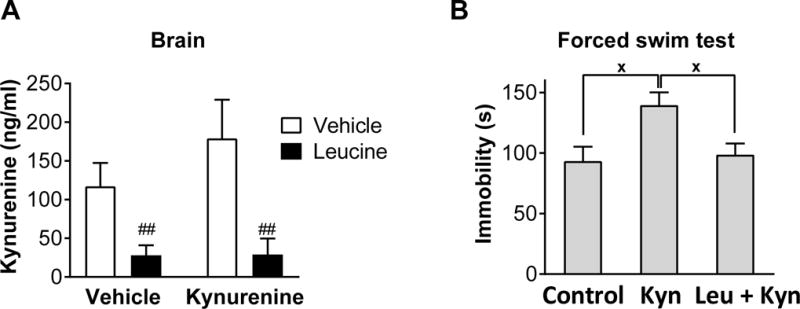
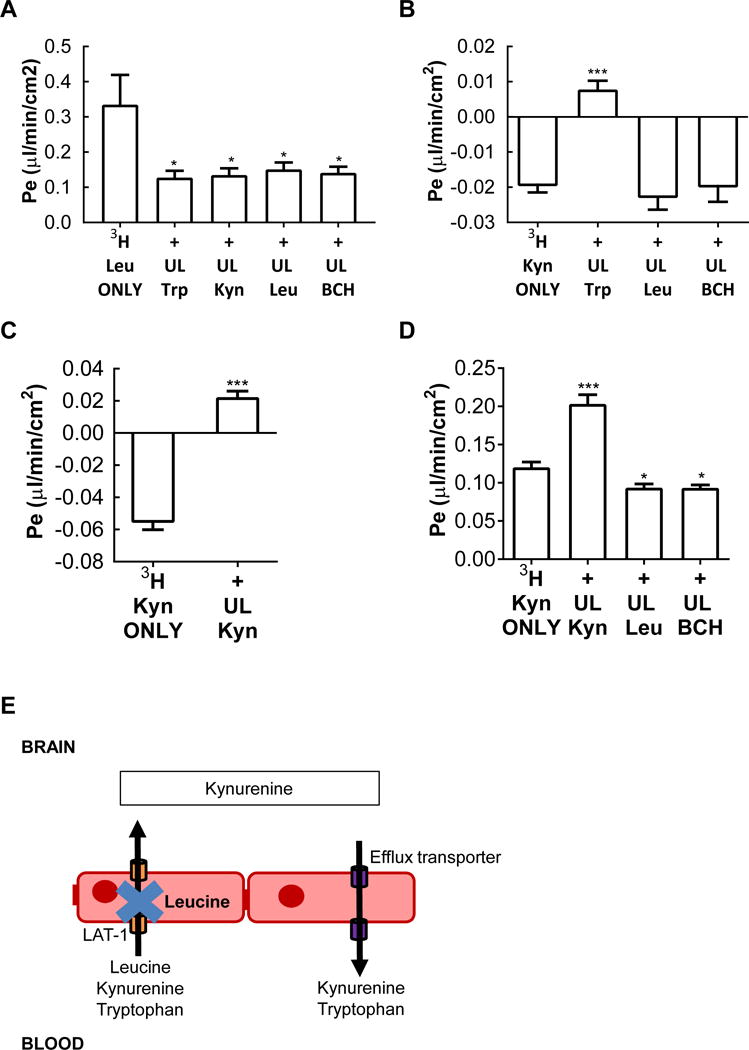
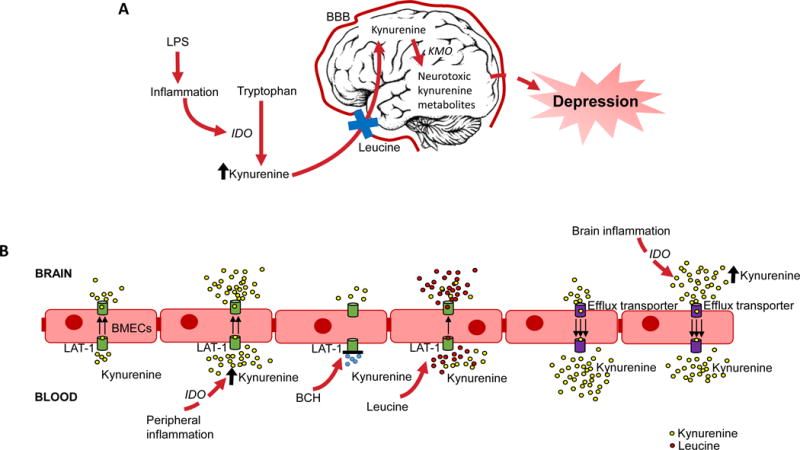
Inflammation activates indoleamine 2,3-dioxygenase (IDO) which metabolizes tryptophan into kynurenine. Circulating kynurenine is transported into the brain by the large amino transporter LAT1 at the level of the blood-brain barrier. We hypothesized that administration of leucine that has a high affinity for LAT1 should prevent the entry of kynurenine into the brain and attenuate the formation of neurotoxic kynurenine metabolites. To test whether leucine could prevent inflammation-induced depression-like behavior, mice were treated with lipopolysaccharide (LPS, 0.83 mg/kg IP) or saline and treated with L-leucine (50 mg/kg, IP) or vehicle administered before and 6 h after LPS. Depression-like behavior was measured by increased duration of immobility in the forced swim test and decreased sucrose preference. Leucine decreased brain kynurenine levels, blocked LPS-induced depression-like behavior and had antidepressant-like effects in control mice. Leucine had no effect of its own on sickness behavior and neuroinflammation. To confirm that leucine acts by interfering with the transport of kynurenine into the brain, mice were injected with L-leucine (300 mg/kg, IP) immediately before kynurenine (33 mg/kg IP) and brain kynurenine and depression-like behavior were measured 3 h later. Leucine did prevent the entry of exogenous kynurenine into the brain and abrogated depression-like behavior measured by increased duration of immobility in the forced swim test. Additional experiments using an in vitro model of the blood-brain barrier confirmed that kynurenine competes with leucine at the level of the amino acid transporter LAT1 for brain uptake. These experiments also revealed that efflux was the dominant direction of kynurenine transport and was largely independent of LAT1 and leucine, which explains why leucine could block brain uptake of kynurenine without affecting brain clearance. These findings demonstrate that leucine has antidepressant properties vis-à-vis inflammation-induced depression and one mechanism for this is by blocking the ability of kynurenine to enter the brain.
Conflict of interest statement
CONFLICT OF INTEREST:
Dr. Dantzer has received honoraria from Danone Nutricia Research, France, that are not related to the work presented in this article. All other authors declare no conflict of interest.
Figures
References
-
- Walker AK, Budac DP, Bisulco S, Lee AW, Smith RA, Beenders B, et al. NMDA receptor blockade by ketamine abrogates lipopolysaccharide-induced depressive-like behavior in C57BL/6J mice. Neuropsychopharmacology: official publication of the American College of Neuropsychopharmacology. 2013;38(9):1609–16. - PMC - PubMed
-
- Bonaccorso S, Marino V, Puzella A, Pasquini M, Biondi M, Artini M, et al. Increased depressive ratings in patients with hepatitis C receiving interferon-alpha-based immunotherapy are related to interferon-alpha-induced changes in the serotonergic system. Journal of clinical psychopharmacology. 2002;22(1):86–90. - PubMed
-
- Capuron L, Neurauter G, Musselman DL, Lawson DH, Nemeroff CB, Fuchs D, et al. Interferon-alpha-induced changes in tryptophan metabolism. relationship to depression and paroxetine treatment. Biological psychiatry. 2003;54(9):906–14. - PubMed
-
- Maes M, Bonaccorso S, Marino V, Puzella A, Pasquini M, Biondi M, et al. Treatment with interferon-alpha (IFN alpha) of hepatitis C patients induces lower serum dipeptidyl peptidase IV activity, which is related to IFN alpha-induced depressive and anxiety symptoms and immune activation. Molecular psychiatry. 2001;6(4):475–80. - PubMed
Publication types
MeSH terms
Substances
Grants and funding
LinkOut - more resources
Full Text Sources
Other Literature Sources
Medical
Research Materials
