


MicroRNA molecular profiling identifies potential signaling pathways conferring resistance to chemoradiation in locally-advanced rectal adenocarcinoma
- PMID: 29988972
- PMCID: PMC6034754
- DOI: 10.18632/oncotarget.25652
MicroRNA molecular profiling identifies potential signaling pathways conferring resistance to chemoradiation in locally-advanced rectal adenocarcinoma
Abstract
Purpose: There has been growing interest in using chemoradiation (CRT) for non-operative management of rectal cancer, and identifying patients who might benefit most from this approach is crucial. This study identified miRNAs (miRs) associated with clinical outcomes and treatment resistance by evaluating both pre- and post-CRT expression profiles.
Methods: Forty patients, 9 with pathologic complete response (pCR) and 31 with pathologic incomplete response (pIR) were included. MicroRNA was extracted from 40 pre-therapy tumor samples and 31 post-chemoradiation surgical samples with pathologic incomplete response (pIR). A generalized linear model was used to identify miRs associated with pCR. A linear mixed effects model was used to identify miRs differentially expressed before and after treatment. miR expression was dichotomized at the mean and clinical outcomes were evaluated using Cox proportional hazard modeling.
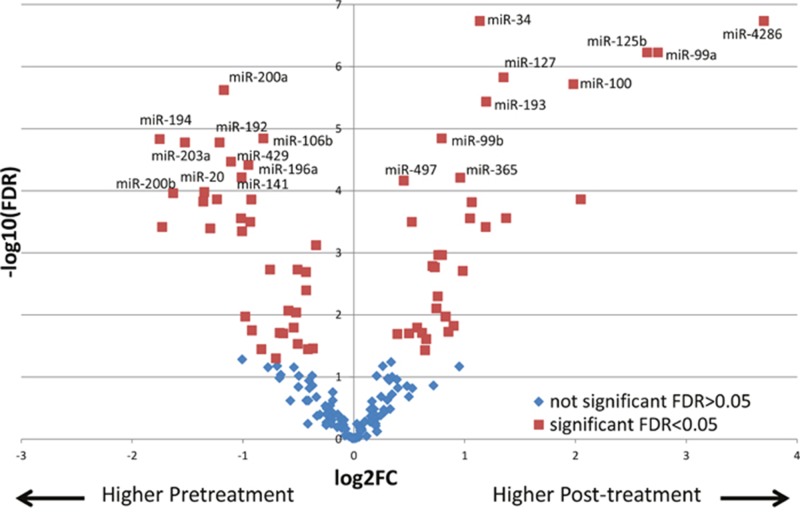
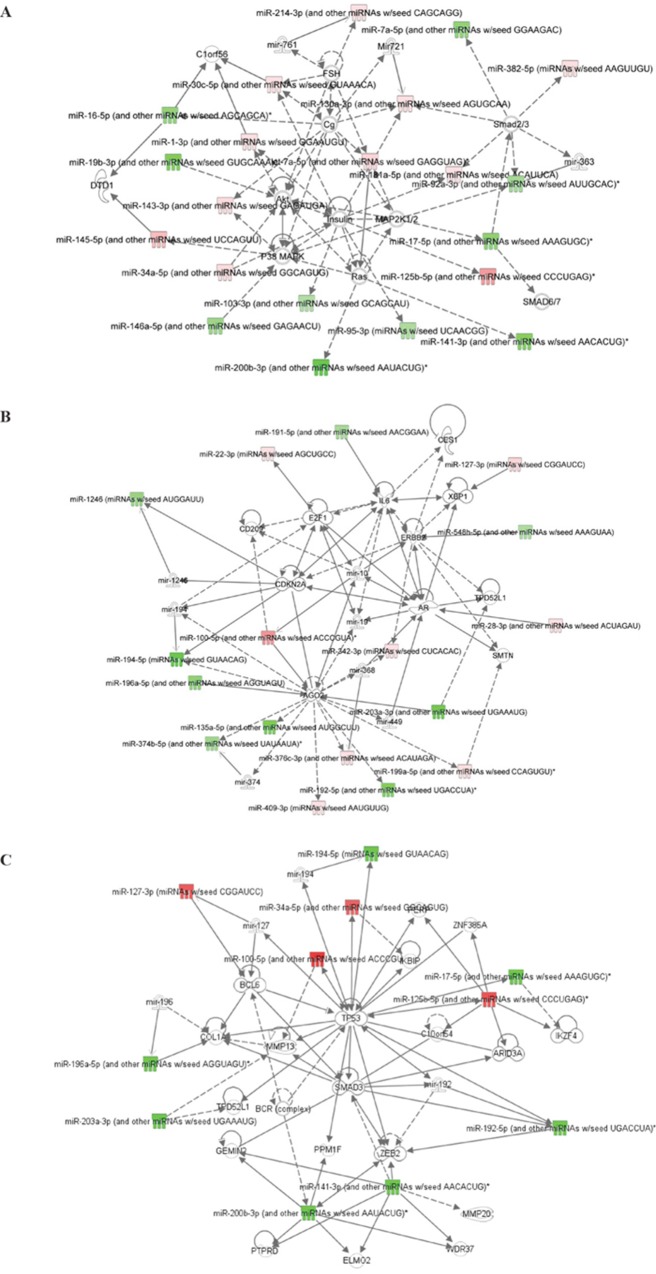
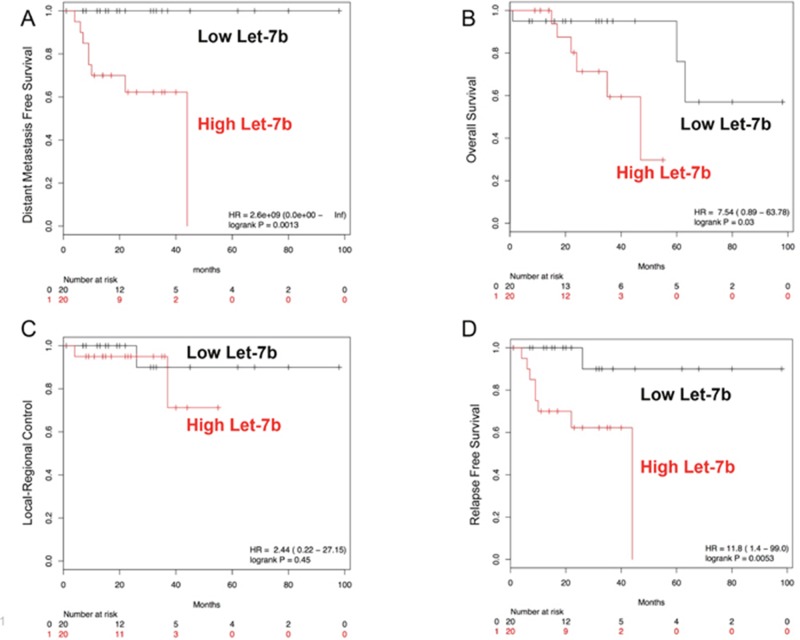
Results: Nine miRs were associated with pCR (p<0.05), but none were significant after false discovery rate correction. Among patients with pIR, 68 miRs were differentially expressed between the pre and post-CRT groups (FDR p<0.05). Ingenuity pathway analysis (IPA) demonstrated multiple signaling networks associated with pIR, including p38MAPK, TP53, AKT, IL-6, and RAS. Increased let-7b was correlated with increased distant metastasis (DM), worse relapse-free survival (RFS), and worse overall survival (OS) (p<0.05).
Conclusions: No miRs were significantly correlated with pCR. We identified miRs that were differentially expressed between pre- and post-CRT tumor samples, and these miRs implicated multiple signaling pathways that may confer resistance to CRT. In addition, we identified an association between increased let-7b and worse clinical outcomes (DM, DFS, OS).
Keywords: biomarker; chemotherapy; miRNA; radiation; rectal cancer.
Conflict of interest statement
CONFLICTS OF INTEREST The authors have no conflicts of interest to disclose.
Figures
References
-
- Roh MS, Colangelo LH, O'Connell MJ, Yothers G, Deutsch M, Allegra CJ, Kahlenberg MS, Baez-Diaz L, Ursiny CS, Petrelli NJ, Wolmark N. Preoperative multimodality therapy improves disease-free survival in patients with carcinoma of the rectum: NSABP R-03. J Clin Oncol. 2009;27:5124–30. doi: 10.1200/JCO.2009.22.0467. - DOI - PMC - PubMed
-
- Sauer R, Liersch T, Merkel S, Fietkau R, Hohenberger W, Hess C, Becker H, Raab HR, Villanueva MT, Witzigmann H, Wittekind C, Beissbarth T, Rödel C. Preoperative versus postoperative chemoradiotherapy for locally advanced rectal cancer: results of the German CAO/ARO/AIO-94 randomized phase III trial after a median follow-up of 11 years. J Clin Oncol. 2012;30:1926–33. doi: 10.1200/JCO.2011.40.1836. - DOI - PubMed
-
- Habr-Gama A, Gama-Rodrigues J, São Julião GP, Proscurshim I, Sabbagh C, Lynn PB, Perez RO. Local recurrence after complete clinical response and watch and wait in rectal cancer after neoadjuvant chemoradiation: impact of salvage therapy on local disease control. Int J Radiat Oncol Biol Phys. 2014;88:822–8. doi: 10.1016/j.ijrobp.2013.12.012. - DOI - PubMed
Grants and funding
LinkOut - more resources
Full Text Sources
Other Literature Sources
Research Materials
Miscellaneous
