. 2018 Jun 22;9(48):28866-28876.
doi: 10.18632/oncotarget.25601.

New generation sequencing of targeted genes in the classical and the variant form of hairy cell leukemia highlights mutations in epigenetic regulation genes

Affiliations

New generation sequencing of targeted genes in the classical and the variant form of hairy cell leukemia highlights mutations in epigenetic regulation genes

Elsa Maitre et al. Oncotarget. .

Abstract

Classical hairy cell leukemia (HCL-c) is a rare lymphoid neoplasm. BRAFV600E mutation, detected in more than 80% of the cases, is described as a driver mutation, but additional genetic abnormalities appear to be necessary for the disease progression. For cases of HCL-c harboring a wild-type BRAF gene, the differential diagnosis of the variant form of HCL (HCL-v) or splenic diffuse red pulp lymphoma (SDRPL) is complex. We selected a panel of 21 relevant genes based on a literature review of whole exome sequencing studies (BRAF, MAP2K1, DUSP2, MAPK15, ARID1A, ARID1B, EZH2, KDM6A, CREBBP, TP53, CDKN1B, XPO1, KLF2, CXCR4, NOTH1, NOTCH2, MYD88, ANXA1, U2AF1, BCOR, and ABCA8). We analyzed 20 HCL-c and 4 HCL-v patients. The analysis of diagnostic samples mutations in BRAF (n = 18), KLF2 (n = 4), MAP2K1 (n = 3), KDM6A (n = 2), CDKN1B (n = 2), ARID1A (n = 2), CREBBP (n = 2) NOTCH1 (n = 1) and ARID1B (n = 1). BRAFV600E was found in 90% (18/20) of HCL-c patients. In HCL-c patients with BRAFV600E , other mutations were found in 33% (6/18) of cases. All 4 HCL-v patients had mutations in epigenetic regulatory genes: KDM6A (n = 2), CREBBP (n = 1) or ARID1A (n = 1). The analysis of sequential samples (at diagnosis and relapse) from 5 patients (2 HCL-c and 3 HCL-v), showed the presence of 2 new subclonal mutations (BCORE1430X and XPO1E571K ) in one patient and variations of the mutated allele frequency in 2 other cases. In the HCL-v disease, we described new mutations targeting KDM6A that encode a lysine demethylase protein. This opens new perspectives for personalized medicine for this group of patients.

Keywords: epigenetic regulation genes; gene mutation; hairy cell leukemia; hairy cell leukemia variant; next-generation sequencing.


Conflict of interest statement

CONFLICTS OF INTEREST All of the authors declare no conflicts of interest

Figures
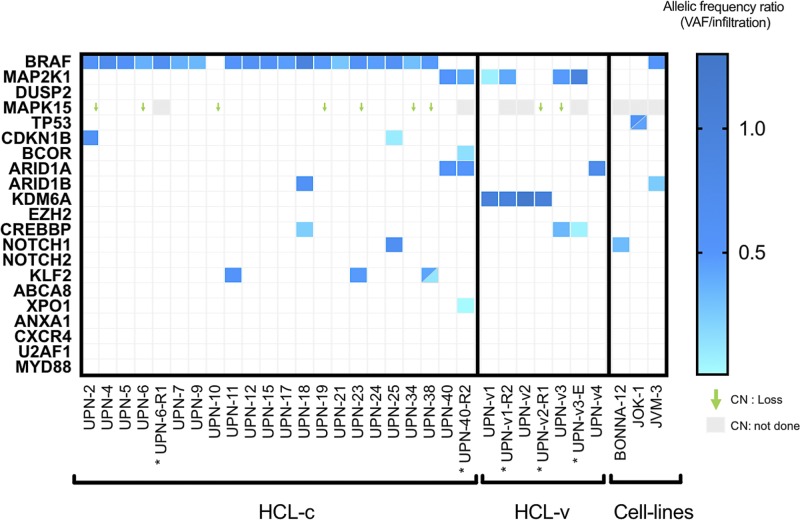
Figure 1
Figure 1. Heat-map representation of mutations and CNV distribution in HCL-c and HCL-v
Each column represents one patient (UPN), and each row is one gene of the Trichopanel. The intensity of color is proportional to the rVAF (dark blue, rVAF value close to 1; light blue, rVAF value < 0.3). Gray represents relapse/evolution samples. Mutations and rVAF details are provided in the Supplementary Table 4. The gene copy number variation was reported for the relevant gene MAPK15, CN not done in gray. Abbreviations: CN, copy number; HCL-c, hairy cell leukemia classic form; HCL-v, variant form. * Relapse/evolution samples.
Figure 2
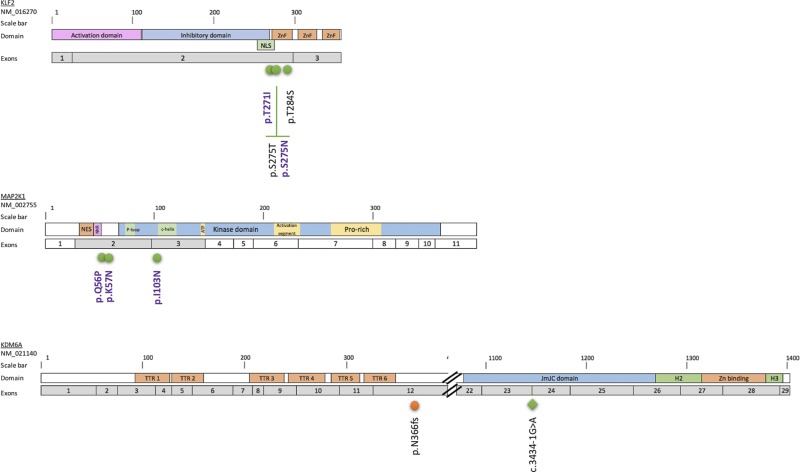
Figure 2. Localization of the KLF2, MAP2K1 and KDM6A mutations in the corresponding proteins
Distribution of mutations along the KLF2, MAP2K1 and KDM6A proteins. The exons targeted by the Trichopanel are represented in gray. Mutations are indicated as follows: green circles, missense mutations; blue circles, non-sense mutations; orange circles, deletions; green diamond, splicing variant. The SNVs previously described in HCL [8] or SMZL [25, 26] are in violet. Abbreviations: Helical domain (H), Jumonji domain (JmJC), nuclear export signal (NES), nuclear localization signal (NLS), negative regulatory region (NNR), Prolin-rich domain (Pro-rich), tetratricopeptids repeats (TTR), Zinc binding domain(Zn), Zinc fingers domain (ZnF).
Figure 3
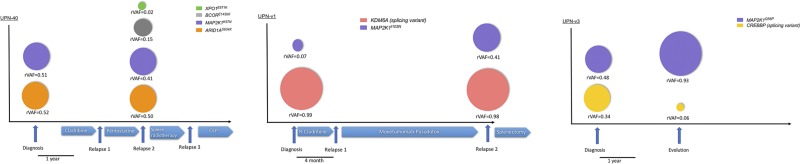
Figure 3. The mutations described at diagnosis are either maintained or evolving at relapse
Representation of the relevant HCL-c (UPN-40) and HCL-v patients (UPNv1 and UPN-v3) tested at diagnosis and at relapse. For each patient, color-coded circles estimate the rVAF of the indicated mutations. Relevant times points and treatment are indicated by arrows. Abbreviations: CEP Cisplatin-Endoxan-Epirubicin, R-Cladribine: Rituximab + cladribine.
Figure 4
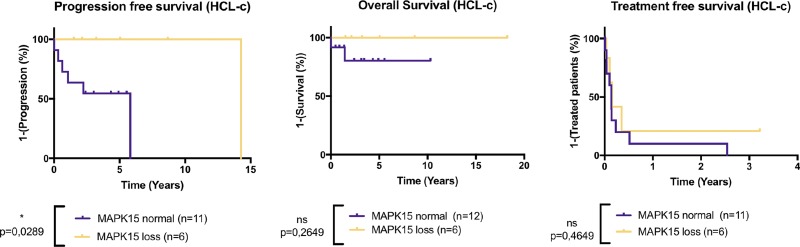
Figure 4. MAPK15 deletion improves the progression-free survival in HCL-c patients
Kaplan-Meier representation of Treatment-free survival (TFS), Progression-free survival (PFS) and Overall survival (OS) of HCL-c according to MAPK15 copy loss status. p-values were calculated with Log-rank Test. In the “MAPK15 normal” group, patients were given first-line treatment with Interferon n = 1, pentostatine n = 2 or cladribine n = 5. In the “MAPK15 loss” group, patients were given first-line treatment with Interferon n = 1 or cladribine n = 6. MAPK15 loss is associated with significantly improved PFS in HLC-c patients, and no significant differences were observed in TFS and OS.

References

    1. Teras LR, DeSantis CE, Cerhan JR, Morton LM, Jemal A, Flowers CR. US Lymphoid Malignancy Statistics by World Health Organization Subtypes. CA Cancer J Clin. 2016;2016;66:443–59. doi: 10.3322/caac.21357. - DOI - PubMed
    1. Swerdlow SH, Campo E, Lee Harris N, Jaffe ES, Pileri SA, Stein H, Thiele J, Vardiman JW. WHO Classification of tumours of Haematopoietic and Lymphoid Tissues. Lyon, France: IARC Press; 2008.
    1. Swerdlow SH, Campo E, Pileri SA, Harris NL, Stein H, Siebert R, Advani R, Ghielmini M, Salles GA, Zelenetz AD, Jaffe ES. The 2016 revision of the World Health Organization classification of lymphoid neoplasms. Blood. 2016;127:2375–90. - PMC - PubMed
    1. Tiacci E, Trifonov V, Schiavoni G, Holmes A, Kern W, Martelli MP, Pucciarini A, Bigerna B, Pacini R, Wells VA, Sportoletti P, Pettirossi V, Mannucci R, et al. BRAF mutations in hairy-cell leukemia. N Engl J Med. 2011;364:2305–2315. - PMC - PubMed
    1. Chung SS, Kim E, Park JH, Chung YR, Lito P, Teruya-Feldstein J, Hu W, Beguelin W, Monette S, Duy C, Rampal R, Telis L, Patel M, et al. Hematopoietic stem cell origin of BRAFV600E mutations in hairy cell leukemia. Sci Transl Med. 2014;6:238ra71–238ra71. - PMC - PubMed