Is water carriage associated with the water carrier's health? A systematic review of quantitative and qualitative evidence
- PMID: 29989042
- PMCID: PMC6035504
- DOI: 10.1136/bmjgh-2018-000764
Is water carriage associated with the water carrier's health? A systematic review of quantitative and qualitative evidence
Abstract
Introduction: The work of carrying water falls mainly on women and children, particularly in sub-Saharan Africa and rural areas. While concerns have been raised, how water carriage is associated with health of the water carrier is not clear. The aim of this review is to summarise evidence on whether, and how, water carriage is associated with the water carrier's health.
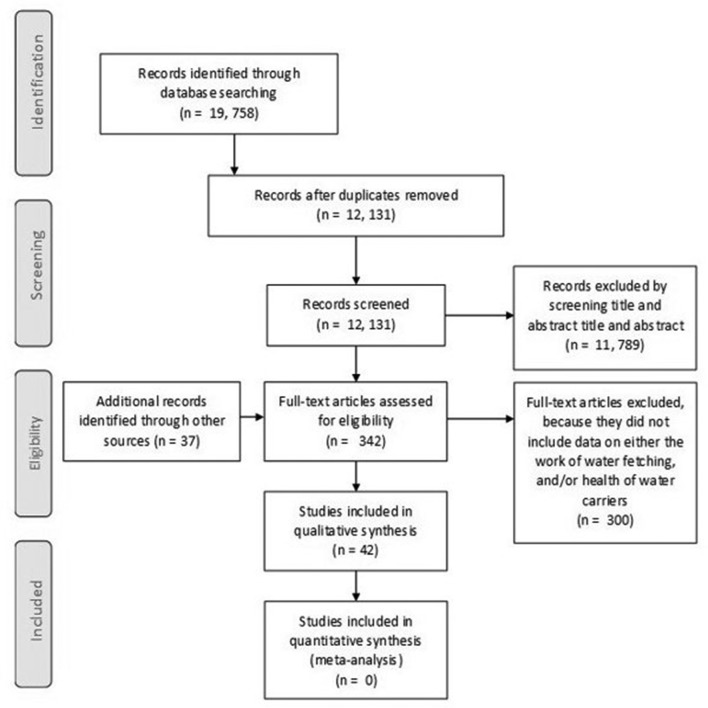
Methods: A systematic review of literature was conducted, searching Embase; Medline; Web of Science Social Sciences Citation Index; Web of Science Arts and Humanities Citation Index; International Initiative for Impact Evaluation website; WHO Virtual Health Sciences Library and WHO African index medicus, from inception to 8 November 2017.
Results: Forty-two studies were included. Their ability to demonstrate cause and effect relationships was limited by study design and fair or poor methodological quality. Overall, the studies suggest that water carriage is associated with negative aspects of the water carriers' health. There is moderate quantitative and strong qualitative evidence that water carriage is associated with pain, fatigue, perinatal health problems and violence against vulnerable people, and inconclusive evidence of an association with stress or self-reported mental health and general health status.
Conclusion: In many circumstances, water carriage is a potential barrier to Sustainable Development Goal (SDG) 6 target 'universal and equitable access to safe and affordable drinking water for all' and SDG 3 'ensure healthy lives and promote well-being for all at all ages'. Efforts should focus on providing water on premises, and where this is not possible, providing water close to home and reducing risk of gender-based violence.
Keywords: child health; maternal health; other infection, disease, disorder, or injury; public health; systematic review.
Conflict of interest statement
Competing interests: None declared.
Figures
References
-
- WHO. Constitution of WHO: principles. Geneva: World Health Organisation, 2018. (accessed 01 May 2018).
-
- WHO. Statement by Dr Margaret Chan, WHO Director-General, on the occasion of World Water Day, 22 March 2007. Geneva: World Health Organisation, 2007. (accessed 26 Nov 2007).
-
- WHO, UNICEF. Safely managed drinking water - thematic report on drinking water. Geneva: World Health Organisation (WHO) and the United Nations Children’s Fund (UNICEF), 2017.
-
- ICLS. Resolution concerning statistics of work, employment and labour underutilization. : ILO, Geneva: Nineteenth International Conference of Labour Statisticians, 2013.
-
- United Nations. Goal 6: Ensure access to water and sanitation for all Geneva: UN Web Services Section, Department of Public Information. United Nations, 2015;2015.
LinkOut - more resources
Full Text Sources
Other Literature Sources