The magnitude and severity of abortion-related morbidity in settings with limited access to abortion services: a systematic review and meta-regression
- PMID: 29989078
- PMCID: PMC6035513
- DOI: 10.1136/bmjgh-2017-000692
The magnitude and severity of abortion-related morbidity in settings with limited access to abortion services: a systematic review and meta-regression
Abstract
Introduction: Defining and accurately measuring abortion-related morbidity is important for understanding the spectrum of risk associated with unsafe abortion and for assessing the impact of changes in abortion-related policy and practices. This systematic review aims to estimate the magnitude and severity of complications associated with abortion in areas where access to abortion is limited, with a particular focus on potentially life-threatening complications.
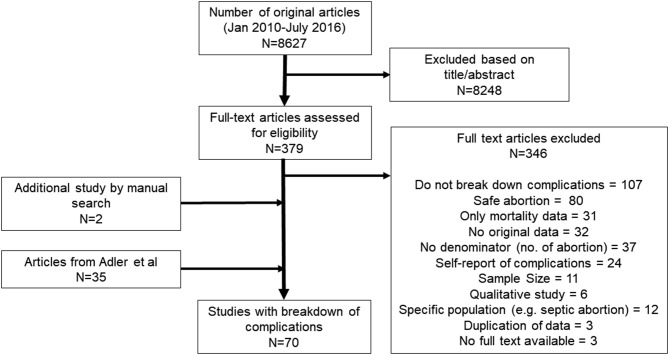
Methods: A previous systematic review covering the literature up to 2010 was updated with studies identified through a systematic search of Medline, Embase, Popline and two WHO regional databases until July 2016. Studies from settings where access to abortion is limited were included if they quantified the percentage of abortion-related hospital admissions that had any of the following complications: mortality, a near-miss event, haemorrhage, sepsis, injury and anaemia. We calculated summary measures of the percentage of abortion-related hospital admissions with each complication by conducting meta-analysis and explored whether these have changed over time.
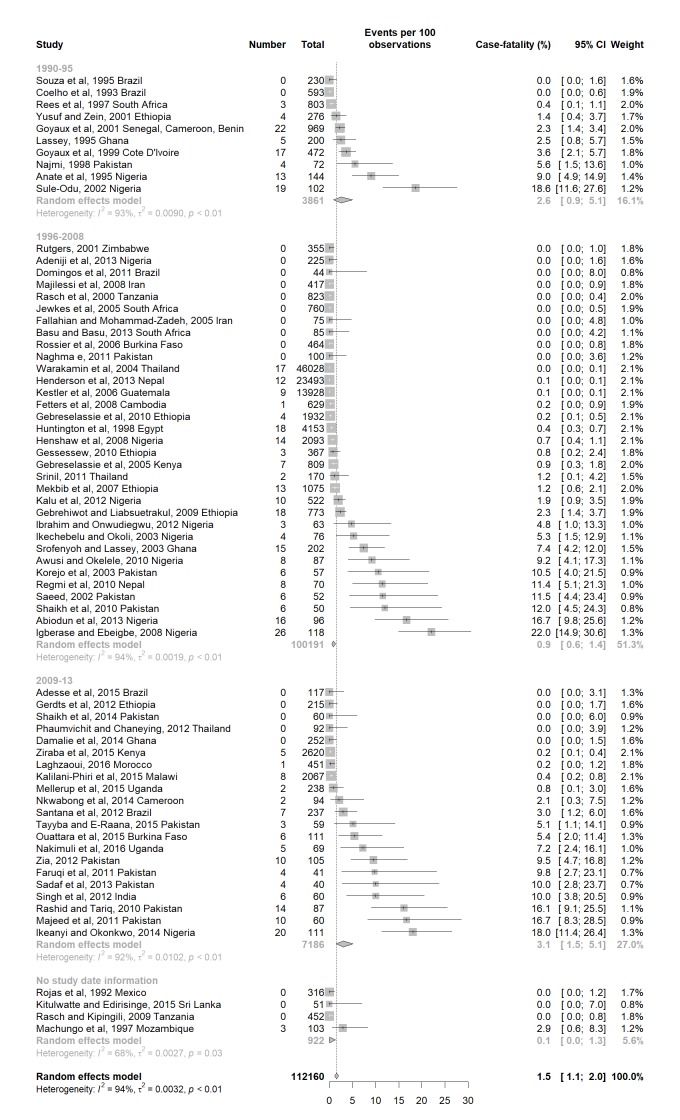
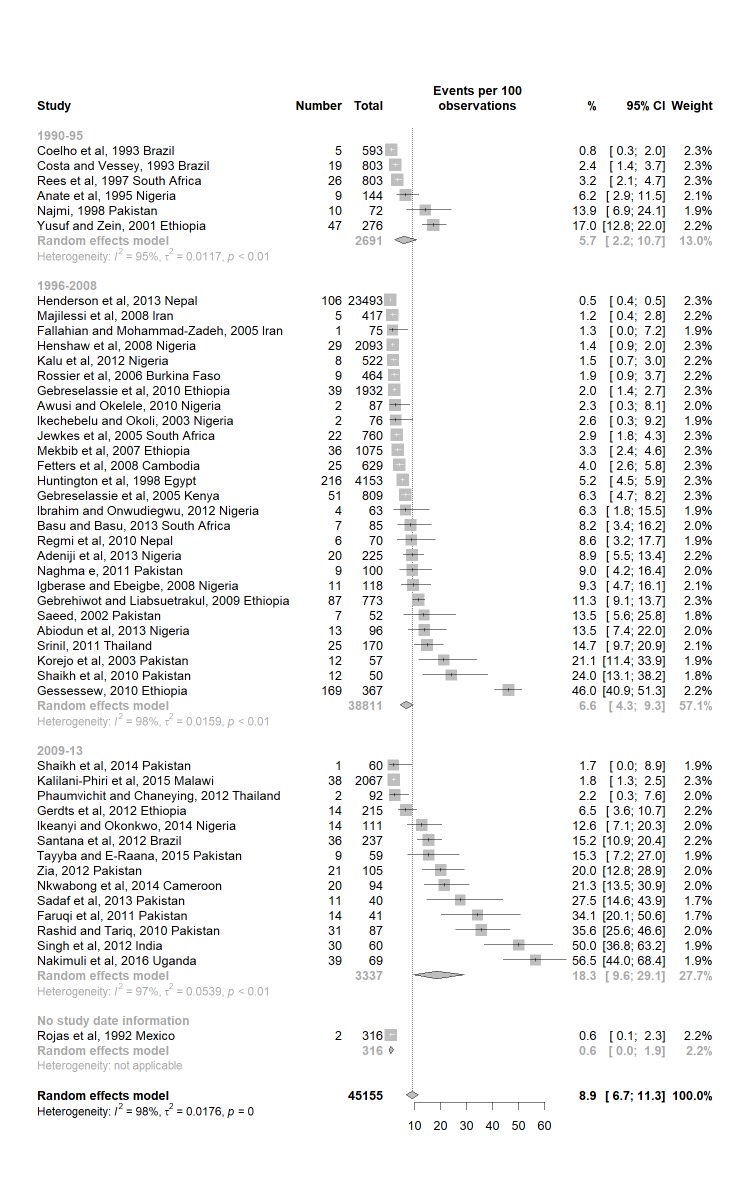
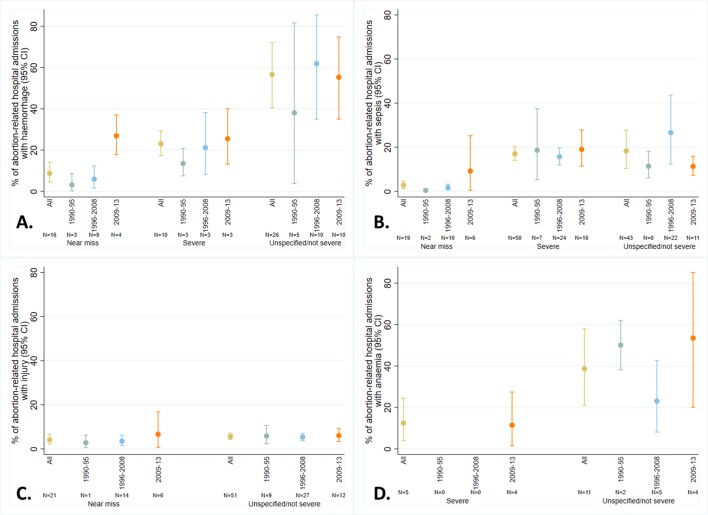
Results: Based on data collected between 1988 and 2014 from 70 studies from 28 countries, we estimate that at least 9% of abortion-related hospital admissions have a near-miss event and approximately 1.5% ends in a death. Haemorrhage was the most common complication reported; the pooled percentage of abortion-related hospital admissions with severe haemorrhage was 23%, with around 9% having near-miss haemorrhage reported. There was strong evidence for between-study heterogeneity across most outcomes.
Conclusions: In spite of the challenges on how near miss morbidity has been defined and measured in the included studies, our results suggest that a substantial percentage of abortion-related hospital admissions have potentially life-threatening complications. Estimates that are more reliable will only be obtained with increased use of standard definitions such as the WHO near-miss criteria and/or better reporting of clinical criteria applied in studies.
Keywords: maternal health; systematic review.
Conflict of interest statement
Competing interests: None declared.
Figures
References
Grants and funding
LinkOut - more resources
Full Text Sources
Other Literature Sources