


What speech and language therapy do community dwelling stroke survivors with aphasia receive in the UK?
- PMID: 29990345
- PMCID: PMC6039008
- DOI: 10.1371/journal.pone.0200096
What speech and language therapy do community dwelling stroke survivors with aphasia receive in the UK?
Abstract
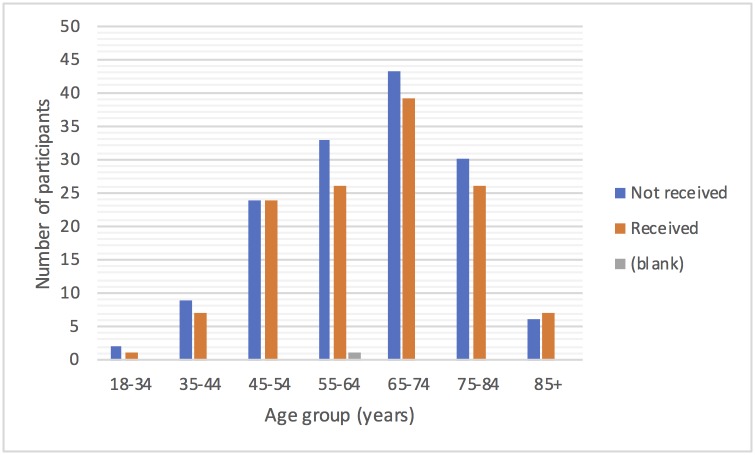
Background: Speech and language therapy provision for aphasia (a language disorder) post stroke has been studied over time through surveys completed by speech and language therapists. This paper revisits provision based on what was received by 278 patients in 21 UK speech and language therapy departments in 2014-2016.
Aims: To explore the speech and language therapy received by community dwelling people with post stroke aphasia in the UK.
Methods and procedures: A quantitative content analysis was conducted by two speech and language therapist researchers. Therapy goals recorded were coded into categories and subcategories. Descriptive statistics were used to identify the frequency with which goal categories were targeted, average therapy time received, length and frequency of therapy sessions, personnel involved and mode of delivery.
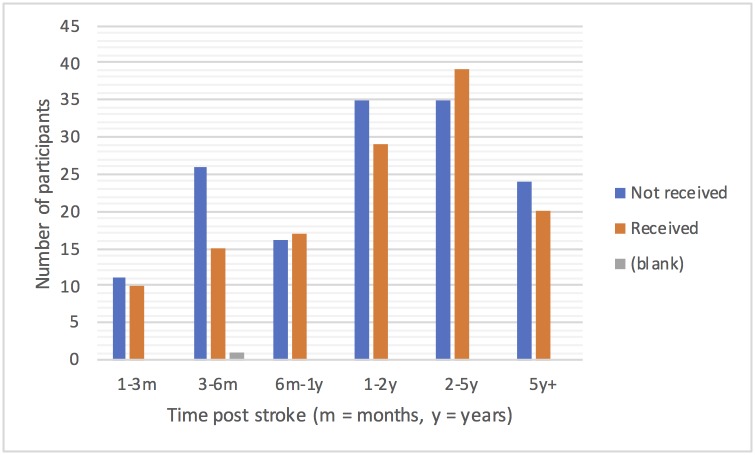
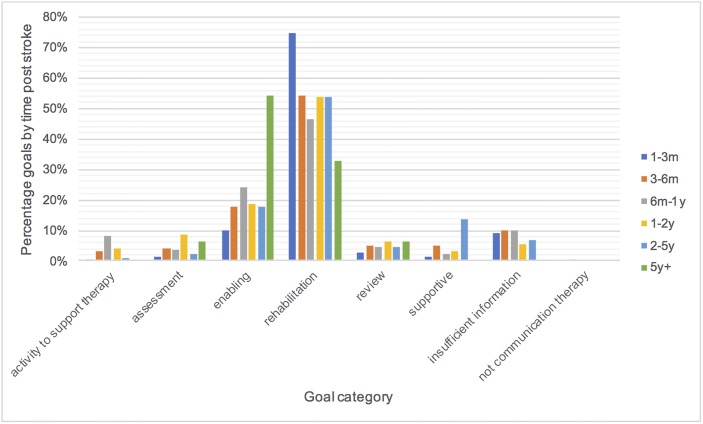
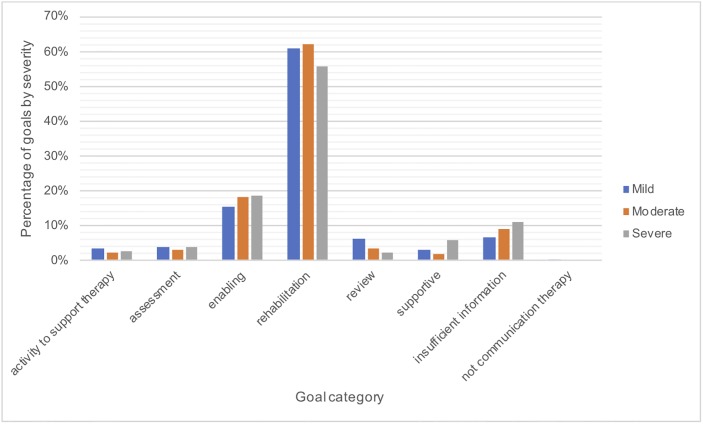
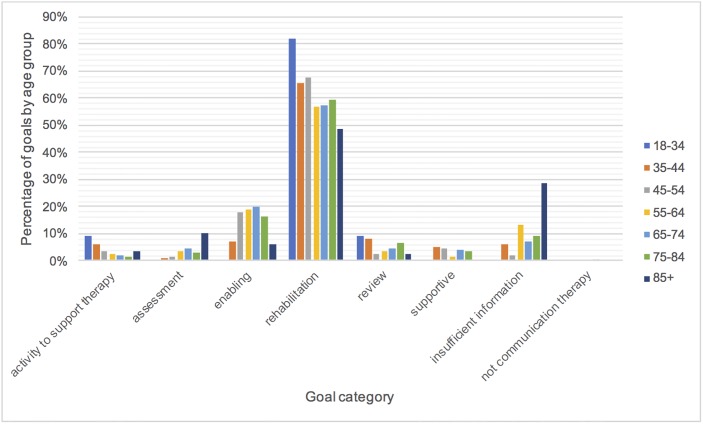
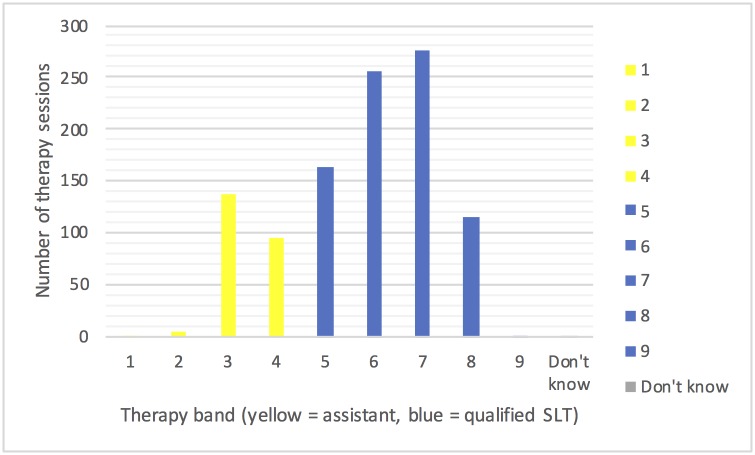
Outcomes and results: Forty-five percent of participants were in receipt of therapy in the three month window observed. Six goal categories were identified. Rehabilitation was the most frequent (60%) followed by enabling (17.2%), review (4.3%), assessment (3.6%), supportive (3.5%) and activity to support therapy (2.8%). The median amount of therapy received in three months was 6.3 hours at an average of one 60-minute session every two weeks. Seventy-seven percent of therapy sessions were delivered by qualified speech and language therapists and 23% by assistants. Ninety percent of sessions were one to one, face to face sessions whilst 9.5% were group sessions.
Discussion: In line with previous reports, speech and language therapy for community dwelling stroke survivors with aphasia is restricted. Rehabilitation is a large focus of therapy but the intensity and dose with which it is provided is substantially lower than that required for an effective outcome. Despite this, one to one face to face therapy is favoured. More efficient methods to support more therapeutic doses of therapy are not commonly used in routine clinical services.
Conflict of interest statement
The authors have declared no competing interests exist.
Figures
References
-
- Stroke Association. State of the nation: Stroke statistics. 2016. https://www.stroke.org.uk/sites/default/files/state_of_the_nation_2016_1....
-
- Worrall L, Sherratt S, Rogers P, Howe T, Hersh D, Fergusson A et al. What people with aphasia want: Their goals according to the ICF. Aphasiology. 2011; 25(3): 309–322.
-
- World Health Organisation (WHO). 2001. International classification of functioning, disability and health (ICF), Geneva, Switzerland: World Health Organisation.
-
- Malcomess K: (2005) The Care Aims Model in Anderson C and van der Gaag A (eds.) Speech and Language Therapy: Issues in Professional Practice. London: Whurr Publisher’s Ltd.
-
- Allen L, Mehta S, McClure JA, Teasell R. Therapeutic interventions for aphasia initiated more than six months post stroke: a review of the evidence. Top Stroke Rehabil. 2012. Nov-Dec; 19 (6): 523–35. doi: 10.1310/tsr1906-523 - DOI - PubMed
Publication types
MeSH terms
Grants and funding
LinkOut - more resources
Full Text Sources
Other Literature Sources
Medical
