


Apoptosis and non-alcoholic fatty liver diseases
- PMID: 29991872
- PMCID: PMC6034146
- DOI: 10.3748/wjg.v24.i25.2661
Apoptosis and non-alcoholic fatty liver diseases
Abstract
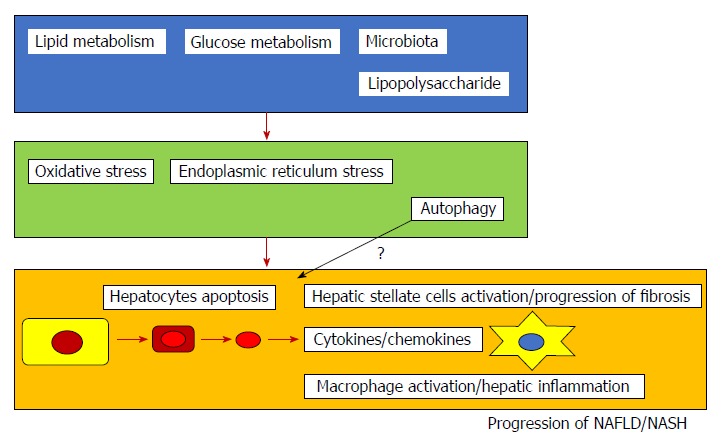
The number of patients with nonalcoholic fatty liver diseases (NAFLD) including nonalcoholic steatohepatitis (NASH), has been increasing. NASH causes cirrhosis and hepatocellular carcinoma (HCC) and is one of the most serious health problems in the world. The mechanism through which NASH progresses is still largely unknown. Activation of caspases, Bcl-2 family proteins, and c-Jun N-terminal kinase-induced hepatocyte apoptosis plays a role in the activation of NAFLD/NASH. Apoptotic hepatocytes stimulate immune cells and hepatic stellate cells toward the progression of fibrosis in the liver through the production of inflammasomes and cytokines. Abnormalities in glucose and lipid metabolism as well as microbiota accelerate these processes. The production of reactive oxygen species, oxidative stress, and endoplasmic reticulum stress is also involved. Cell death, including apoptosis, seems very important in the progression of NAFLD and NASH. Recently, inhibitors of apoptosis have been developed as drugs for the treatment of NASH and may prevent cirrhosis and HCC. Increased hepatocyte apoptosis may distinguish NASH from NAFLD, and the improvement of apoptosis could play a role in controlling the development of NASH. In this review, the association between apoptosis and NAFLD/NASH are discussed. This review could provide their knowledge, which plays a role in seeing the patients with NAFLD/NASH in daily clinical practice.
Keywords: Apoptosis; Autophagy; Nonalcoholic fatty liver diseases; Nonalcoholic steatohepatitis; c-Jun N-terminal kinase.
Conflict of interest statement
Conflict-of-interest statement: Kanda T received research grants from AbbVie, MSD, Chugai Pharma, and Sysmex. These companies played no role in this study. Other authors declare no conflict of interests related to this publication.
Figures
References
-
- Brunt EM, Janney CG, Di Bisceglie AM, Neuschwander-Tetri BA, Bacon BR. Nonalcoholic steatohepatitis: a proposal for grading and staging the histological lesions. Am J Gastroenterol. 1999;94:2467–2474. - PubMed
-
- Bellentani S. The epidemiology of non-alcoholic fatty liver disease. Liver Int. 2017;37 Suppl 1:81–84. - PubMed
-
- Takahashi T, So-Wan T, Kamimura T, Asakura H. Infiltrating polymorphonuclear leukocytes and apoptotic bodies derived from hepatocytes but not from ballooning hepatocytes containing Mallory bodies show nuclear DNA fragmentation in alcoholic hepatitis. Alcohol Clin Exp Res. 2000;24:68S–73S. - PubMed
-
- Feldstein AE, Canbay A, Angulo P, Taniai M, Burgart LJ, Lindor KD, Gores GJ. Hepatocyte apoptosis and fas expression are prominent features of human nonalcoholic steatohepatitis. Gastroenterology. 2003;125:437–443. - PubMed
Publication types
MeSH terms
Substances
LinkOut - more resources
Full Text Sources
Other Literature Sources
Medical
Research Materials
Miscellaneous
