


The many menopauses: searching the cognitive research literature for menopause types
- PMID: 29994973
- PMCID: PMC6314513
- DOI: 10.1097/GME.0000000000001171
The many menopauses: searching the cognitive research literature for menopause types
Abstract
Objective: Recent evidence suggests that early or induced menopause increases the risk for cognitive impairment and dementia. Given the potential for different cognitive outcomes due to menopause types, it is important that present research on menopause and cognition distinguishes between types. The aim of this project was to determine to what extent research looking at cognition in postmenopausal women published in one year, 2016, accounted for menopausal type.
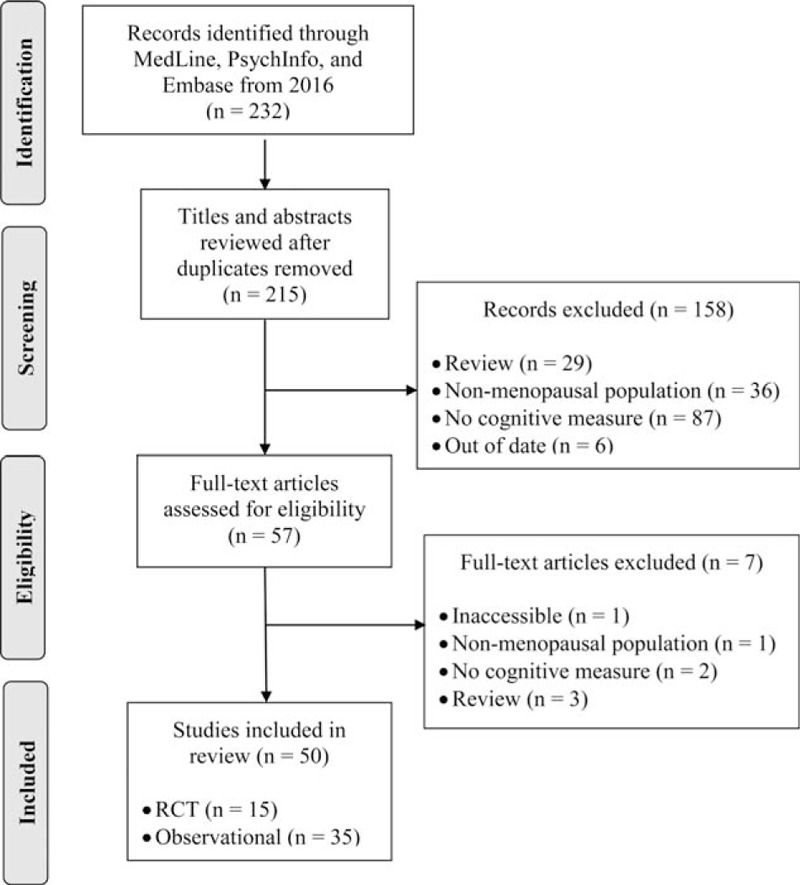
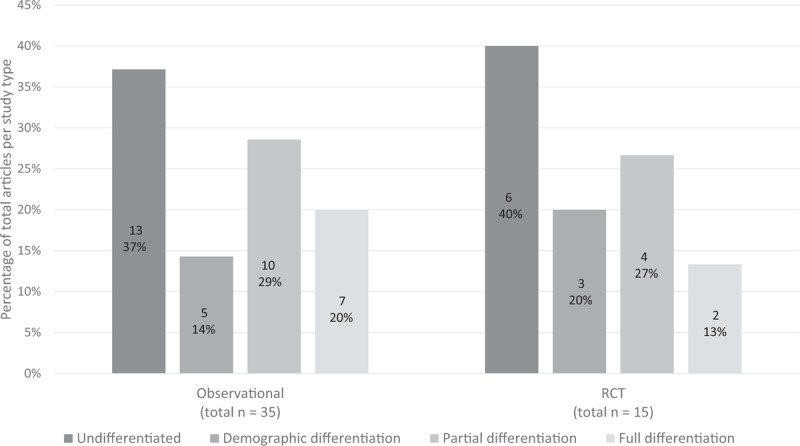
Methods: We searched MEDLINE, EMBASE, and PsychINFO using keywords and MeSH terms for menopause and cognition. We included any research paper reporting a cognitive outcome measure in a menopausal human population. Differentiation between the types of menopause was defined by four categories: undifferentiated, demographic differentiation (menopause type reported but not analyzed), partial differentiation (some but not all types analyzed), and full differentiation (menopause types factored into analysis, or recruitment of only one type).
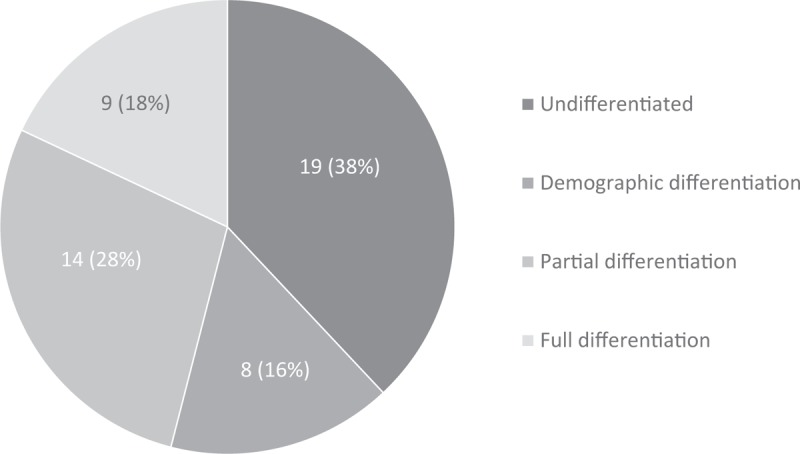
Results: Fifty research articles were found and analyzed. Differentiation was distributed as follows: undifferentiated, 38% (19 articles); demographic differentiation, 16% (8); partial differentiation, 28% (14); and full differentiation, 18% (9).
Conclusions: This review revealed that although some clinical studies differentiated between the many menopauses, most did not. This may limit their relevance to clinical practice. We found that when menopause types are distinguished, the differing cognitive outcomes of each type are clarified, yielding the strongest evidence, which in turn will be able to inform best clinical practice for treating all women.
Figures
References
-
- Hale GE, Robertson DM, Burger HG. The perimenopausal woman: endocrinology and management. J Steroid Biochem Mol Biol 2014; 142:121–131. - PubMed
-
- Shifren JL, Gass MLS. The North American Menopause Society recommendations for clinical care of midlife women. Menopause 2014; 21:1038–1062. - PubMed
-
- Adamopoulos DA, Karamertzanis M, Thomopoulos A, Pappa A, Koukkou E, Nicopoulou SC. Age at menopause and prevalence of its different types in contemporary Greek women. Menopause 2002; 9:443–448. - PubMed
Publication types
MeSH terms
Grants and funding
LinkOut - more resources
Full Text Sources
Other Literature Sources
Medical
