


Quantitative assessment of intestinal stiffness and associations with fibrosis in human inflammatory bowel disease
- PMID: 29995938
- PMCID: PMC6040714
- DOI: 10.1371/journal.pone.0200377
Quantitative assessment of intestinal stiffness and associations with fibrosis in human inflammatory bowel disease
Abstract
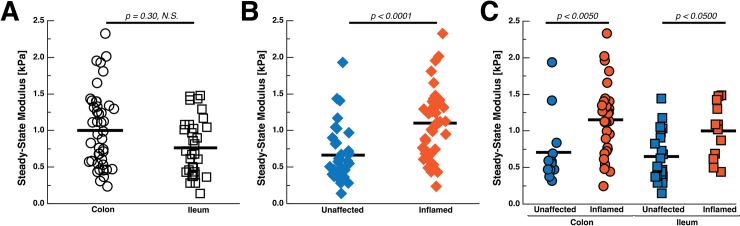
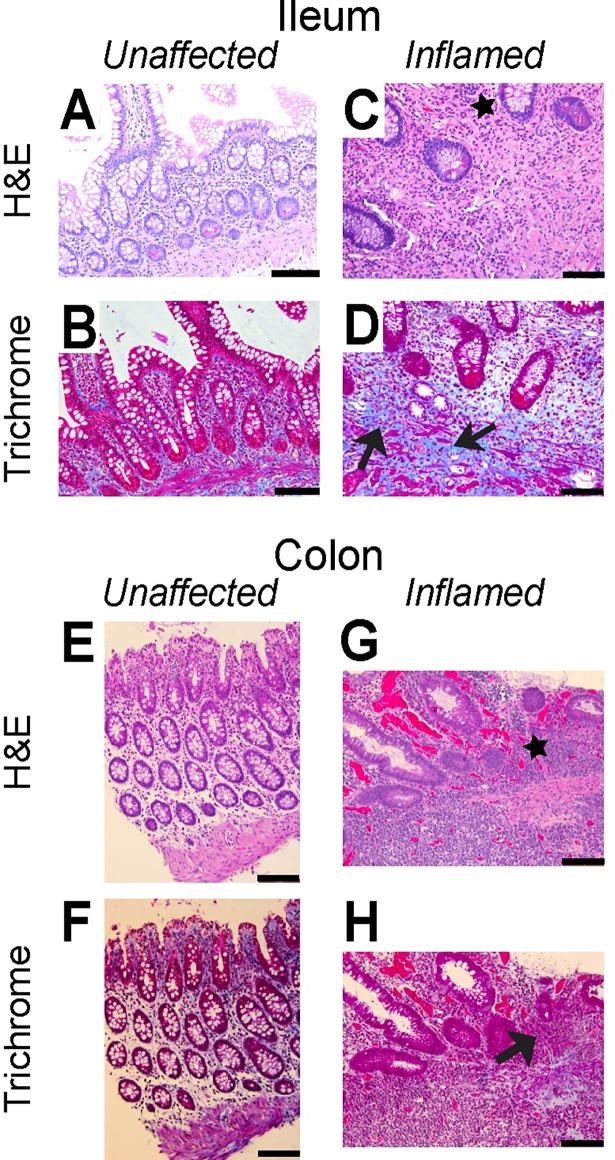
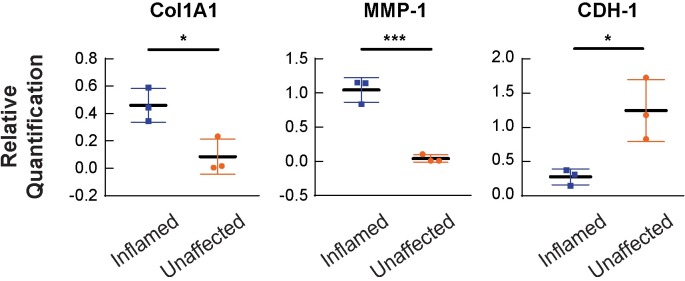
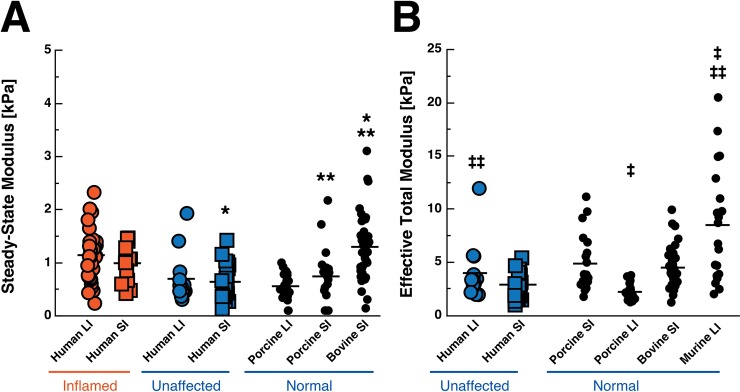
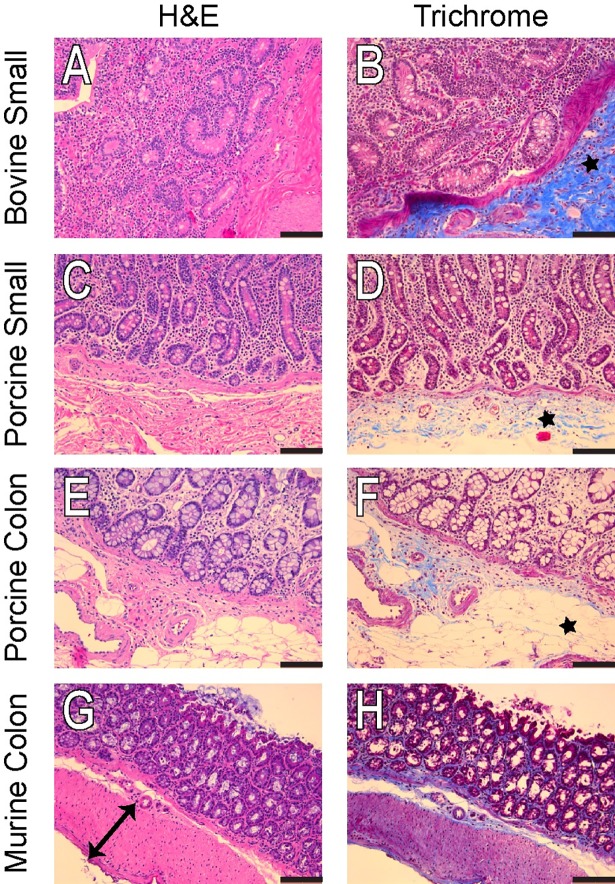
Inflammatory bowel disease (IBD) continues to increase in prevalence in industrialized countries. Major complications of IBD include formation of fibrotic strictures, fistulas, reduced absorptive function, cancer risk, and the need for surgery. In other chronic gastrointestinal disease models, stiffness has been shown to precede fibrosis; therefore, stiffness may be a reasonable indicator of progression toward stricture formation in IBD patients. Herein, we seek to quantify tissue stiffness and characterize fibrosis in patients with IBD and to compare mechanical properties of unaffected human tissue to common animal species used for IBD studies. Inflamed and unaffected tissue from IBD patients and unaffected tissue from mice, pigs, and cows were indented using a custom device to determine the effective stiffness. Histology was performed on matched tissues, and total RNA was isolated from IBD tissue samples and used for gene expression analysis of pro-fibrotic genes. We observed an increase in the effective stiffness (steady-state modulus, SSM) (p < 0.0001) and increased expression of the collagen type I gene (COL1A1, p = 0.01) in inflamed tissue compared to unaffected areas in our IBD patient cohort. We also found that increased staining of collagen fibers in submucosa positively correlated with SSM (p = 0.093). We determined that unaffected animal bowel stiffness is significantly greater than similar human tissues, suggesting additional limitations on animal models for translational investigations regarding stiffness-related hypotheses. Taken together, our data support development of tools for evaluation of bowel stiffness in IBD patients for prognostic applications that may enable more accurate prediction of those who will develop fibrosis and more precise prescription of aggressive therapies.
Conflict of interest statement
The authors have declared that no competing interests exist.
Figures
References
-
- Kappelman MD, Moore KR, Allen JK, Cook SF. Recent Trends in the Prevalence of Crohn’s Disease and Ulcerative Colitis in a Commercially Insured US Population. Dig Dis Sci. Springer US; 2013;58: 519–525. doi: 10.1007/s10620-012-2371-5 - DOI - PMC - PubMed
-
- Rieder F, Zimmermann EM, Remzi FH, Sandborn WJ. Crohn's disease complicated by strictures: a systematic review. Gut. BMJ Publishing Group; 2013;62: 1072–1084. doi: 10.1136/gutjnl-2012-304353 - DOI - PMC - PubMed
-
- Rieder F, Fiocchi C. Intestinal fibrosis in IBD—a dynamic, multifactorial process. Nat Rev Gastroenterol Hepatol. Nature Publishing Group; 2009;6: 228–235. doi: 10.1038/nrgastro.2009.31 - DOI - PubMed
-
- Rieder F, Brenmoehl J, Leeb S, Schölmerich J, Rogler G. Wound healing and fibrosis in intestinal disease. Gut. BMJ Publishing Group; 2007;56: 130–139. doi: 10.1136/gut.2006.090456 - DOI - PMC - PubMed
-
- Fiocchi C, Lund PK. Themes in fibrosis and gastrointestinal inflammation. Am J Physiol Gastrointest Liver Physiol. 2011;300: G677–83. doi: 10.1152/ajpgi.00104.2011 - DOI - PMC - PubMed
Publication types
MeSH terms
Substances
Grants and funding
LinkOut - more resources
Full Text Sources
Other Literature Sources
Miscellaneous
