


Pediatric Rheumatology Collaborative Study Group - over four decades of pivotal clinical drug research in pediatric rheumatology
- PMID: 29996857
- PMCID: PMC6042275
- DOI: 10.1186/s12969-018-0261-x
Pediatric Rheumatology Collaborative Study Group - over four decades of pivotal clinical drug research in pediatric rheumatology
Abstract
Importance: Specialized research networks are essential to achieve drug approvals for rare pediatric diseases. Such networks help realize the potential of global legislation enacted upon the recognition that most children are treated with drugs whose most beneficial dose and regimen have not been established in pediatric patients. The Pediatric Rheumatology Collaborative Study Group (PRCSG) is a North American clinical trials network that is specialized in the performance of clinical trials of new therapies for pediatric populations with rheumatic diseases. This review provides an overview of the strategies employed by this research network to achieve drug and biologic approvals for children with pediatric rheumatic diseases, particularly juvenile idiopathic arthritis.
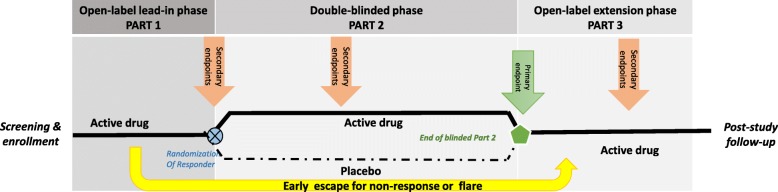
Observations: Clinical trial conduct in rare pediatric diseases has required global recruitment. Supported or led by the PRCSG, highly responsive, validated, composite measures have been established to assess drug efficacy. For pediatric orphan diseases with high disease burdens, specialized investigative sites and study designs are needed to complete adequately powered trials at the high standard necessary to enable drug labeling by regulatory agencies. Novel trial designs have been utilized for more efficient testing of innovative drug candidates. All these have been developed or co-developed by the PRCSG research network.
Conclusions and relevance: Specialized research networks in pediatric rheumatology, such as the PRCSG, have changed the landscape of available therapies and improved overall disease outcomes for children with pediatric rheumatic diseases.
Keywords: Clinical trials; Drug approvals; JIA; Networks; PRCSG; Pediatrics.
Conflict of interest statement
Ethics approval and consent to participate
Not applicable. This research review does not report on human participants, human data or human or animal experiments.
Consent for publication
Not applicable.
Competing interests
Dr. Lovell is Chairman of the PRCSG, Dr. Brunner is the Scientific Director of the PRCSG. All other named authors are members of the PRCSG Advisory Council. Drs. Yim and Peng are also members of the Advisory Council and reviewed the manuscript but deemed their contributions to the manuscript not significant enough to be included as named authors.
Publisher’s Note
Springer Nature remains neutral with regard to jurisdictional claims in published maps and institutional affiliations.
Figures
References
-
- Best pharmaceuticals for children act of 2007. Food and Drug Administration Amendments Act (FDAAA), Title V Vol Public Law No. 110-85.
-
- Pediatric Research Equity Act . Pub L. 2003. pp. No. 108–No. 155.
-
- Field MJ, Boat TF, Institute of Medicine (U.S.), National Research Council (U.S.) Safe and effective medicines for children : pediatric studies conducted under the best Pharmaceuticals for Children act and the pediatric research equity act. Washington, D.C.: The National Academies Press; 2012. - PubMed
Publication types
MeSH terms
Substances
Grants and funding
LinkOut - more resources
Full Text Sources
Other Literature Sources
