. 2018 Jul;15(144):20180236.
doi: 10.1098/rsif.2018.0236.

A combined low-frequency electromagnetic and fluidic stimulation for a controlled drug release from superparamagnetic calcium phosphate nanoparticles: potential application for cardiovascular diseases

Affiliations

A combined low-frequency electromagnetic and fluidic stimulation for a controlled drug release from superparamagnetic calcium phosphate nanoparticles: potential application for cardiovascular diseases

Alessandra Marrella et al. J R Soc Interface. 2018 Jul.

Abstract

Alternative drug delivery approaches to treat cardiovascular diseases are currently under intense investigation. In this domain, the possibility to target the heart and tailor the amount of drug dose by using a combination of magnetic nanoparticles (NPs) and electromagnetic devices is a fascinating approach. Here, an electromagnetic device based on Helmholtz coils was generated for the application of low-frequency magnetic stimulations to manage drug release from biocompatible superparamagnetic Fe-hydroxyapatite NPs (FeHAs). Integrated with a fluidic circuit mimicking the flow of the cardiovascular environment, the device was efficient to trigger the release of a model drug (ibuprofen) from FeHAs as a function of the applied frequencies. Furthermore, the biological effects on the cardiac system of the identified electromagnetic exposure were assessed in vitro and in vivo by acute stimulation of isolated adult cardiomyocytes and in an animal model. The cardio-compatibility of FeHAs was also assessed in vitro and in an animal model. No alterations of cardiac electrophysiological properties were observed in both cases, providing the evidence that the combination of low-frequency magnetic stimulations and FeHAs might represent a promising strategy for controlled drug delivery to the failing heart.

Keywords: ELM stimulation; QRS complex; bioreactor; cardiac cells; drug delivery; drug release.


Figures

Figure 1.
Figure 1.
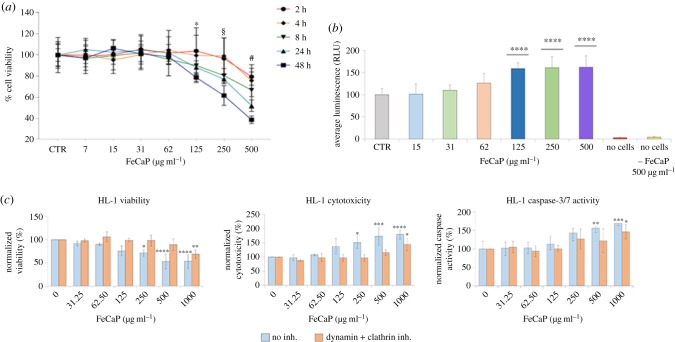
Biocompatibility of FeHA to HL-1 cardiac cells: effects on cell viability, caspase 3/cytotoxicity and ROS production. (a) Cell toxicity as measured by the Real Time Glo assay in HL-1 cells treated as indicated during 48 h. Data are presented as mean ± s.d.; n = 9, in three independent experiments for each experimental condition. Using one-way ANOVA and Tukey's post hoc test, * indicates p < 0.05 significance for the 125 µg ml−1 FeHA dose after 48 h, § indicates p < 0.05 significance for the 250 µg ml−1 FeHA dose after 8, 24 and 48 h, and # indicates p < 0.01 significance for the 500 µg ml−1 FeHA dose after all timing treatments: 2, 4, 8, 24 and 48 h compared with control non-treated cells (CTR). (b) ROS production was used to evaluate FeHA-induced oxidative stress in HL-1 cardiac cells after 24 h treatment. Data are presented as mean ± s.d.; n = 9, in three independent experiments for each experimental condition. ****p < 0.0001 indicate significance calculated for each FeHA dose compared with CTR using one-way ANOVA and Tukey's post hoc test. (c) Correlation of viability, cytotoxic and apoptotic levels’ detection via the activated caspase 3/7 assay in HL-1 cells pretreated as indicated with clathrin and dynamin inhibitors and then with increasing concentrations of FeHA during 24 h. Data are presented as mean ± s.d.; n = 9, in three independent experiments for each experimental condition. *p < 0.05, **p < 0.01, ***p < 0.001 and ****p < 0.0001 indicate significance for each FeHA dose compared with CTR using two-way ANOVA and Tukey's post hoc test.
Figure 2.
Figure 2.
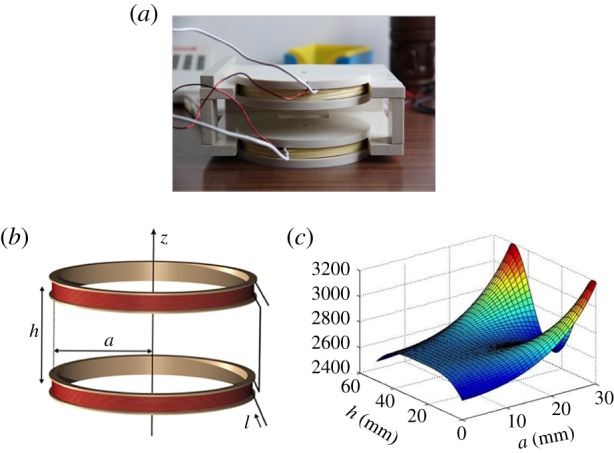
Picture (a) and schematic representation (b) of the Helmholtz coils. Magnetic induction modulus profile within coils (c); the warm colours (red and yellow) indicate generally higher values in terms of field strength, while cold ones (blue) lower values.
Figure 3.
Figure 3.
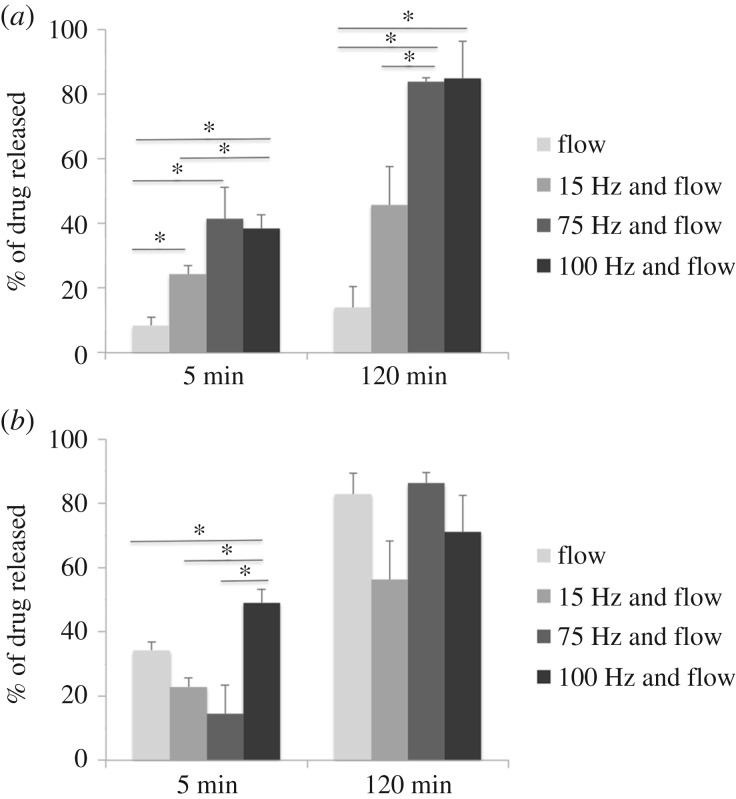
Percentage of IBU released within the fluidic circuit under magnetic and fluidic stimulation from FeHA (a) and HA (b) NPs at different time points. Values are reported as mean ± s.d., * indicates p < 0.05 significance.
Figure 4.
Figure 4.
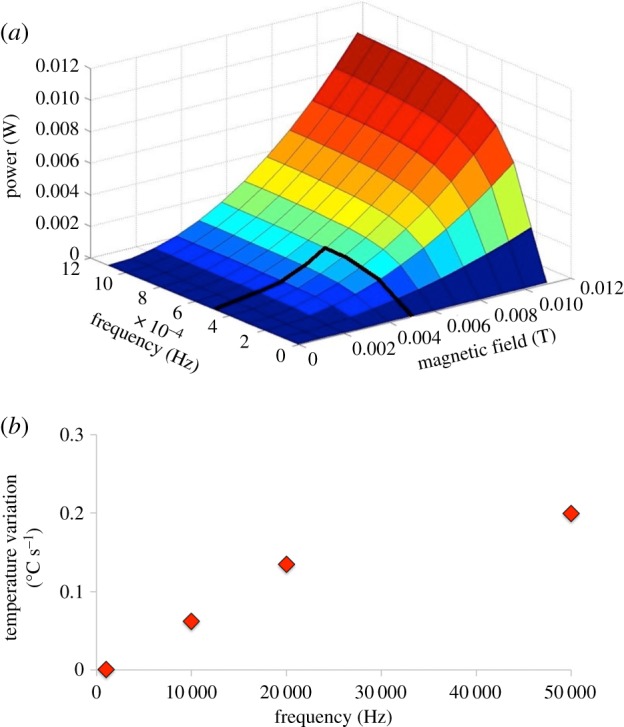
Representation of the electromagnetic stimulation parameters (frequency of stimulation and magnetic field intensity) necessary to induce heat dissipation (a) and correlation between temperature variations and frequency of stimulations considering B = 3.27 mT (b).
Figure 5.
Figure 5.
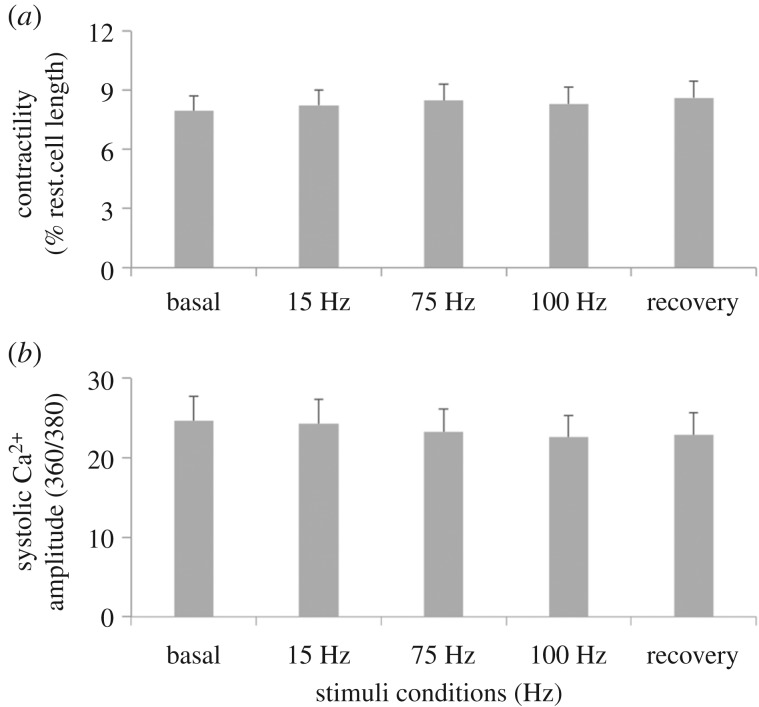
Cardiomyocyte activity. Contractility (a) and Ca2+ transients (b) in adult cardiomyocytes at different electromagnetic stimulations. All values are reported as mean ± s.e.m.
Figure 6.
Figure 6.
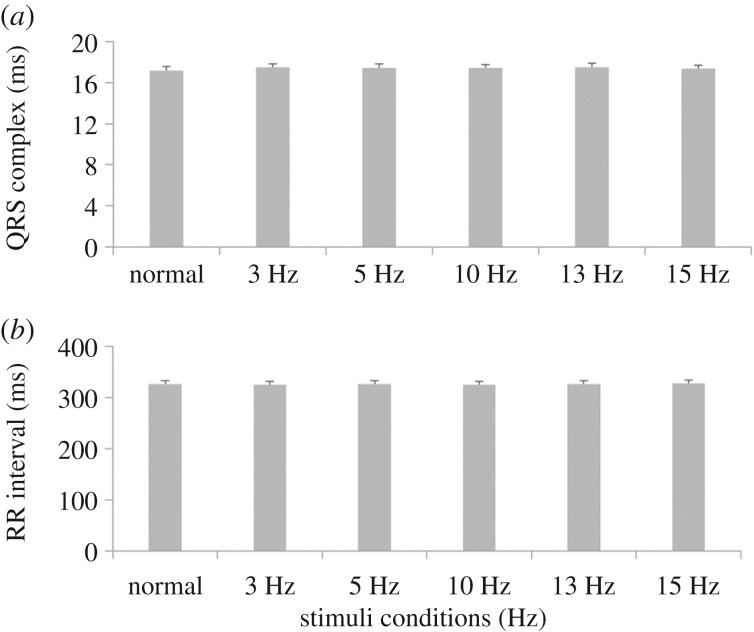
In vivo cardiac ECG. QRS complex (a) and RR interval (b) durations at different electromagnetic stimulations. All values are reported as mean ± s.e.m.

References

    1. Mosterd A, Hoes AW. 2007. Clinical epidemiology of heart failure. Heart 93, 1137–1146. (10.1136/hrt.2003.025270) - DOI - PMC - PubMed
    1. Dvir T, Bauer M, Schroeder A, Tsui JH, Anderson DG, Langer R, Liao R, Kohane DS. 2011. Nanoparticles targeting the infarcted heart. Nano Lett. 11, 4411–4414. (10.1021/nl2025882) - DOI - PMC - PubMed
    1. Cheraghi M, Negahdari B, Daraee H, Eatemadi A. 2017. Heart targeted nanoliposomal/nanoparticles drug delivery: an updated review. Biomed. Pharmacother. 86, 316–323. (10.1016/j.biopha.2016.12.009) - DOI - PubMed
    1. Di Mauro V, et al. 2016. Bioinspired negatively charged calcium phosphate nanocarriers for cardiac delivery of MicroRNAs. Nanomedicine 11, 891–906. - PubMed
    1. Radisic M, Park H, Gerecht S, Cannizzaro C, Langer R, Vunjak-Novakovic G. 2007. Biomimetic approach to cardiac tissue engineering. Phil. Trans. R. Soc. B 362, 1357–1368. (10.1098/rstb.2007.2121) - DOI - PMC - PubMed

Publication types

MeSH terms