


Green Tea Quality Evaluation Based on Its Catechins and Metals Composition in Combination with Chemometric Analysis
- PMID: 29997337
- PMCID: PMC6100455
- DOI: 10.3390/molecules23071689
Green Tea Quality Evaluation Based on Its Catechins and Metals Composition in Combination with Chemometric Analysis
Abstract
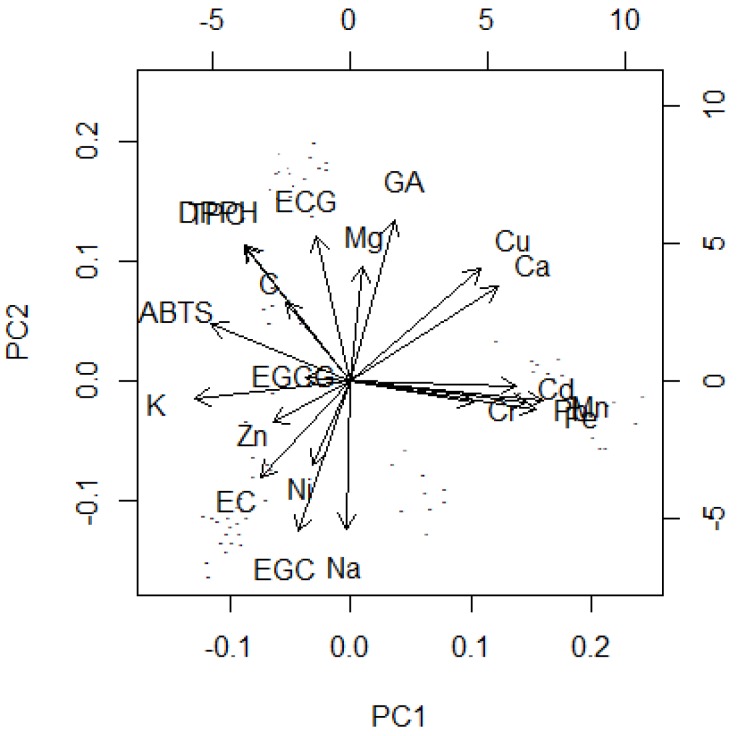
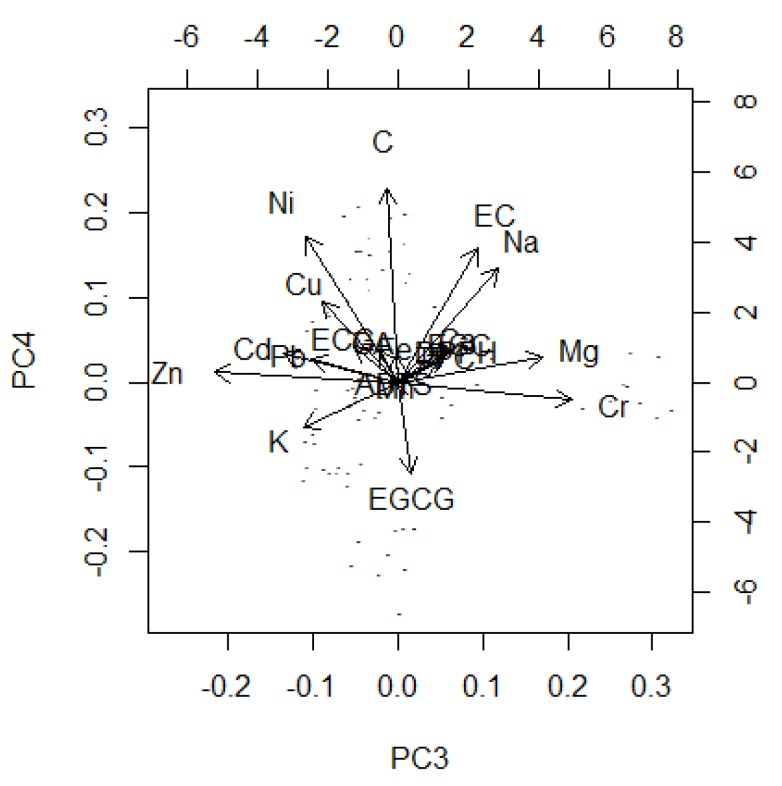
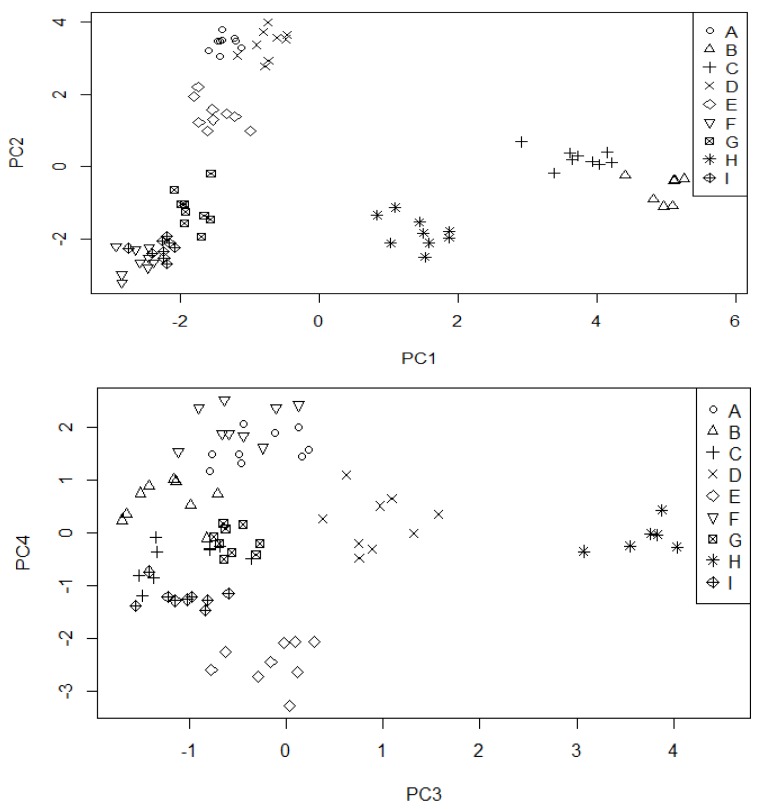
Green tea infusions are one of the most popular beverages consumed across the world, especially is Asian countries. Green tea quality is primarily based on catechin content, however, the concentration of elements could also significantly influence its biological properties and thus quality and safety. The main purpose of the present study was the evaluation of catechin, antioxidant activity and metal content (K, Na, Ca, Mg, Fe, Mn, Cu, Zn, Cr, Pb, Cd and Ni) in different green tea types cultivated in Japan, Sri Lanka, South Korea, India, China and Japan. The chemical analysis of samples was performed using LC-ESI-Q-TOF-MS for organic constituents and atomic absorption spectrometry (flame and electrothermal) method for inorganic ones. The obtained results were subjected to chemometric elaboration. EGC (213 mg/100 mL of the tea infusion in South Korean Jeoncha) and EGCG (124 mg/100 mL in Japanese Sencha) were the dominant catechins in all green tea samples. Chinese and Indian green tea samples contained the highest concentration of toxic heavy metals, however these values were far below appropriate limitations for green teas. PCA revealed significant similarities between Japanese samples and Korean Jeoncha. In general the latter one was evaluated to have the best quality based on the investigated parameters.
Keywords: ABTS; DPPH; LC-ESI-Q-TOF-MS; catechins; green teas; metals.
Conflict of interest statement
The authors declare no conflict of interest. The founding sponsors had no role in the design of the study; in the collection, analyses, or interpretation of data; in the writing of the manuscript, and in the decision to publish the results.
Figures
References
-
- World Health Organization (WHO) Noncommunicable Diseases Country Profiles 2014. WHO; Geneva, Switzerland: 2014.
-
- World Health Organization . Diet, Nutrition, and the Prevention of Chronic Diseases. WHO; Geneva, Switzerland: 2003. - PubMed
-
- Nicholas L., Roberts D., Pond D. The role of the general practitioner and the dietitian in patient nutrition management. Asia Pac. J. Clin. Nutr. 2003;12:3–8. - PubMed
MeSH terms
Substances
LinkOut - more resources
Full Text Sources
Other Literature Sources
Molecular Biology Databases
