


Molecular Mechanisms of T Cells Activation by Dendritic Cells in Autoimmune Diseases
- PMID: 29997500
- PMCID: PMC6028573
- DOI: 10.3389/fphar.2018.00642
Molecular Mechanisms of T Cells Activation by Dendritic Cells in Autoimmune Diseases
Abstract
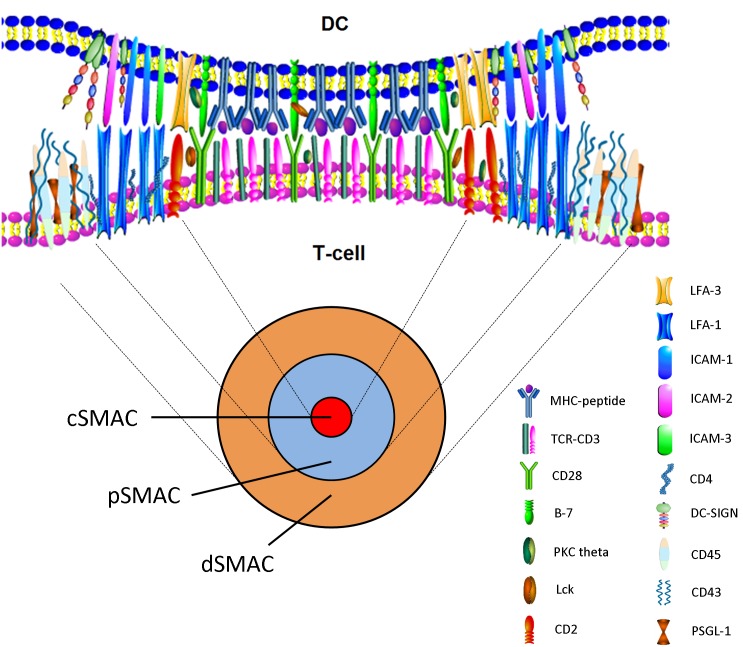
The interaction between T cell and dendritic cells (DCs) that leads to T cell activation affects the progression of the immune response including autoimmune diseases. Antigen presentation on immune cell surface, formation of an immunological synapse (IS), and specific identification of complex by T cells including two activating signals are necessary steps that lead to T cell activation. The formation of stimulatory IS involves the inclusion of costimulatory molecules, such as ICAM-1/LFA-1 and CD28/B7-1, and so on. Some fusion proteins and monoclonal antibodies targeting costimulatory molecules have been developed and approved to treat autoimmune diseases, including rheumatoid arthritis (RA), systemic lupus erythematosus (SLE), multiple sclerosis (MS), type I diabetes (T1D), inflammatory bowel disease (IBD), and psoriasis. These biological agents, including CTLA-4- and LFA-3-Ig, anti-CD3 monoclonal antibody, could prevent the successful engagement of DCs by T cell with significant efficacy and safety profile. In this article, we reviewed the molecular mechanisms of T cell activation during the interaction between T cells and DCs, and summarized some biological agents that target costimulatory molecules involved in the regulation of T cell activation.
Keywords: T cell; activation; autoimmune diseases; biological agents; dendritic cells; immunological synapse.
Figures

References
Publication types
LinkOut - more resources
Full Text Sources
Other Literature Sources
