


Overlapping geographic clusters of food security and health: Where do social determinants and health outcomes converge in the U.S?
- PMID: 29998188
- PMCID: PMC6039352
- DOI: 10.1016/j.ssmph.2018.06.006
Overlapping geographic clusters of food security and health: Where do social determinants and health outcomes converge in the U.S?
Abstract
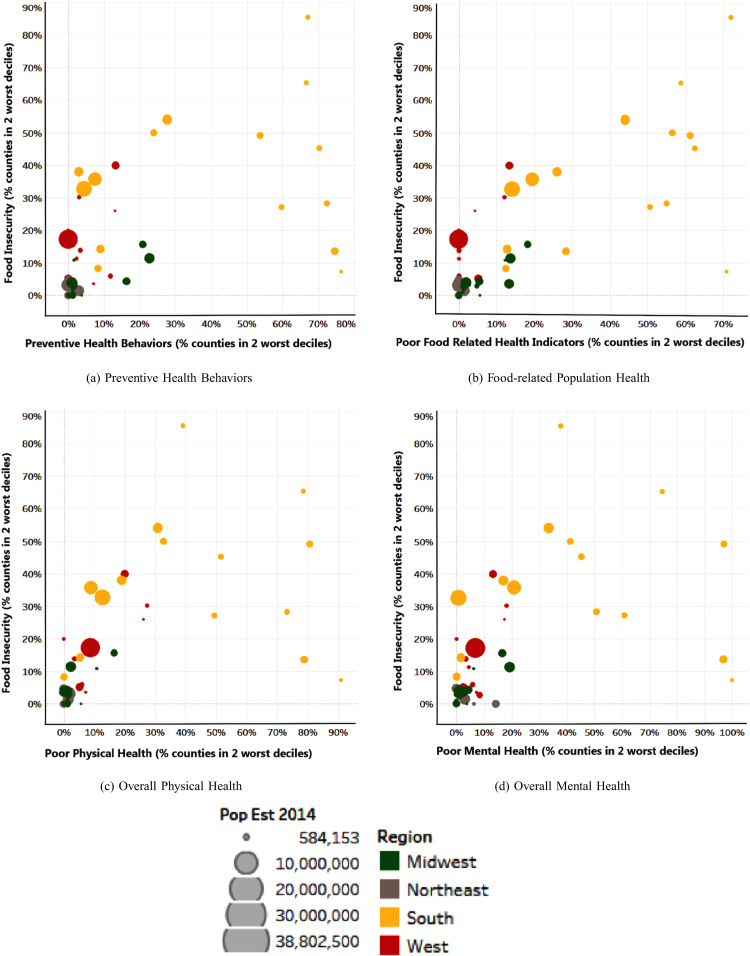
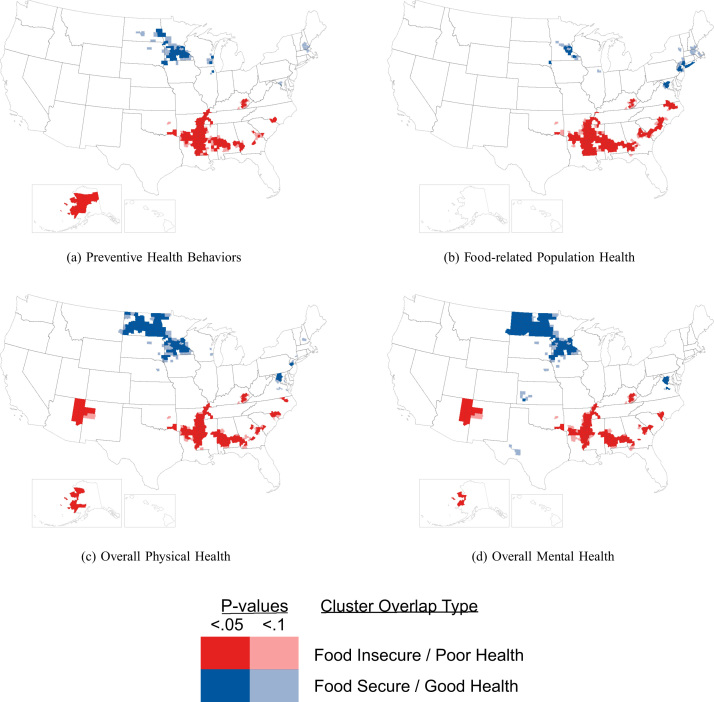
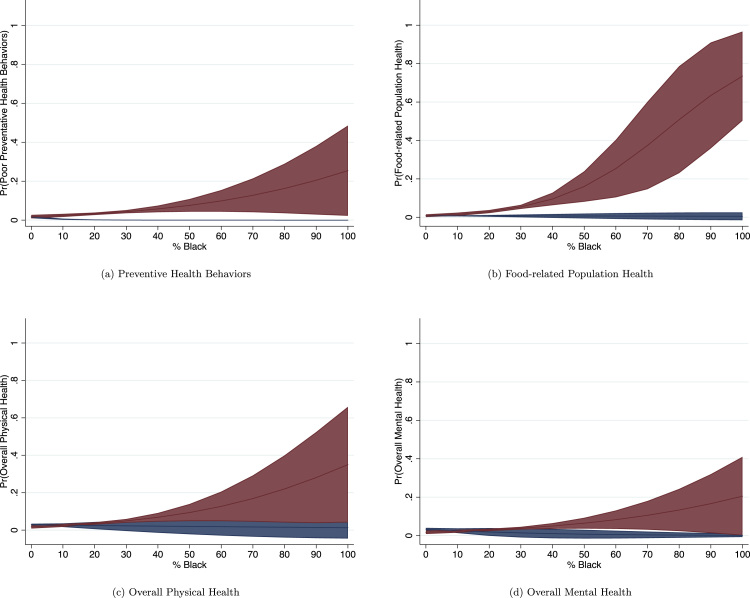
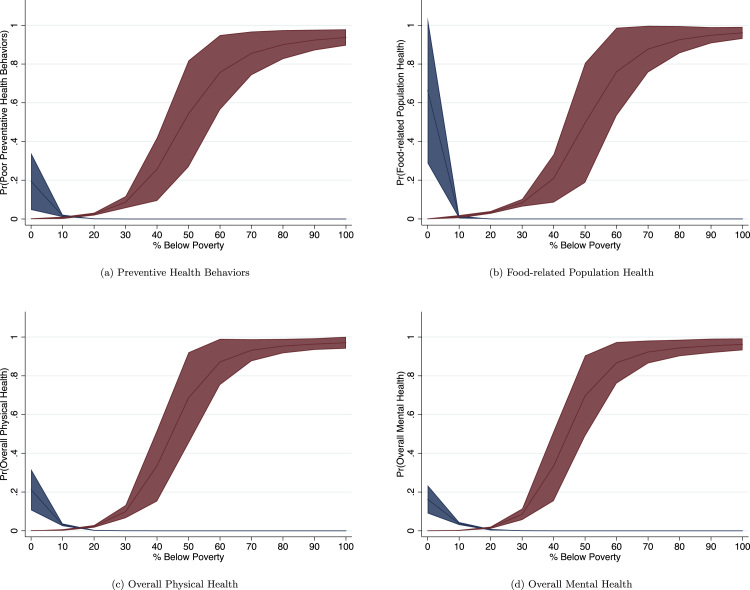
We identified overlapping geographic clusters of food insecurity and health across U.S. counties to identify potential shared mechanisms for geographic disparities in health and food insecurity. By analyzing health variables compiled as part of the 2014 Robert Wood Johnson Foundation County Health Rankings, we constructed four health indices and compared their spatial patterns to spatial patterns found in food insecurity data obtained from 2014 Feeding America's County Map the Meal Gap data. Clusters of low and high food security that overlapped with clusters of good or poor health were identified using Local Moran's I statistics. Next, multinomial logistic regressions were estimated to identify sociodemographic, urban/rural, and economic correlates of counties lying within overlapping clusters. In general, poor health and high food insecurity clusters, "unfavorable cluster overlaps", were present in the Mississippi Delta, Black Belt, Appalachia, and Alaska. Overlapping good health and low food insecurity clusters, "favorable cluster overlaps", were less common and located in the Corn Belt and New England. Counties with higher black populations and higher poverty were associated with an increased likelihood of lying within overlapping clusters of poor health and high food insecurity. Generally consistent patterns in spatial overlaps between food security and health indicate potential for shared causal mechanisms. Identified regions and county-level characteristics associated with being located inside of overlapping clusters may be used in future place-based intervention and policy.
Keywords: Food Insecurity; Social determinants of health; Spatial clusters.
Figures
References
-
- Afulani P., Herman D., Coleman-Jensen A., Harrison G.G. Food insecurity and health outcomes among older adults: The role of cost-related medication underuse. Journal of Nutrition in Gerontology. 2015;34(3):319–342. - PubMed
-
- Alaimo K. Food insecurity in the United States: An overview. Topics in Clinical Nutrition. 2005;20(4):281–298. 〈http://journals.lww.com/topicsinclinicalnutrition/Fulltext/2005/10000/F...
-
- Brown D.L., Hirschl T.A. Household poverty in rural and metropolitan‐core areas of the United States. Rural Sociology. 1995
-
- Center for Disease Control and Prevention (2015). Behavioral risk factor surveillance system. Retrieved from 〈http://www.cdc.gov/brfss/〉.
-
- Chi D.L., Masterson E.E., Carle A.C., Mancl L.A., Coldwell S.E. Socioeconomic status, food security, and dental caries in US children: Mediation analyses of data from the National Health and Nutrition Examination Survey, 2007–2008. American Journal of Public Health. 2014;104(5):860–864. - PMC - PubMed
Grants and funding
LinkOut - more resources
Full Text Sources
Other Literature Sources
Miscellaneous
