


Osteochondritis Dissecans of the Knee: Etiology and Pathogenetic Mechanisms. A Systematic Review
- PMID: 29998741
- PMCID: PMC7298596
- DOI: 10.1177/1947603518786557
Osteochondritis Dissecans of the Knee: Etiology and Pathogenetic Mechanisms. A Systematic Review
Abstract
Objective: The purpose of this manuscript is to analyze the evidence regarding etiopathogenesis of knee osteochondritis dissecans (OCD) lesions through a systematic review, so to summate the current understanding of the origin and progression of this pathologic articular processes.
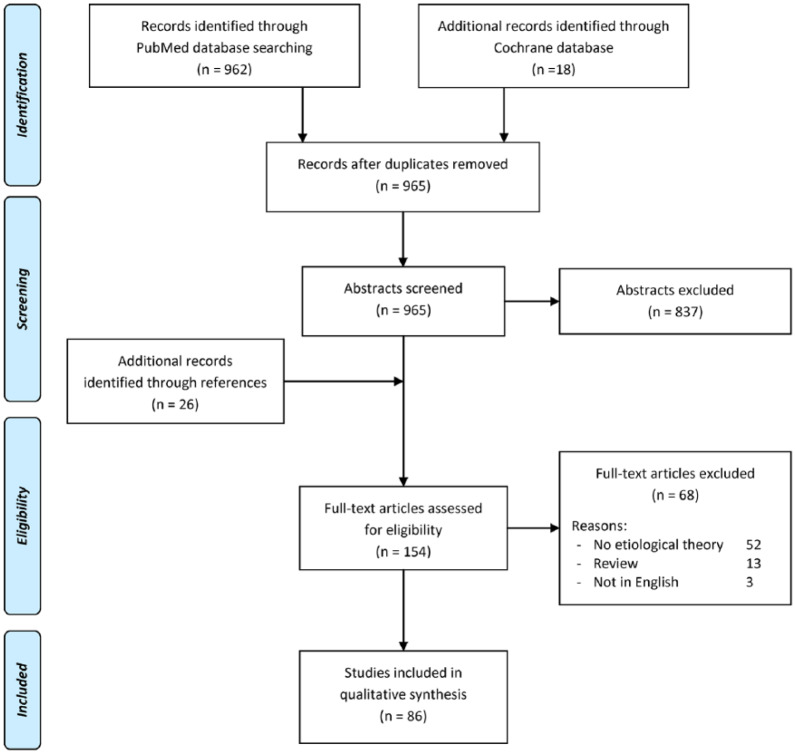
Design: A systematic review of the literature was performed on the PubMed and Cochrane databases on October 2017 by 2 independent authors and included all levels of evidence. This included all English language literature, pertaining specifically to etiopathology of knee OCD with exclusions for review articles and expert opinion. Of 965 identified records, 154 full-text articles were assessed for eligibility and 86 studies met the inclusion criteria.
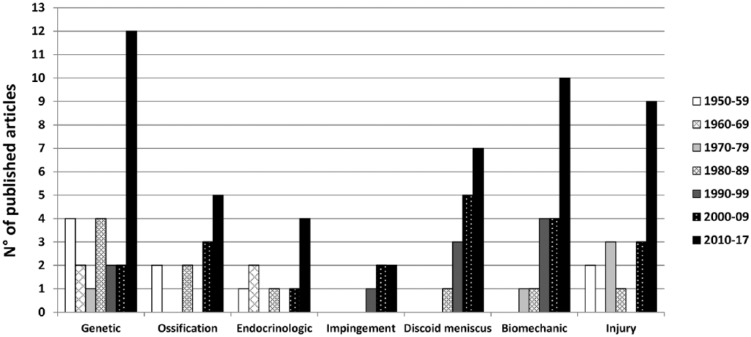
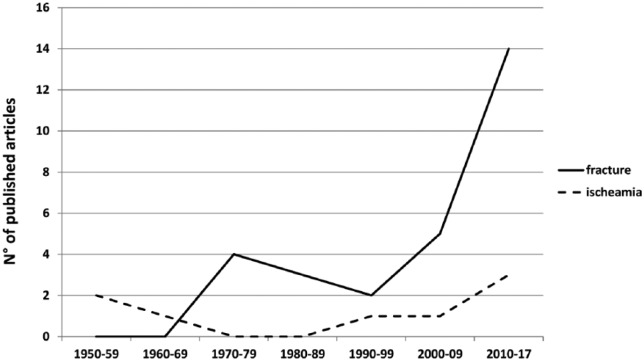
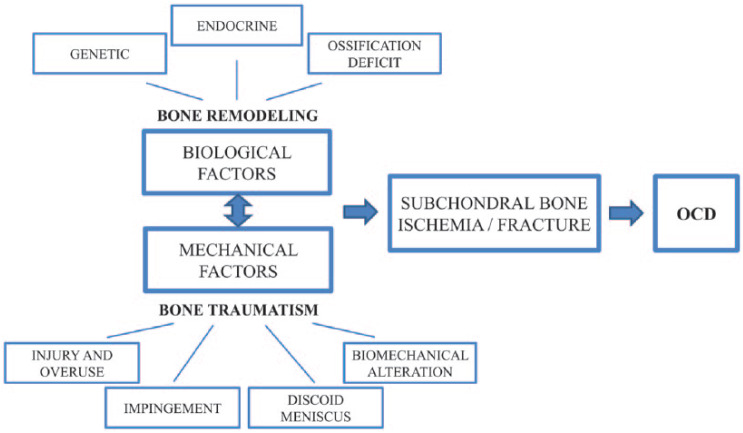
Results: According to these studies, the etiology of OCD can be of a biological or mechanical origin: 40 articles proposed a biological hypothesis, including genetic causes (27), ossification center deficit (12), and endocrine disorders (9); conversely, 52 articles supported a mechanical hypothesis, including injury/overuse (18), tibial spine impingement (5), discoid meniscus (16), and biomechanical alterations (20) as the cause of the onset of OCD. The pathogenic processes were investigated by 36 of these articles, with a focus on subchondral bone fracture and ischemia as the ultimate events leading to OCD.
Conclusions: Biological and mechanical factors are found to result in subchondral bone remodeling alterations, acting independently or more likely synergically in the progression of knee OCD. The former includes genetic causes, deficit of ossification centers and endocrine disorders; the latter, tibial spine impingement, discoid meniscus, and biomechanical alterations, together with injuries and overuse. The resultant subchondral bone ischemia and/or fracturing appears to determine the onset and progression of OCD.
Level of evidence: Systematic review of level II-IV studies, level IV.
Keywords: cartilage; etiology; knee; osteochondral; osteochondritis dissecans.
Conflict of interest statement
Figures
References
-
- Crawford DC, Safran MR. Osteochondritis dissecans of the knee. J Am Acad Orthop Surg. 2006;14(2):90-100. - PubMed
Publication types
MeSH terms
LinkOut - more resources
Full Text Sources
Other Literature Sources
Medical
Research Materials
Miscellaneous
