


The Safety and Benefits of the Semisterile Technique for Closed Reduction and Percutaneous Pinning of Pediatric Upper Extremity Fractures
- PMID: 29998759
- PMCID: PMC6900694
- DOI: 10.1177/1558944718787310
The Safety and Benefits of the Semisterile Technique for Closed Reduction and Percutaneous Pinning of Pediatric Upper Extremity Fractures
Abstract
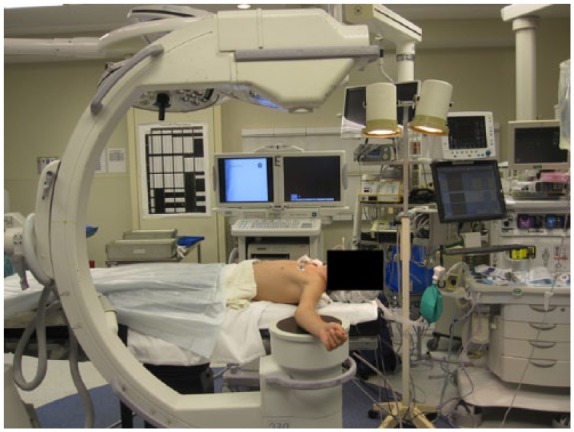
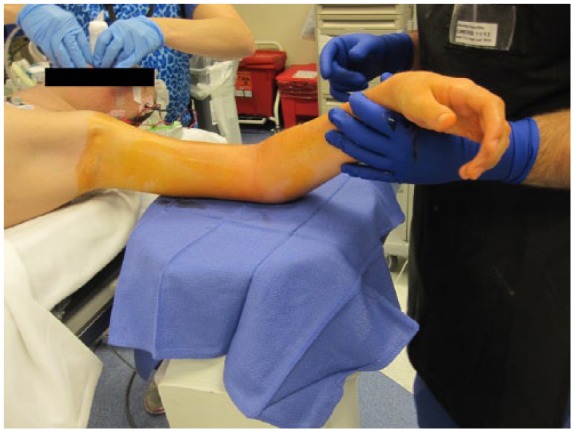
Background: Closed reduction and percutaneous pinning (CRPP) is traditionally performed following full surgical prep and draping. The semisterile technique utilizes minimal prep and draping, which was proven to be a viable alternative when treating pediatric supracondylar humerus fractures. The purpose of this study was to investigate the safety and benefits of the semisterile technique for CRPP of pediatric upper extremity fractures. Methods: A retrospective cohort study was conducted of pediatric patients who underwent CRPP of an upper extremity fracture over a 4-year period. Demographic data, fracture type/location, and the type of prep technique (full-prep vs semisterile) were recorded. Qualities of intraoperative care were assessed, and postoperative care parameters were compared. Patient outcomes for the 2 techniques were compared using bivariate analyses. Results: In total, 219 patient records were reviewed including 160 in the semisterile group and 59 in the full-prep group. When comparing intraoperative parameters between the full-prep and semisterile techniques, the average room setup time was similar (20.6 vs 18.8 minutes, P = .52). However, the procedure times (32.1 vs 26.9 minutes, P = .04) were significantly shorter in the semisterile group. Nearly a 10-minute decrease in total time in the operating room was present while utilizing the semisterile technique (62.8 vs 53.6 minutes, P < .01). There were no statistical differences in complication rates between prep groups (P = .31), and there were no infections while utilizing the semisterile technique. Conclusions: The semisterile technique is a safe and efficient alternative that may be used when performing CRPP of pediatric upper extremity fractures.
Keywords: closed reduction and percutaneous pinning (CRPP); fracture; pediatric; semisterile technique; upper extremity.
Conflict of interest statement
Figures
References
-
- Bashyal RK, Chu JY, Schoenecker PL, et al. Complications after pinning of supracondylar distal humerus fractures. J Pediatr Orthop. 2009;29:704-708. - PubMed
-
- Battle J, Carmichael KD. Incidence of pin track infections in children’s fractures treated with Kirschner wire fixation. J Pediatr Orthop. 2007;27:154-157. - PubMed
-
- Botte MJ, Davis JL, Rose BA, et al. Complications of smooth pin fixation of fractures and dislocations in the hand and wrist. Clin Orthop Relat Res. 1992(276):194-201. - PubMed
MeSH terms
LinkOut - more resources
Full Text Sources
Other Literature Sources
Miscellaneous
