


Blood pressure variability, heart functionality, and left ventricular tissue alterations in a protocol of severe hemorrhagic shock and resuscitation
- PMID: 30001154
- PMCID: PMC6230573
- DOI: 10.1152/japplphysiol.00348.2018
Blood pressure variability, heart functionality, and left ventricular tissue alterations in a protocol of severe hemorrhagic shock and resuscitation
Abstract
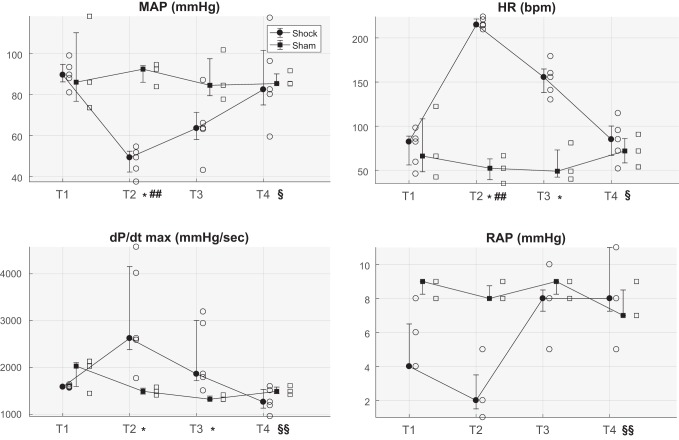
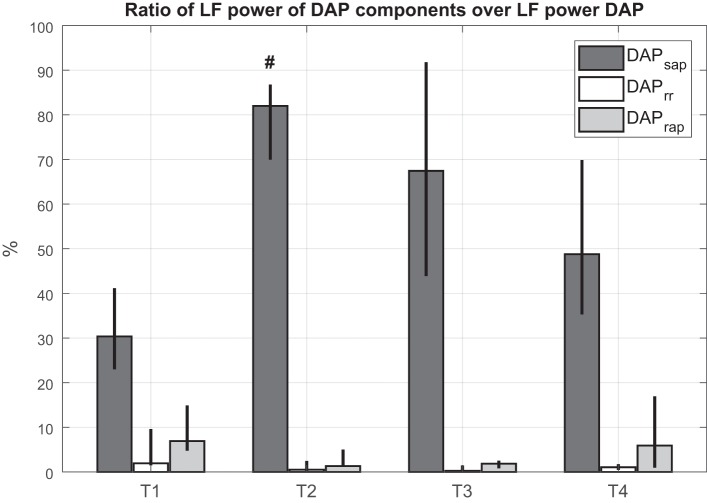
Autonomic control of blood pressure (BP) and heart rate (HR) is crucial during bleeding and hemorrhagic shock (HS) to compensate for hypotension and hypoxia. Previous works have observed that at the point of hemodynamic decompensation a marked suppression of BP and HR variability occurs, leading to irreversible shock. We hypothesized that recovery of the autonomic control may be decisive for effective resuscitation, along with restoration of mean BP. We computed cardiovascular indexes of baroreflex sensitivity and BP and HR variability by analyzing hemodynamic recordings collected from five pigs during a protocol of severe hemorrhage and resuscitation; three pigs were sham-treated controls. Moreover, we assessed the effects of severe hemorrhage on heart functionality by integrating the hemodynamic findings with measures of plasma high-sensitivity cardiac troponin T and metabolite concentrations in left ventricular (LV) tissue. Resuscitation was performed with fluids and norepinephrine and then by reinfusion of shed blood. After first resuscitation, mean BP reached the target value, but cardiovascular indexes were not fully restored, hinting at a partial recovery of the autonomic mechanisms. Moreover, cardiac troponins were still elevated, suggesting a persistent myocardial sufferance. After blood reinfusion all the indexes returned to baseline. In the harvested heart, LV metabolic profile confirmed the acute stress condition sensed by the cardiomyocytes. Variability indexes and baroreflex trends can be valuable tools to evaluate the severity of HS, and they may represent a more useful end point for resuscitation in combination with standard measures such as mean values and biological measures. NEW & NOTEWORTHY Autonomic control of blood pressure was highly impaired during hemorrhagic shock, and it was not completely recovered after resuscitation despite global restoration of mean pressures. Moreover, a persistent myocardial sufferance emerged from measured cardiac troponin T and metabolite concentrations of left ventricular tissue. We highlight the importance of combining global mean values and biological markers with measures of variability and autonomic control for a better characterization of the effectiveness of the resuscitation strategy.
Keywords: cardiovascular autonomic control; hemorrhagic shock; metabolomics; myocardial sufferance; resuscitation.
Figures
References
-
- Aletti F, Ferrario M, Xu D, Greaves DK, Shoemaker JK, Arbeille P, Baselli G, Hughson RL. Short-term variability of blood pressure: effects of lower-body negative pressure and long-duration bed rest. Am J Physiol Regul Integr Comp Physiol 303: R77–R85, 2012. doi: 10.1152/ajpregu.00050.2012. - DOI - PubMed
Publication types
MeSH terms
Substances
LinkOut - more resources
Full Text Sources
Other Literature Sources
