


Reference values for white blood-cell-based inflammatory markers in the Rotterdam Study: a population-based prospective cohort study
- PMID: 30002404
- PMCID: PMC6043609
- DOI: 10.1038/s41598-018-28646-w
Reference values for white blood-cell-based inflammatory markers in the Rotterdam Study: a population-based prospective cohort study
Abstract
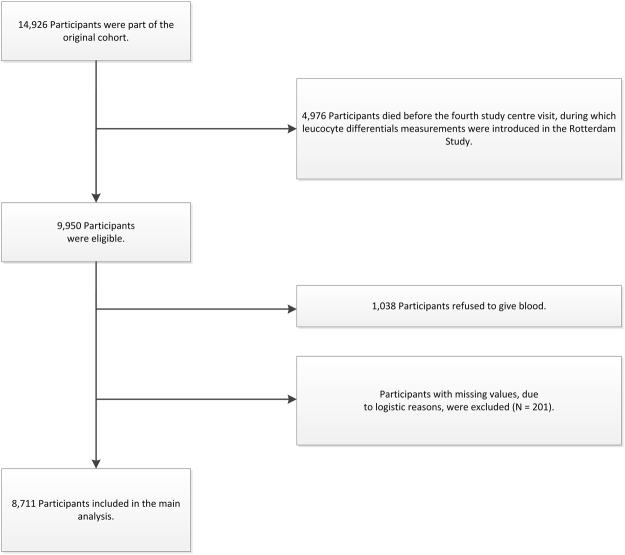
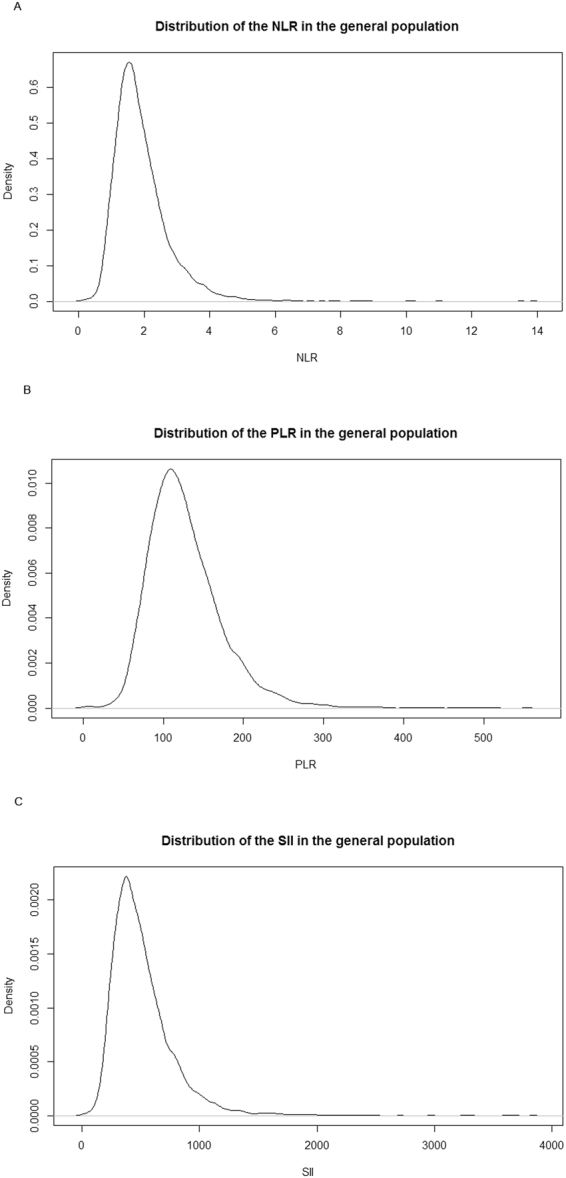
Novel prognostic inflammatory markers of cancer survival and cardiovascular disease are; the neutrophil-to-lymphocyte ratio (NLR), the platelet-to-lymphocyte ratio (PLR) and the systemic immune-inflammation index (SII). As normal values for these markers are unknown, our objective was to obtain reference values in the general population. We obtained data from a population-based prospective cohort study of individuals aged 45 years and over between 2002 and 2014. Absolute blood counts were used to calculate the NLR, PLR and SII. All inflammatory indices followed a log-normal distribution. We calculated the mean and 95% reference intervals in an unselected population. Furthermore we studied whether the inflammatory markers differed between age categories and gender. In total 8,711 participants (57.1% female; mean age 65.9 years, standard deviation 10.5 years) were included. Mean values and corresponding 95% reference intervals for the NLR were: 1.76 (0.83-3.92), for PLR: 120 (61-239) and for SII: 459 (189-1168). The inflammatory markers increased with age. The PLR and SII were higher in females, whilst the NLR was higher in males. In conclusion, we provided reference values for new inflammatory markers. All increase with age and vary with gender. This provides context that allows for proper interpretation of their potential value in future clinical practice and research.
Conflict of interest statement
The authors declare no competing interests.
Figures
References
MeSH terms
Substances
LinkOut - more resources
Full Text Sources
Other Literature Sources
