


Wild Relatives of Maize, Rice, Cotton, and Soybean: Treasure Troves for Tolerance to Biotic and Abiotic Stresses
- PMID: 30002665
- PMCID: PMC6032925
- DOI: 10.3389/fpls.2018.00886
Wild Relatives of Maize, Rice, Cotton, and Soybean: Treasure Troves for Tolerance to Biotic and Abiotic Stresses
Abstract
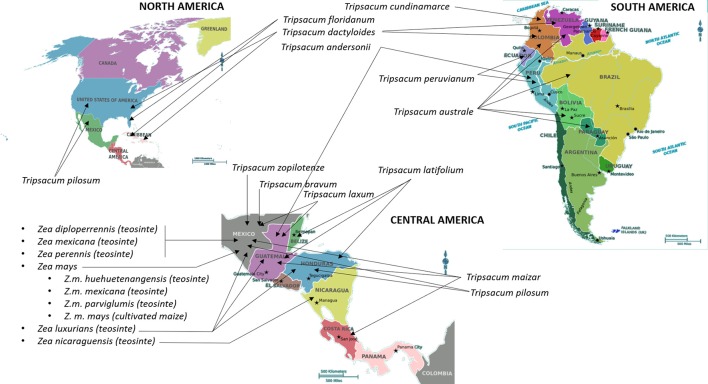
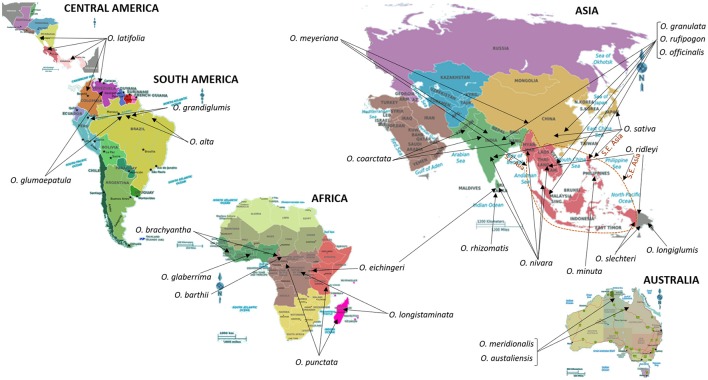
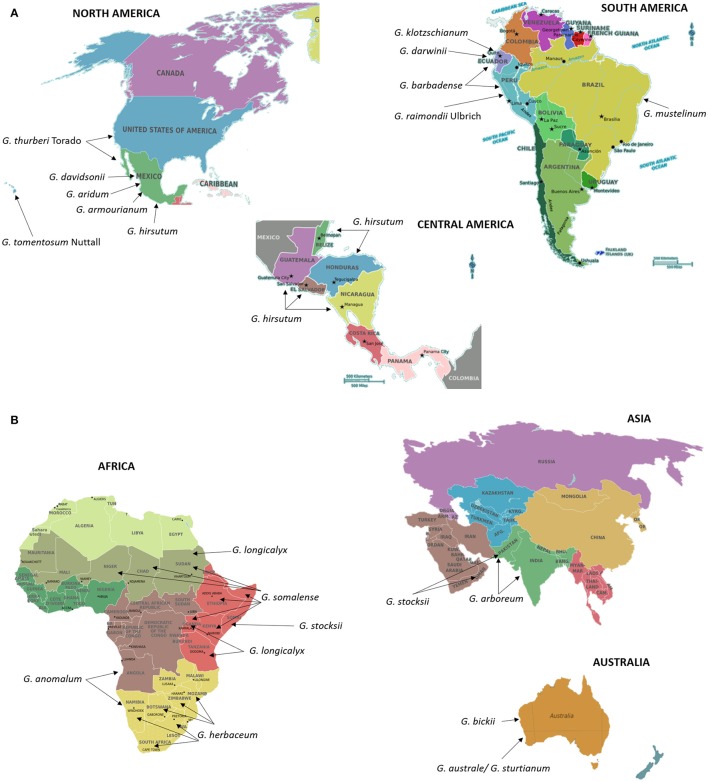
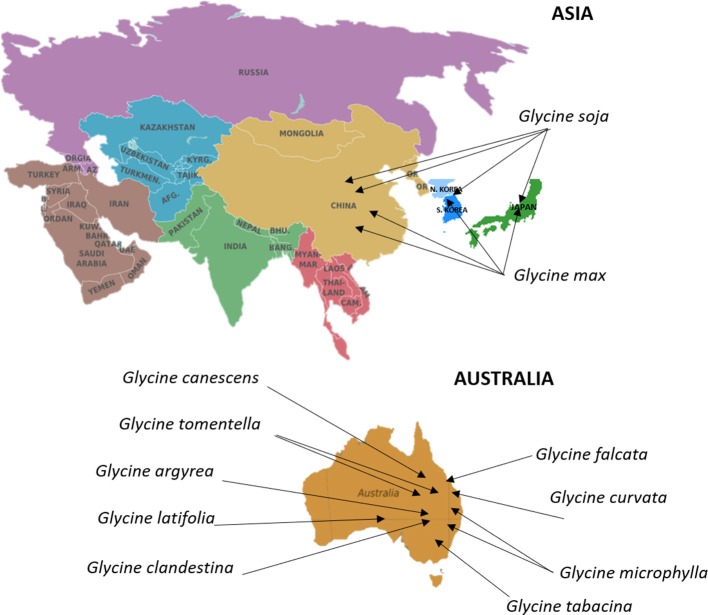
Global food demand is expected to nearly double by 2050 due to an increase in the world's population. The Green Revolution has played a key role in the past century by increasing agricultural productivity worldwide, however, limited availability and continued depletion of natural resources such as arable land and water will continue to pose a serious challenge for global food security in the coming decades. High yielding varieties with proven tolerance to biotic and abiotic stresses, superior nutritional profiles, and the ability to adapt to the changing environment are needed for continued agricultural sustainability. The narrow genetic base of modern cultivars is becoming a major bottleneck for crop improvement efforts and, therefore, the use of crop wild relatives (CWRs) is a promising approach to enhance genetic diversity of cultivated crops. This article provides a review of the efforts to date on the exploration of CWRs as a source of tolerance to multiple biotic and abiotic stresses in four global crops of importance; maize, rice, cotton, and soybean. In addition to the overview of the repertoire and geographical spread of CWRs in each of the respective crops, we have provided a comprehensive discussion on the morphological and/or genetic basis of the traits along with some examples, when available, of the research in the transfer of traits from CWRs to cultivated varieties. The emergence of modern molecular and genomic technologies has not only accelerated the pace of dissecting the genetics underlying the traits found in CWRs, but also enabled rapid and efficient trait transfer and genome manipulation. The potential and promise of these technologies has also been highlighted in this review.
Keywords: cotton; crop wild relatives (CWRs); maize; rice; soybean; tolerance to abiotic stress; tolerance to biotic stress.
Figures
References
-
- Abdurakhmonov I. Y. (2014). World Cotton Germplasm Resources. Rijeka: InTech Press.
-
- Abdurakhmonov I. Y. (ed.). (2016). Introductory chapter: introduction to cotton research highlights, in Cotton Research (London: IntechOpen; ), 3–15.
-
- Abiko T., Kotula L., Shiono K., Malik A. I., Colmer T. D., Nakazono M. (2012). Enhanced formation of aerenchyma and induction of a barrier to radial oxygen loss in adventitious roots of Zea nicaraguensis contribute to its waterlogging tolerance as compared with maize (Zea mays ssp. mays). Plant Cell Environ. 35, 1618–1630. 10.1111/j.1365-3040.2012.02513.x - DOI - PubMed
-
- Aggarwal A., Ezaki B., Munjal A., Tripathi B. N. (2015). Physiology and biochemistry of aluminum toxicity and tolerance in crops, in Stress Responses in Plants, eds Tripathi B. N., Müller M. (Basel: Springer International Publishing Switzerland; ), 35–57.
-
- Ali M. L., Sanchez P. L., Yu S.- B., Lorieux M., Eizenga G. C. (2010). Chromosome segment substitution lines: a powerful tool for the introgression of valuable genes from Oryza wild species into cultivated rice (O. sativa). Rice 3, 218–234. 10.1007/s12284-010-9058-3 - DOI
Publication types
LinkOut - more resources
Full Text Sources
Other Literature Sources
Miscellaneous
