


Endophytic Bacillus and Pseudomonas spp. Modulate Apple Shoot Growth, Cellular Redox Balance, and Protein Expression Under in Vitro Conditions
- PMID: 30002666
- PMCID: PMC6032008
- DOI: 10.3389/fpls.2018.00889
Endophytic Bacillus and Pseudomonas spp. Modulate Apple Shoot Growth, Cellular Redox Balance, and Protein Expression Under in Vitro Conditions
Abstract
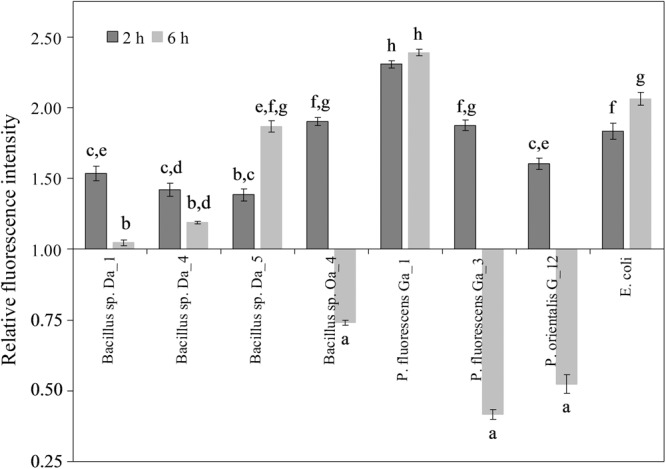
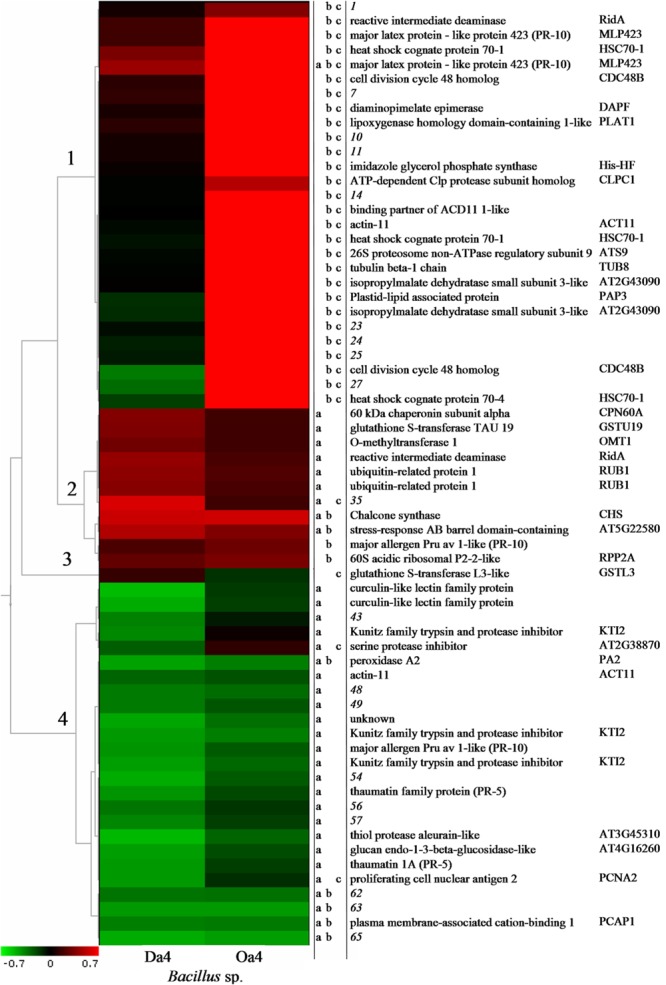
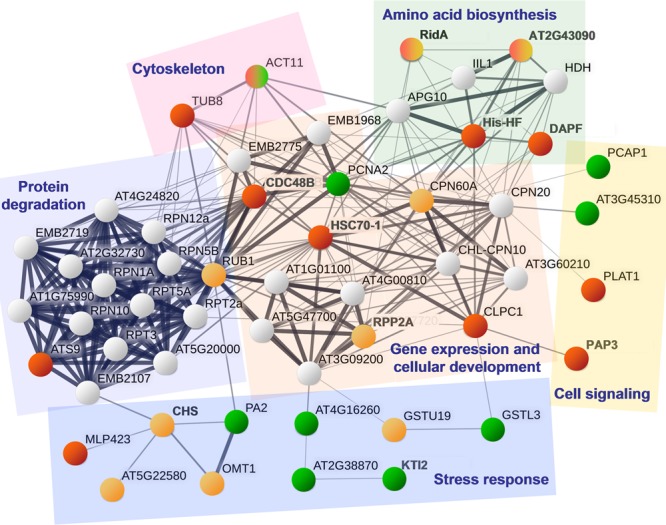
Interactions between host plants and endophytic microorganisms play an important role in plant responses to pathogens and environmental stresses and have potential applications for plant stress management under in vitro conditions. We assessed the effect of endophytic bacteria on the growth and proliferation of domestic apple cv. Gala shoots in vitro. Further, a model apple cell suspension system was used to examine molecular events and protein expression patterns at an early stage of plant-endophyte interaction. Among the seven strains used in the study, Bacillus spp. strains Da_1, Da_4, and Da_5 and the Pseudomonas fluorescens strain Ga_1 promoted shoot growth and auxiliary shoot proliferation. In contrast, Bacillus sp. strain Oa_4, P. fluorescens strain Ga_3 and P. orientalis strain G_12 inhibited shoot development. In the cell suspension, the effects of the association between endophytic bacteria and plant cells were specific to each strain. Modulation of the cellular redox balance was monitored in the apple cells using a 2',7'-dichlorodihydrofluorescein diacetate (H2DCFDA) probe, and strain-specific effects were observed that correlated with the in vitro shoot development results. Proteomic analysis revealed differences in protein expressions in apple cells co-cultivated with different Bacillus spp. strains that had contrasting effects on cellular redox balance and shoot development. The Bacillus sp. strain Da_4, which enhanced shoot development and oxidation of H2DCFDA, induced differential expression of proteins that are mainly involved in the defense response and regulation of oxidative stress. Meanwhile, treatment with Bacillus sp. strain Oa_4 led to strong upregulation of PLAT1, HSC70-1 and several other proteins involved in protein metabolism and cell development. Taken together, the results suggest that different cell signaling and response events at the early stage of the plant-endophyte interaction may be important for strain-dependent regulation of cellular redox balance and development of shoot phenotype.
Keywords: micropropagation; plant stress; plant–endophyte interaction; proteomics; reactive oxygen and nitrogen species.
Figures


References
-
- Abreu-Tarazi M. F., Navarrete A. A., Andreote F. D., Almeida C. V., Tsai S. M., Almeida M. (2010). Endophytic bacteria in long-term in vitro cultivated ”axenic” pineapple microplants revealed by PCR-DGGE. World J. Microbiol. Biotechnol. 26 555–560. 10.1007/s11274-009-0191-3 - DOI
-
- Alqueres S., Meneses C., Rouws L., Rothballer M., Baldani I., Schmid M., et al. (2013). The bacterial superoxide dismutase and glutathione reductase are crucial for endophytic colonization of rice roots by Gluconacetobacter diazotrophicus PAL5. Mol. Plant Microbe Int. 26 937–945. 10.1094/MPMI-12-12-0286-R - DOI - PubMed
-
- Al-Whaibi M. H. (2011). Plant heat-shock proteins: a mini review. J. King Saud Univ. Sci. 23 139–150. 10.1016/j.jksus.2010.06.022 - DOI
-
- Baker J. C., Mock N. M. (1994). An improved method for monitoring cell death in cell suspension and leaf disc assays using evans blue. Plant Cell Tiss. Organ. Cult. 39 7–12. 10.1007/BF00037585 - DOI
-
- Benson E. E. (2000). Special symposium: In vitro plant recalcitrance do free radicals have a role in plant tissue culture recalcitrance? In Vitro Cell. Dev. Biol. Plant 36 163–170. 10.1007/s11627-000-0032-4 - DOI
LinkOut - more resources
Full Text Sources
Other Literature Sources
Miscellaneous
