


Treatment of high- and intermediate-risk pulmonary embolism using the AngioJet percutaneous mechanical thrombectomy system in patients with contraindications for thrombolytic treatment - a pilot study
- PMID: 30002757
- PMCID: PMC6041588
- DOI: 10.5114/wiitm.2018.75848
Treatment of high- and intermediate-risk pulmonary embolism using the AngioJet percutaneous mechanical thrombectomy system in patients with contraindications for thrombolytic treatment - a pilot study
Abstract
Introduction: Intravenous thrombolysis is the treatment of choice in patients presenting with high- and intermediate-risk pulmonary embolism. The role of percutaneous mechanical pulmonary thrombectomy (PMPT) is not fully established, although selected patients can be managed with this method.
Aim: This open-label single-centre prospective pilot study was aimed at assessing the feasibility of PMPT for the treatment of severe pulmonary embolism in a Polish hospital. We also evaluated the safety and efficacy of such management.
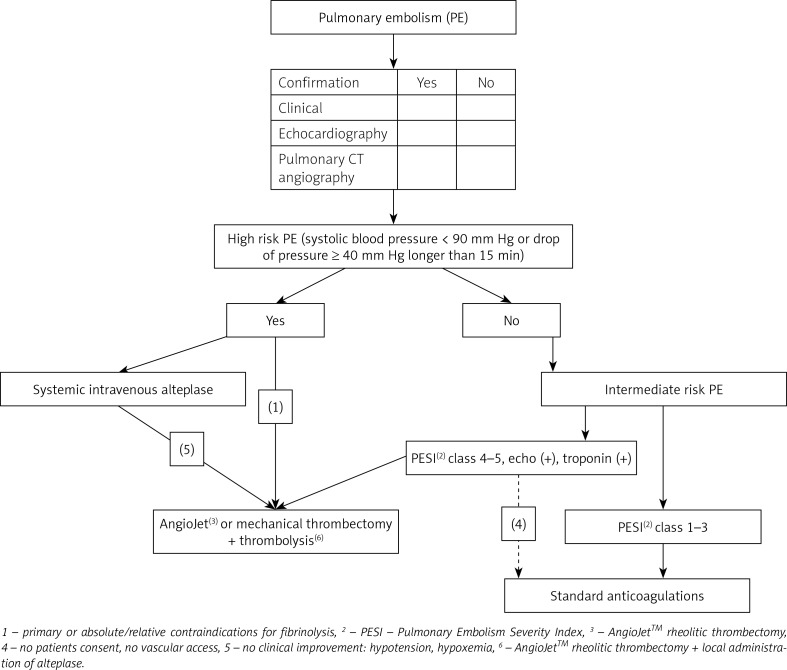
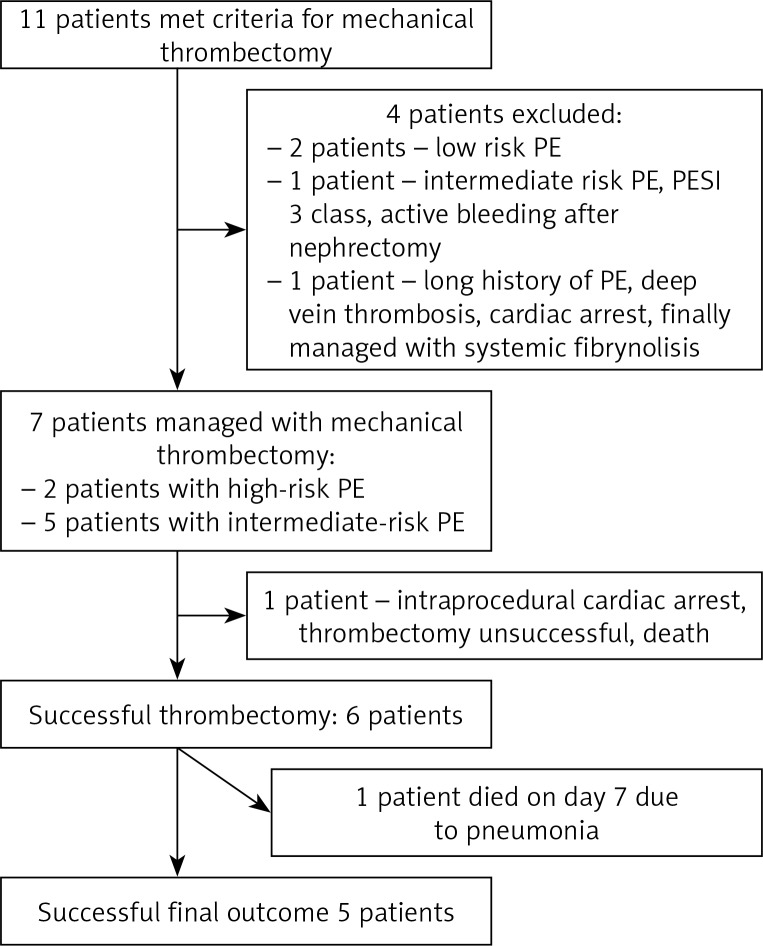
Material and methods: We managed 7 patients, aged 52.7 ±16.6 years, presenting with high- and intermediate-risk pulmonary embolism (4 patients with class 5 and one patient with class 4 of the Pulmonary Embolism Severity Index), with occlusion of at least 2 lobar arteries and contraindications for thrombolysis. Percutaneous mechanical pulmonary thrombectomy was performed using the AngioJet system.
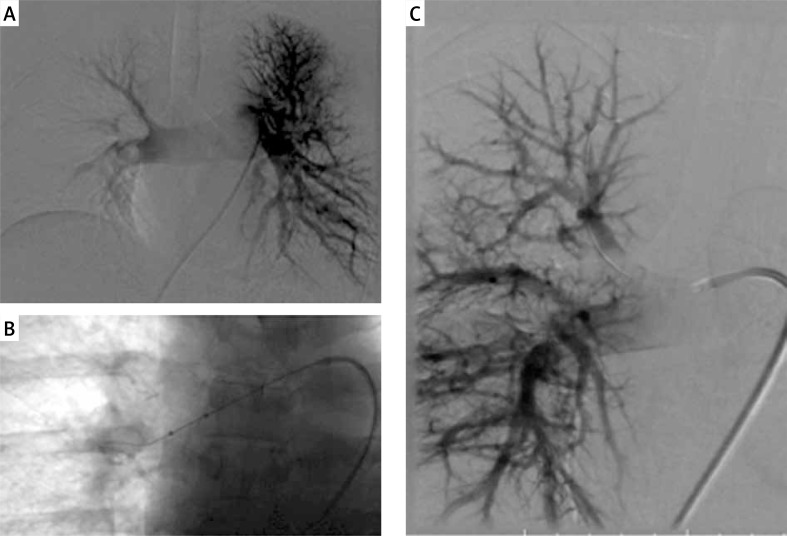
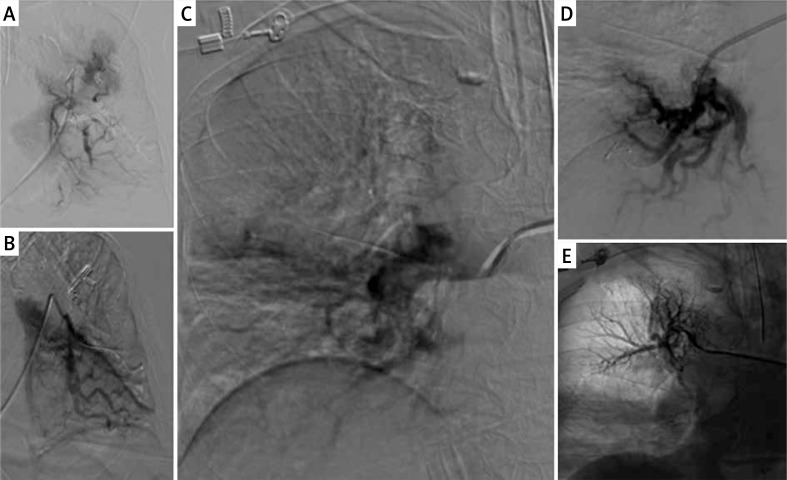
Results: It was possible to introduce the thrombectomy system to the pulmonary arteries in all patients. The procedure was successful in 6 patients (technical success rate: 85.7%). Two (28.6%) patients died during the hospital stay, one patient with unsuccessful thrombectomy and the other due to pneumonia. In all survivors control echocardiography demonstrated normalised function of the right ventricle. Also, dyspnoea disappeared and blood gas parameters normalised. There was no recurrent thromboembolism during 3-14 months of follow-up.
Conclusions: In the Polish setting, in selected patients, management of high- and intermediate-risk pulmonary embolism with PMPT is technically feasible. Such treatment is relatively safe and effective. It can be an alternative to standard management, especially in patients with contraindications for fibrinolysis or surgical embolectomy.
Keywords: mechanical thrombectomy system; pulmonary artery; pulmonary embolism; thromboembolic disease.
Figures
References
-
- Tapson VF. Acute pulmonary embolism. N Engl J Med. 2008;358:1037–52. - PubMed
-
- Cohen AT, Agnelli G, Anderson FA, et al. VTE Impact Assessment Group in Europe (VITAE), Venous thromboembolism (VTE) in Europe. The number of VTE events and associated morbidity and mortality. Thromb Haemost. 2007;98:756–64. - PubMed
-
- Goldhaber SZ, Visani L, De Rosa M. Acute pulmonary embolism: clinical outcomes in the International Cooperative Pulmonary Embolism Registry (ICOPER) Lancet. 1999;353:1386–9. - PubMed
-
- Heit JA, Cohen AT, Anderson FA. Estimated annual numbers of US acute-care hospital patients at risk for venous thromboembolism. Am J Hematol. 2007;82:777–82. - PubMed
-
- Agnelli G, Becattini C. Acute pulmonary embolism. N Engl J Med. 2010;363:266–74. - PubMed
LinkOut - more resources
Full Text Sources
Other Literature Sources
