Resistance to sliding in orthodontics: misconception or method error? A systematic review and a proposal of a test protocol
- PMID: 30003061
- PMCID: PMC6041452
- DOI: 10.4041/kjod.2018.48.4.268
Resistance to sliding in orthodontics: misconception or method error? A systematic review and a proposal of a test protocol
Abstract
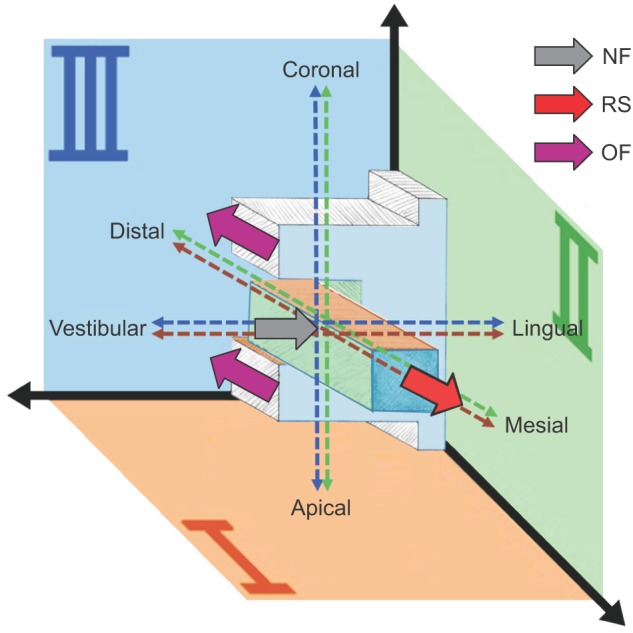
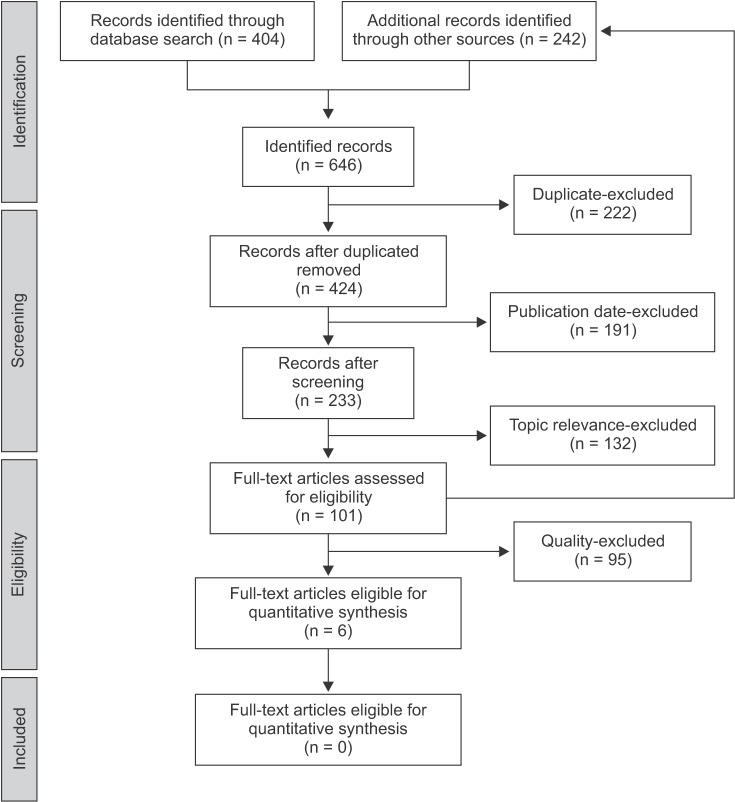
Resistance to sliding (RS) between the bracket, wire, and ligature has been largely debated in orthodontics. Despite the extensive number of published studies, the lack of discussion of the methods used has led to little understanding of this phenomenon. The aim of this study was to discuss variables affecting RS in orthodontics and to suggest an operative protocol. The search included PubMed©, Medline©, and the Cochrane Library©. References of full-text articles were manually analyzed. English-language articles published between January 2007 and January 2017 that performed an in vitro analysis of RS between the bracket, wire, and ligature were included. Study methods were analyzed based on the study design, description of materials, and experimental setup, and a protocol to standardize the testing methods was proposed. From 404 articles identified from the database search and 242 records selected from published references, 101 were eligible for the qualitative analysis, and six for the quantitative synthesis. One or more experimental parameters were incompatible and a meta-analysis was not performed. Major factors regarding the study design, materials, and experimental setup were not clearly described by most studies. The normal force, that is the force perpendicular to the sliding of the wire and one of the most relevant variable in RS, was not considered by most studies. Different variables were introduced, often acting as confounding factors. A protocol was suggested to standardize testing procedures and enhance the understanding of in vitro findings.
Keywords: Biomaterial science; Bracket; Wire.
Conflict of interest statement
CONFLICTS OF INTEREST: No potential conflict of interest relevant to this article was reported.
Figures
References
-
- Besançon RM. The encyclopedia of physics. 3rd ed. New York, NY: Van Nostrand Reinhold Company; 1985.
-
- Jastrzebsky ZD. The nature and properties of engineering materials. 2nd ed. New York, NY: Wiley & Sons; 1976.
-
- Kusy RP, Whitley JQ. Influence of archwire and bracket dimensions on sliding mechanics: derivations and determinations of the critical contact angles for binding. Eur J Orthod. 1999;21:199–208. - PubMed
-
- Kusy RP, Whitley JQ. Friction between different wire-bracket configurations and materials. Semin Orthod. 1997;3:166–177. - PubMed
-
- Burrow SJ. Friction and resistance to sliding in orthodontics: a critical review. Am J Orthod Dentofacial Orthop. 2009;135:442–447. - PubMed
Publication types
LinkOut - more resources
Full Text Sources
Other Literature Sources