


Surgical management of hilar cholangiocarcinoma at Memorial Sloan Kettering Cancer Center
- PMID: 30003193
- PMCID: PMC6036362
- DOI: 10.1002/ags3.12181
Surgical management of hilar cholangiocarcinoma at Memorial Sloan Kettering Cancer Center
Abstract
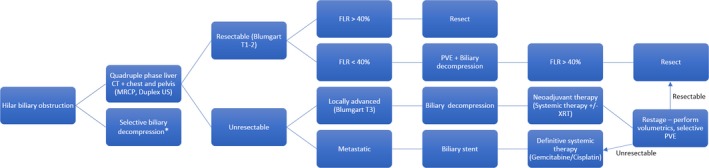
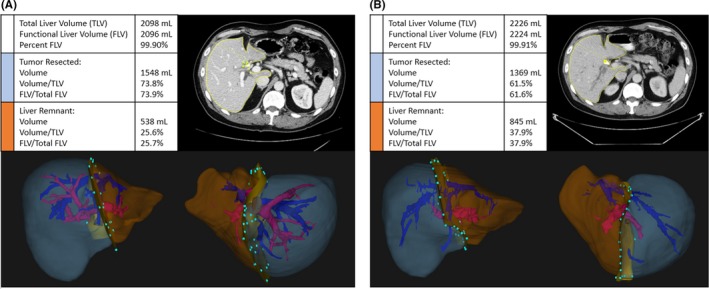
Hilar cholangiocarcinoma, which represents approximately 60% of biliary tract malignancies, is increasing in incidence and presents an ongoing challenge for patients and hepatobiliary surgeons. Although the majority of patients present with advanced disease, the remaining minority of patients are best treated with surgical resection or transplant. Transplant is typically reserved for locally unresectable tumors often in the setting of underlying hepatic dysfunction and will not be discussed herein. This review, therefore, focuses on oncological resection and the strategies implemented for the treatment of hilar cholangiocarcinoma at a quaternary referral center, including preoperative considerations such as patient selection and optimization of the future liver remnant, nuances to the operative approach for these tumors such as resection under low central venous pressure and management of the bile duct, as well as postoperative management.
Keywords: complete surgical resection; hilar cholangiocarcinoma; portal vein embolization; preoperative biliary drainage.
Figures
References
-
- Altemeier W, Gall E, Zinninger M. Sclerosing carcinoma of the major intrahepatic bile ducts. Arch Surg. 1957;75:450–61. - PubMed
-
- Klatskin G. Adenocarcinoma of the hepatic duct at its bifurcation within the porta hepatis. An unusual tumor with distinctive clinical and pathological features. Am J Med. 1965;38:241–56. - PubMed
-
- Rocha FG, Matsuo K, Blumgart LH, Jarnagin WR. Hilar cholangiocarcinoma: the Memorial Sloan‐Kettering Cancer Center experience. J Hepatobiliary Pancreat Sci. 2010;17:490–6. - PubMed
-
- Flemming JA, Zhang‐Salomons J, Nanji S, Booth CM. Increased incidence but improved median overall survival for biliary tract cancers diagnosed in Ontario from 1994 through 2012: a population‐based study. Cancer. 2016;122:2534–43. - PubMed
Publication types
Grants and funding
LinkOut - more resources
Full Text Sources
Other Literature Sources
