


Epidemiology and ecology of West Nile virus in sub-Saharan Africa
- PMID: 30005653
- PMCID: PMC6043977
- DOI: 10.1186/s13071-018-2998-y
Epidemiology and ecology of West Nile virus in sub-Saharan Africa
Abstract
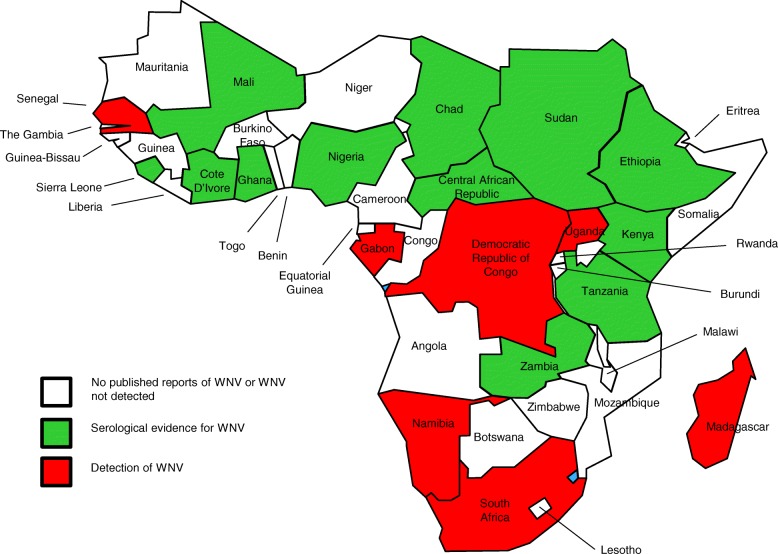
West Nile virus (WNV) is the aetiological agent of the mosquito-borne zoonotic disease West Nile fever. The virus, first isolated in Uganda in 1937, evolved into two distinct lineages in sub-Saharan Africa (SSA) that subsequently spread to most continents where the virus has evolved further as evident through phylogenetic analysis of extant genomes. Numerous published reports from the past 70 years from countries in SSA indicate that the virus is endemic across the region. However, due in part to the limited availability of diagnostic methods across large areas of the continent, the human burden of WNV is poorly understood. So too are the drivers for translocation of the virus from countries south of the Sahara Desert to North Africa and Europe. Migratory birds are implicated in this translocation although the transient viraemia, measured in days, and the time taken to migrate, measured in weeks, suggest a more complex mechanism is in play. This review considers the evidence for the presence of WNV across SSA and the role of migratory birds in the emergence of the virus in other continents.
Keywords: Birds; Migration; Mosquito; Sub-Saharan Africa; West Nile virus.
Conflict of interest statement
Ethics approval and consent to participate
Not applicable.
Consent for publication
Not applicable.
Competing interests
The authors declare that they have no competing interests.
Publisher’s Note
Springer Nature remains neutral with regard to jurisdictional claims in published maps and institutional affiliations.
Figures
References
Publication types
MeSH terms
Grants and funding
LinkOut - more resources
Full Text Sources
Other Literature Sources
Medical
Research Materials
Miscellaneous
