


Dietary vitamin D intake and vitamin D related genetic polymorphisms are not associated with gastric cancer in a hospital-based case-control study in Korea
- PMID: 30008463
- PMCID: PMC6117605
- DOI: 10.7555/JBR.32.20170089
Dietary vitamin D intake and vitamin D related genetic polymorphisms are not associated with gastric cancer in a hospital-based case-control study in Korea
Abstract
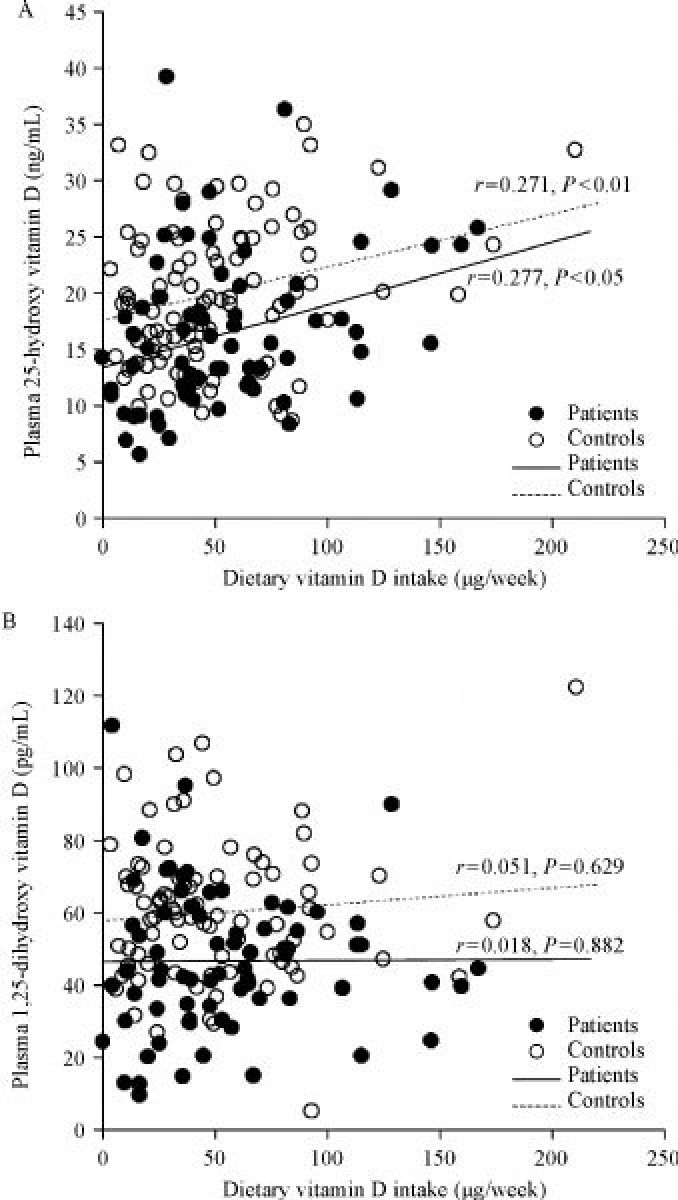
There have been few studies on the association between vitamin D levels and gastric cancer in Asian populations, but no studies have been performed on the interactions between vitamin D intake and polymorphisms in the vitamin D pathway. The effects of vitamin D intake, vitamin D related genetic polymorphisms, and their association with the incidence of gastric cancer were investigated in a hospital case-control study, including 715 pairs of newly diagnosed gastric cancer patients and controls matched for age and sex. Correlations between vitamin D intake and plasma vitamin D concentrations were also assessed in a subset of subjects. No statistically significant difference was observed in the dietary intake of vitamin D between the patients and controls, nor were there any evident associations between vitamin D intake and risk of gastric cancer in multivariate analyses. Vitamin D intake significantly correlated with the circulating 25-hydroxyvitamin D levels, but not with the active form of the vitamin, 1,25-dihydroxyvitamin D. There were no statistically significant interactions between vitamin D intake, and VDR or TXNIP polymorphisms. This study suggests that dietary vitamin D intake is not associated with gastric cancer risk, and the genetic polymorphisms of vitamin D-related genes do not modulate the effect of vitamin D with respect to gastric carcinogenesis.
Keywords: gastric cancer; gene-environment interaction; vitamin D; vitamin D receptor.
Figures
References
-
- Tsugane S, Sasazuki S. Diet and the risk of gastric cancer: review of epidemiological evidence[J]. Gastric Cancer, 2007, 10(2): 75‒83 . - PubMed
-
- Correa P, Shiao YH. Phenotypic and genotypic events in gastric carcinogenesis[J]. Cancer Res, 1994, 54(S7): 1941s‒1943s . - PubMed
-
- Krishnan AV, Feldman D. Mechanisms of the anti-cancer and anti-inflammatory actions of vitamin D[J]. Annu Rev Pharmacol Toxicol, 2011, 51: 311‒336. - PubMed
LinkOut - more resources
Full Text Sources
Other Literature Sources
