Review
. 2018 Dec;113(12):1763-1771.
doi: 10.1038/s41395-018-0180-y.

Rectal Cancer in 2018: A Primer for the Gastroenterologist

Affiliations
Review

Rectal Cancer in 2018: A Primer for the Gastroenterologist

Benjamin A Goldenberg et al. Am J Gastroenterol. 2018 Dec.

Abstract

The rectum has distinctive anatomic and physiologic features, which increase the risk of local spread and recurrence among rectal cancers as compared to colon cancers. Essential to the management of rectal cancers is accurate endoscopic localization as well as preoperative imaging assessment of local and distant disease. Successful oncologic care is multidisciplinary including input from Gastroenterologists, Surgeons, Medical and Radiation Oncologists, Radiologists, and Pathologists. Extensive planning of curative intent is mandatory as failures of upfront treatment present great long‐term difficulty for patients and caregivers. Local recurrences are frequently associated with major morbidity including bowel and urinary obstruction, severe pain, and significantly diminished quality of life. Distant recurrence is associated with lower survival. Over the last two decades, there have been many advances in diagnostic imaging techniques as well as surgical techniques including transanal endoscopic microsurgery for very early stage cancers. Progress in curative management paradigms includes shorter courses of preoperative radiotherapy and chemotherapy doublet paradigms for perioperative treatment. This review describes the diagnosis, workup, and multimodality curative intent treatment of rectal cancers. It is emphasized that success begins in the hands and eyes of the gastroenterologist.


Figures
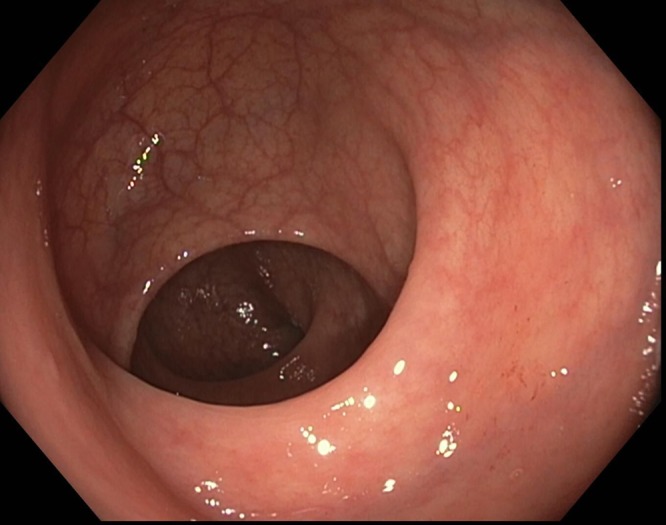
Fig. 1
Fig. 1
Endoscopic view of the three rectal folds
Fig. 2
Fig. 2
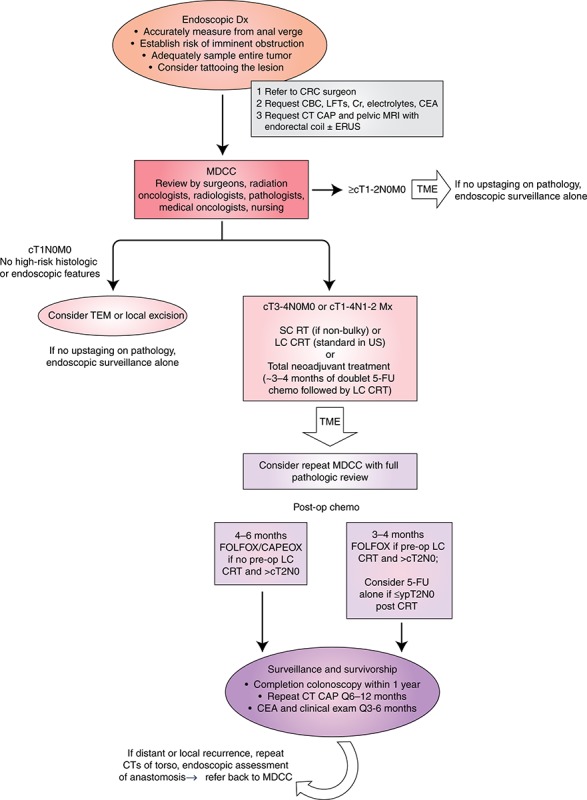
Pathway for diagnosis, staging, and treatment of rectal cancers. FOLFOX/CAPEOX fluorouracil, leucovorin, and oxaliplatin/capecitabine and oxaliplatin; LC long‐course; MDCC, multidisciplinary case conference; SC short‐course; TEM transanal endoscopic microsurgery; TME total mesorectal excision
Fig. 3
Fig. 3
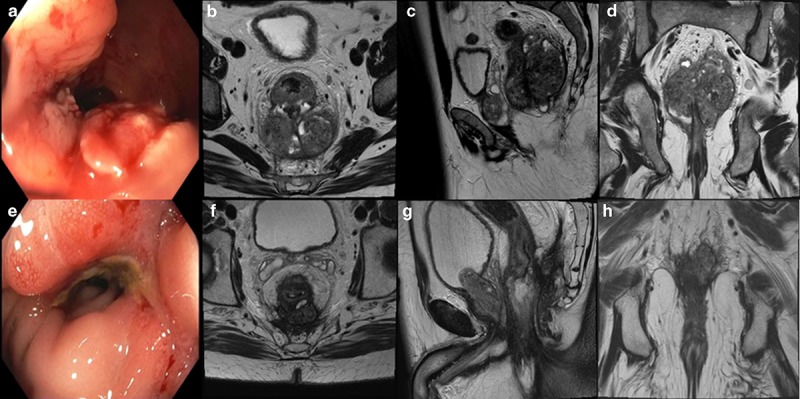
Staging workup information for a patient who was found to have a fungating, non‐obstructing rectal mass on a routine screening colonoscopy. A representative image from the in‐office sigmoidoscopy (a) shows the non‐obstructing mass situated on the posterior wall approximately 3 cm from the anal verge and extending 10 cm proximally. Representative axial (b), sagittal (c) and coronal (d) images from his baseline magnetic resonance imaging (MRI) show aT4aN2 tumor measuring 10 cm × 6 cm with the inferior edge extending through the levator into the ischiorectal fossa on the left, and the invading edge of the tumor involving the mesorectal fascia posteriorly with concern for extension beyond the mesorectal fascia superiorly and posteriorly. There were several suspicious mesorectal and external iliac lymph nodes present as well as extramural venous invasion. Due to the bulky nature of his primary tumor, he was dispositioned to neoadjuvant chemotherapy with four cycles of FOLFOX chemotherapy. Restaging MRI showed a nice response to chemotherapy, and he was then dispositioned to neoadjuvant chemoradiation. He received oral capecitabine twice daily on days he received radiation. Post‐treatment sigmoidoscopy (e) showed that the inferior tumor edge was now 4 cm proximal to the anal verge, and post‐treatment MRI (f, g, h) showed the tumor now measuring 5.5 × 3.9 cm with the degree of mesorectal fascial abutment significantly decreased. The pelvic adenopathy also decreased in size
Fig. 4
Fig. 4
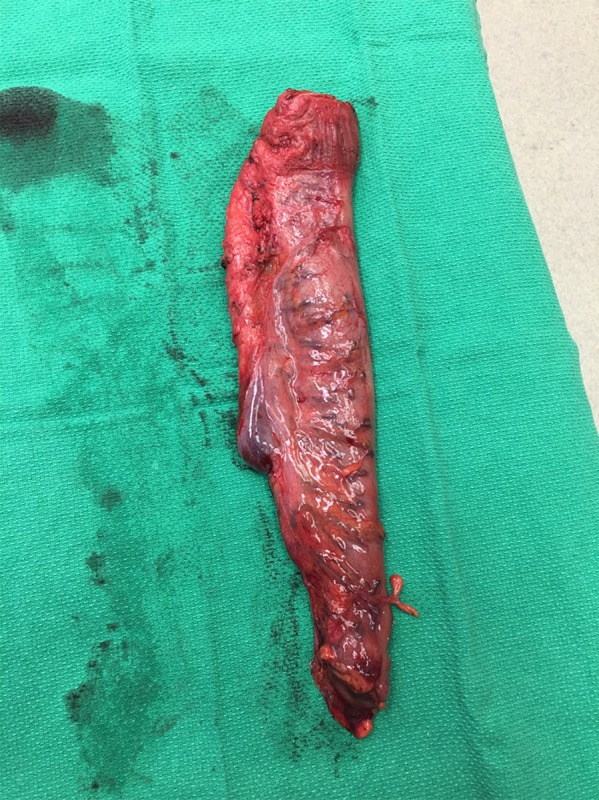
Intact Mesorectal envelope from successful TME for Stage 3 Rectal Cancer post‐neoadjuvant treatment
Fig. 5
Fig. 5
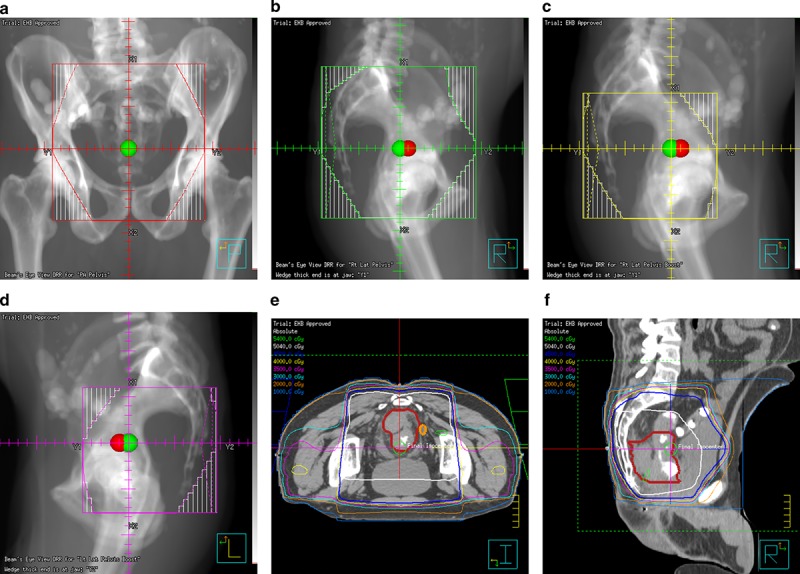
Representative images of a radiation treatment plan for a patient diagnosed on screening colonoscopy with a T4aN2 adenocarcinoma of the proximal rectum. Due to the bulky nature of his primary tumor, he was dispositioned to neoadjuvant chemotherapy with four cycles of FOLFOX chemotherapy. Restaging MRI showed a nice response to chemotherapy, and he was then dispositioned to neoadjuvant chemoradiation. He received oral capecitabine twice daily on days he received radiation. He was treated to 45 Gray in 25 fractions using a three‐field plan: a posterior‐anterior field (a) a left lateral field (b) and a right lateral field (not shown). A sequential boost of an additional 5.4 Gy in three fractions was delivered to the tumor plus margin using right (c) and left (d) lateral fields. Representative axial (e) and sagittal (f) images of the isodose distributions are displayed. He tolerated treatment well and underwent a complete combined abdominoperineal proctectomy with colostomy 6 weeks after completion of chemoradation. His pathologic stage was ypT3N0. All margins were negative and only 30% of the tumor specimen contained viable cells. He then went on to receive a final four cycles of adjuvant 5‐fluorouracil to complete his oncologic treatment

Comment in

References

    1. Siegel RL, Miller KD, Jemal A. Cancer statistics, 2016. CA Cancer J Clin. 2016;66:7–30. - PubMed
    1. Glynne-Jones R, Wyrwicz L, Tiret E, et al. Rectal cancer: ESMO clinical practice guidelines for diagnosis, treatment and follow-up. Ann Oncol. 2017;28:iv22–iv40. (Supplement 4) - PubMed
    1. Valentini V, van Stiphout RG, Lammering G, et al. Nomograms for predicting local recurrence, distant metastases, and overall survival for patients with locally advanced rectal cancer on the basis of european randomized clinical trials. J Clin Oncol. 2011;29:3163–72. - PubMed
    1. Henley SJ, Singh SD, King J, et al. Invasive cancer incidence and survival—United States, 2011. MMWR Morb Mortal Wkly Rep. 2015;64:237–42. - PMC - PubMed
    1. Bailey CE, Hu CY, You YN, et al. Increasing disparities in the age-related incidences of colon and rectal cancers in the United States, 1975-2020. JAMA Surg 2015;150:17–22. - PMC - PubMed

MeSH terms