


The early 20th century warming: Anomalies, causes, and consequences
- PMID: 30008810
- PMCID: PMC6033150
- DOI: 10.1002/wcc.522
The early 20th century warming: Anomalies, causes, and consequences
Abstract
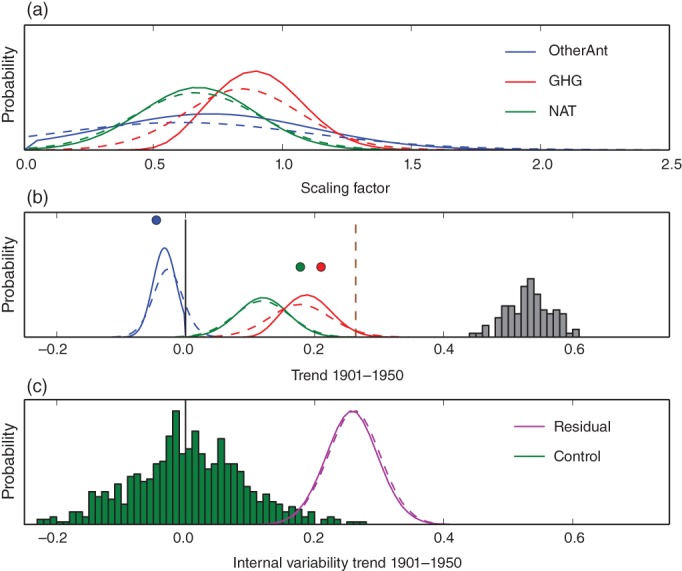
The most pronounced warming in the historical global climate record prior to the recent warming occurred over the first half of the 20th century and is known as the Early Twentieth Century Warming (ETCW). Understanding this period and the subsequent slowdown of warming is key to disentangling the relationship between decadal variability and the response to human influences in the present and future climate. This review discusses the observed changes during the ETCW and hypotheses for the underlying causes and mechanisms. Attribution studies estimate that about a half (40-54%; p > .8) of the global warming from 1901 to 1950 was forced by a combination of increasing greenhouse gases and natural forcing, offset to some extent by aerosols. Natural variability also made a large contribution, particularly to regional anomalies like the Arctic warming in the 1920s and 1930s. The ETCW period also encompassed exceptional events, several of which are touched upon: Indian monsoon failures during the turn of the century, the "Dust Bowl" droughts and extreme heat waves in North America in the 1930s, the World War II period drought in Australia between 1937 and 1945; and the European droughts and heat waves of the late 1940s and early 1950s. Understanding the mechanisms involved in these events, and their links to large scale forcing is an important test for our understanding of modern climate change and for predicting impacts of future change. This article is categorized under:Paleoclimates and Current Trends > Modern Climate Change.
Keywords: attributing causes to climate change; decadal climate variability; extreme weather and climate events; observed climate change.
Figures
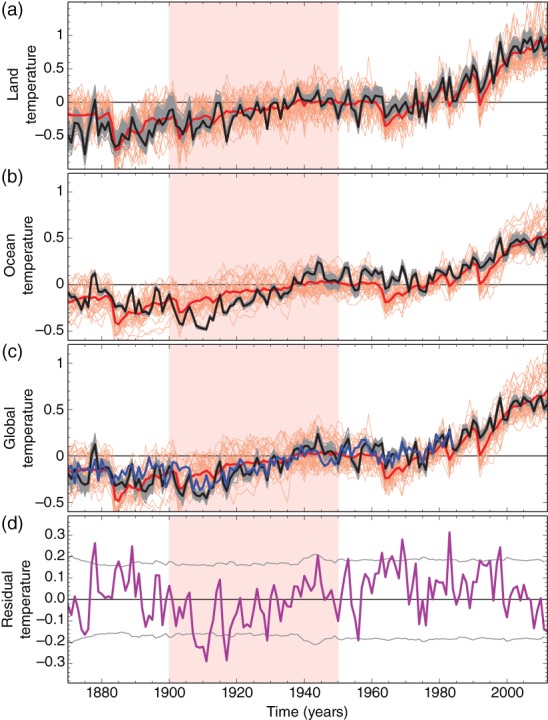
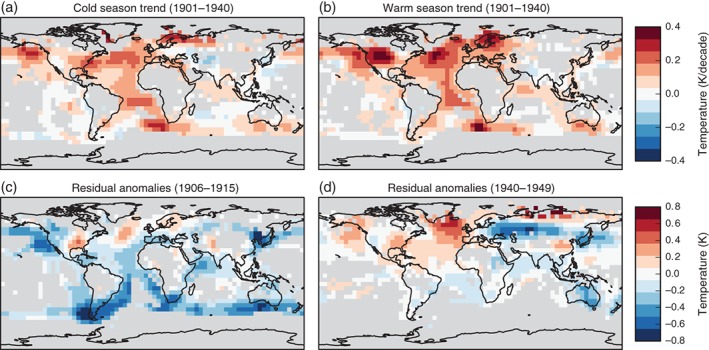
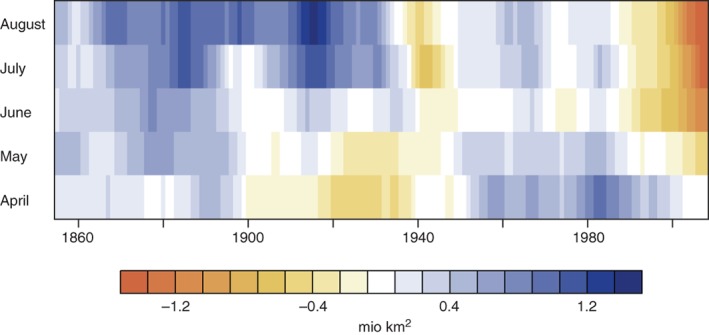
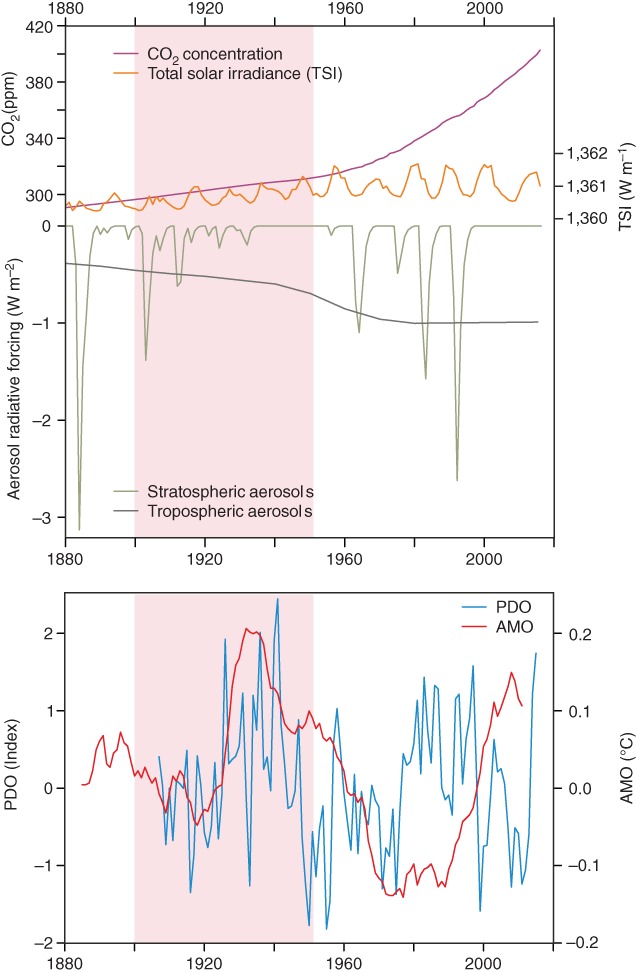
References
-
- Abatzoglou, J. T. , & Barbero, R. (2014). Observed and projected changes in absolute temperature records across the contiguous United States. Geophysical Research Letters, 41, 6501–6508. https://doi.org/10.1002/2014GL061441 - DOI
-
- Abram, N. J. , McGregor, H. , Tierney, J. E. , Evans, M. N. , McKay, N. P. , Kaufman, D. S. , & PAGES 2k Consortium . (2016). Early onset of industrial‐era warming across the oceans and continents. Nature, 536, 411–418. https://doi.org/10.1038/nature19082 - DOI - PubMed
-
- Allan, R. , & Ansell, T. (2006). A New globally complete monthly historical gridded mean sea level pressure dataset (HadSLP2): 1850–2004. Journal of Climate, 19, 5816–5842.
-
- Allan, R. , Brohan, P. , Compo, G. , Stone, R. , Luterbacher, J. , & Brönnimann, S. (2011). The International Atmospheric Circulation Reconstructions over the Earth (ACRE) initiative. Bulletin of the American Meteorological Society, 92, 1421–1425. https://doi.org/10.1175/2011BAMS3218.1 - DOI
-
- Anderson, D. M. , Mauk, E. M. , Wahl, E. R. , Morrill, C. , Wagner, A. J. , Easterling, D. , & Rutishauser, T. (2013). Global warming in an independent record of the past 130 years. Geophysical Research Letters, 40, 189–193. https://doi.org/10.1029/2012GL054271 - DOI
Publication types
LinkOut - more resources
Full Text Sources
Other Literature Sources