


Kadsurenone is a useful and promising treatment strategy for breast cancer bone metastases by blocking the PAF/PTAFR signaling pathway
- PMID: 30008927
- PMCID: PMC6036417
- DOI: 10.3892/ol.2018.8935
Kadsurenone is a useful and promising treatment strategy for breast cancer bone metastases by blocking the PAF/PTAFR signaling pathway
Abstract
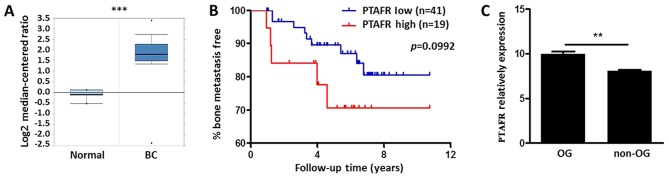
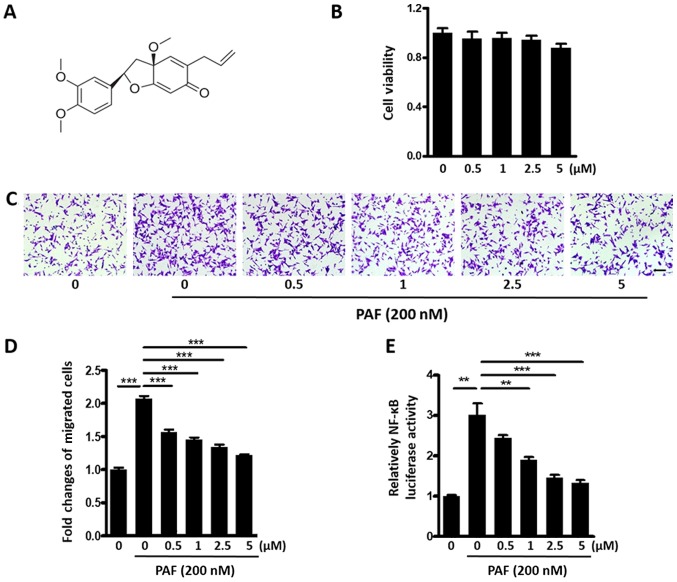
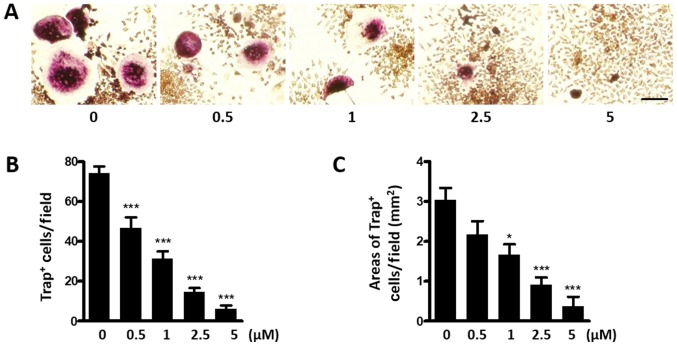
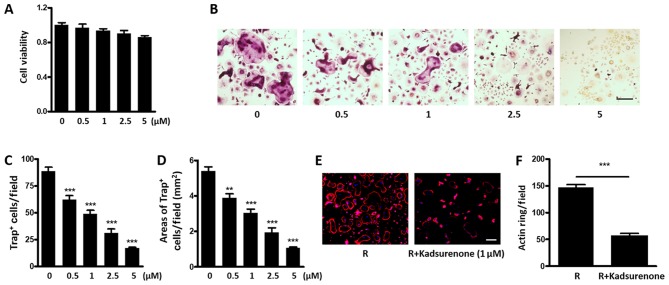
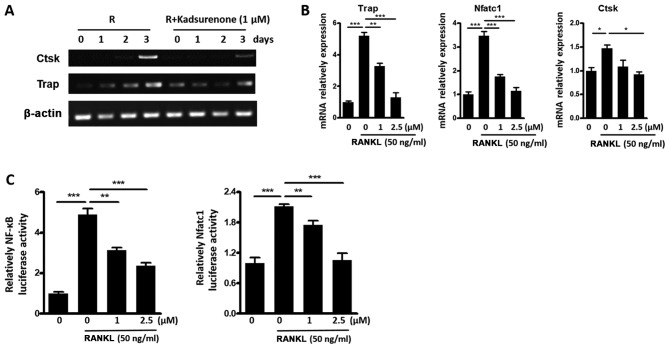
Breast cancer (BC) is characterized by high incidences of bone metastases. Current treatment strategies for BC bone metastases primarily focused on breaking the 'vicious osteolytic cycle'. Platelet-activating factor (PAF) is a potent phospholipid mediator, which has previously reported biological activities in BC progression and osteoclast differentiation by activating its receptor PAF receptor (PTAFR). However, the role of PAF in the mediation of BC bone metastases remains elusive. In the present study, it was revealed that the upregulation of PTAFR was associated with an increased incidence of bone metastases. It was also revealed that PAF significantly enhanced the processes of BC cell migration and BC mediated osteoclastogenesis. These results suggest that PAF serves a promotion role in BC bone metastases. It was further demonstrated that the natural PAF antagonist Kadsurenone may effectively attenuate each process by partially blocking the PAF/PTAFR signaling pathway. Therefore, targeting PAF/PTAFR by Kadsurenone may be a promising treatment strategy for BC bone metastases.
Keywords: Kadsurenone; PAF; bone metastases; breast cancer; osteoclastogenesis; vicious osteolytic cycle.
Figures
References
-
- Sutcliffe P, Connock M, Shyangdan D, Court R, Kandala NB, Clarke A. A systematic review of evidence on malignant spinal metastases: natural history and technologies for identifying patients at high risk of vertebral fracture and spinal cord compression. Health Technol Assess. 2013;17:1–274. doi: 10.3310/hta17420. - DOI - PMC - PubMed
LinkOut - more resources
Full Text Sources
Other Literature Sources