


The Rationale for Monitoring Cognitive Function in Multiple Sclerosis: Practical Issues for Clinicians
- PMID: 30008964
- PMCID: PMC6008981
- DOI: 10.2174/1874205X01812010031
The Rationale for Monitoring Cognitive Function in Multiple Sclerosis: Practical Issues for Clinicians
Abstract
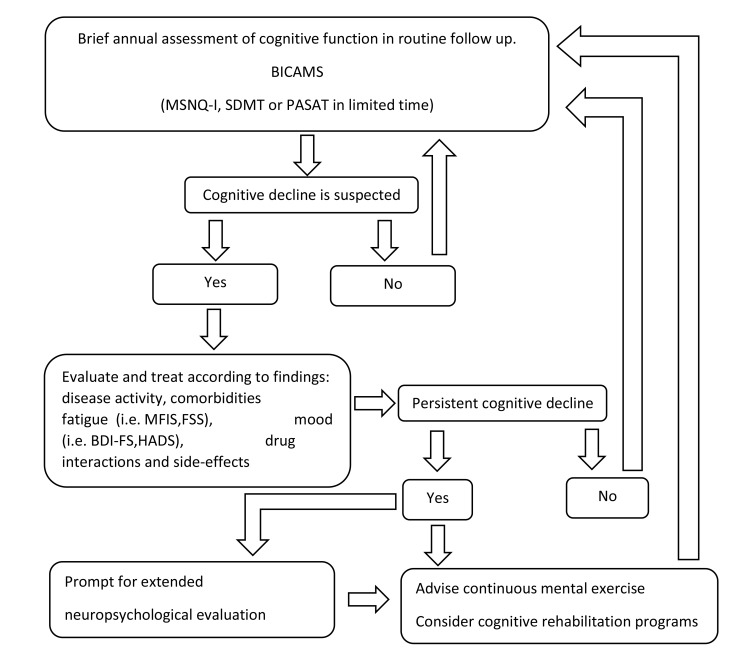
About half of patients with multiple sclerosis exhibit cognitive impairment which negatively affects their quality of life. The assessment of cognitive function in routine clinical practice is still undervalued, although various tools have been proposed for this reason. In this article, we describe the potential benefits of implementing cognitive assessment tools in routine follow -ups of MS patients. Early detection of changes in cognitive performance may provide evidence of disease activity, could unmask depression or medication side-effects and provide suitable candidates for cognitive rehabilitation. Since apathy and cognitive deficiencies are common presenting symptoms in Progressive Multifocal Leukoencephalopathy, we discuss the utility of frequent monitoring of mental status in multiple sclerosis patients at increased risk. In addition, we propose a relevant algorithm aiming to incorporate a systematic evaluation of cognitive function in every day clinical practice in multiple sclerosis.
Keywords: Clinical practice; Cognition; Depression; Fatigue; Monitoring; Multiple sclerosis.
References
-
- Jongen P.J., Ter Horst A.T., Brands A.M. Cognitive impairment in multiple sclerosis. Minerva Med. 2012;103(2):73–96. - PubMed
-
- Saccà F., Costabile T., Carotenuto A., Lanzillo R., Moccia M., Pane C., Russo C.V., Barbarulo A.M., Casertano S., Rossi F., Signoriello E., Lus G., Brescia Morra V. The EDSS integration with the Brief International Cognitive Assessment for Multiple Sclerosis and orientation tests. Mult. Scler. 2017;23(9):1289–1296. doi: 10.1177/1352458516677592. - DOI - PubMed
Publication types
LinkOut - more resources
Full Text Sources
Other Literature Sources